
Harness recently launched a Zero-Day Agent that monitors threat intelligence feeds around the clock to identify and fix newly disclosed vulnerabilities instantly. This development signifies a critical pivot in the arms race between cyber defense teams and threat actors who utilize automated exploit

Organizations often discover that adding more security tools leads to less overall protection due to the complexity of managing disparate data streams. This paradox has become the defining challenge of the current cybersecurity landscape, where the sheer volume of independent security products has

The unprecedented velocity at which generative intelligence has transitioned from a novel corporate experiment to a non-negotiable operational infrastructure has fundamentally altered the risk perimeter for every modern enterprise. As we navigate through 2026, the utility of these systems is no

Insurance providers and regulatory bodies following NIST Zero Trust guidelines now mandate microsegmentation as a foundational requirement for cyber risk management. This shift reflects a broader industry realization that the traditional hardened perimeter is no longer sufficient to protect
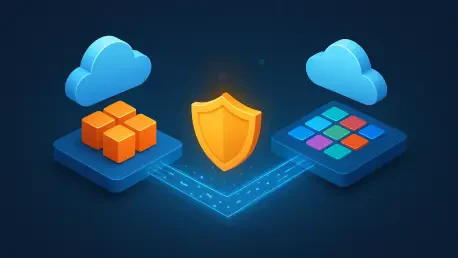
Managing multi-cloud environments has shifted from a luxury to a baseline requirement for high-availability systems, where the ability to orchestrate resources across different providers determines the resilience of a modern tech stack. Infrastructure engineers often discover that the most

The security of a core SaaS platform often depends on the integrity of third-party applications granted OAuth tokens to access sensitive customer data through interconnected APIs. This intricate web of permissions creates a landscape where traditional perimeter-based defenses no longer suffice. As