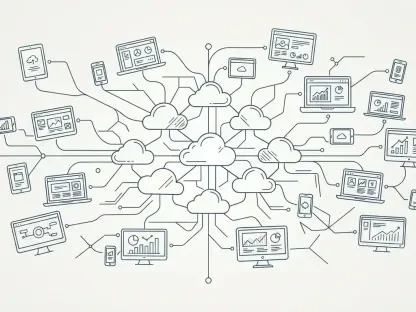

Every executive suite in the mid-market sector currently grapples with a paralyzing contradiction where the board demands immediate integration of generative artificial intelligence while the underlying infrastructure remains tethered to decades-old monolithic software. This integration paradox

The digital landscape experienced a sudden and jarring reality check on the morning of July 24, 2026, when a massive regional connectivity failure within the Amazon Web Services ecosystem disrupted several of the world's most ubiquitous online platforms. This specific incident, which originated

The world's most valuable software company is currently leveraging a war chest of over three hundred billion dollars to fundamentally reshape how enterprise intelligence functions, moving away from its role as a supportive venture capitalist toward becoming a dominant, independent powerhouse.

The persistent challenge of managing disparate data streams across hybrid cloud environments has reached a critical tipping point for modern enterprises as they struggle with fragmented architectures. In response to this mounting pressure, the integration landscape has shifted away from simple

A massive shipment of critical components sitting idle at a major port because of a minor clerical error can trigger a cascade of delays that paralyzes production lines across an entire continent. Global logistics networks are currently undergoing a profound transformation as legacy systems

The transition from centralized corporate campuses to a completely fragmented digital environment has fundamentally rewritten the rules of enterprise cybersecurity for every modern organization. For decades, the logic of defense relied on the physical walls of the office, where firewalls and