
Structured documents and professional slide decks can now be created in real time as AI-driven whiteboards organize ideas during collaborative sessions. This development marks a definitive pivot from the era of static digital assistants to a more dynamic, participatory model of artificial intelligence. Anthropic’s official unveiling of Claude Meetings has introduced a layer of sophistication to video conferencing that previously felt like science fiction. By embedding the assistant directly into the virtual call environment, the system effectively acts as a visible attendee capable of listening to nuances and providing immediate technical support. This integration represents a fundamental shift in how professionals interact with software, moving away from manual data entry toward a fluid exchange of information. The ability to pull live data from enterprise applications while a conversation is ongoing ensures that the context remains accurate and the flow of the meeting is never interrupted by administrative tasks.
Bridging the Gap: Real-Time Documentation and Data
One of the most persistent bottlenecks in corporate environments has been the productivity lag that occurs between the end of a meeting and the distribution of follow-up materials. Claude Meetings addresses this by generating project timelines and action items in real time, ensuring that documentation is finalized before the virtual room is closed. The software does not merely transcribe dialogue; it interprets the intent behind discussions to categorize tasks by urgency and department. This approach allows project managers to bypass the hours typically spent reconciling notes and manually assigning duties. By integrating directly with existing workflow management tools, the AI can populate task boards and update status reports instantly. This level of automation ensures that momentum gained during high-energy brainstorming sessions is not lost to the friction of post-meeting summaries. The result is a more agile organizational structure where transitions from concept to execution are nearly instantaneous.
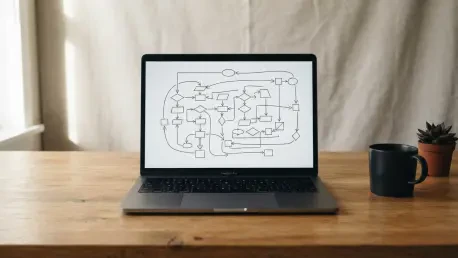
To support this real-time execution, the introduction of Claude Whiteboards and Claude Sheets offers a specialized environment for complex data handling and visual ideation. Whiteboards enable teams to transform a chaotic stream of ideas into logical structures, while Sheets allows for the creation of intricate, formula-heavy spreadsheets using natural language prompts. This eliminates the need for specialized technical knowledge when building financial models or tracking resource allocation during a call. These features are currently being deployed in beta for users on Team and Enterprise plans, with a focus on deep integration within Google Meet. Plans for expanding these capabilities to other major video conferencing platforms indicate a push toward universal compatibility. This expansion suggests that the role of the AI is becoming less about being a standalone app and more about serving as a connective tissue across the professional software ecosystem, making complex technical tasks accessible to every team member.
Strategic Integration: Privacy and Performance Standards
Maintaining a balance between functionality and rigorous privacy has been a cornerstone of the rollout for these tools. Anthropic implemented transparency protocols that require the AI to identify its presence at the start of every session, ensuring all participants are aware of its active role. This focus on security is a strategic decision intended to build trust within industries that handle proprietary data, while deactivation features prevent unauthorized access during sensitive calls. From a global perspective, these advancements signal a trend toward active AI for emerging technology sectors. In regions like Pakistan, these innovations could provide the necessary infrastructure to manage complex digital workflows for remote workforces with minimal overhead. By streamlining tasks like budget tracking, the system positions itself as a primary competitor to tech giants. These measures ensure that while the AI is an active participant, it operates within strict boundaries defined by the host organization.
The initial implementation of these integrated collaborative tools demonstrated that moving AI from a passive role to an active one significantly improved workflow consistency across diverse teams. Organizations that successfully adopted these systems reported a marked reduction in administrative overhead and a much clearer alignment on project goals. To maximize the long-term benefits of this technology, enterprises focused on establishing clear internal guidelines for how AI-generated insights were validated and eventually archived. Training staff to use natural language prompts effectively within Sheets and Whiteboards became a priority, ensuring that the full potential of the software was realized across different departments. It was also essential for leaders to evaluate their existing security frameworks to ensure they complemented the transparency protocols built into the meeting tools. Companies that treated these tools as a fundamental infrastructure shift were better positioned to maintain high levels of productivity.