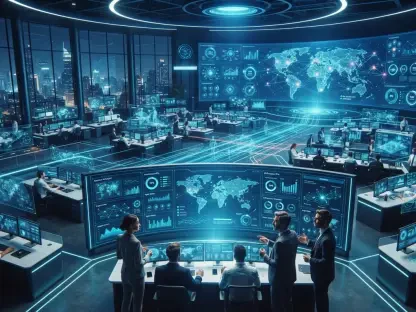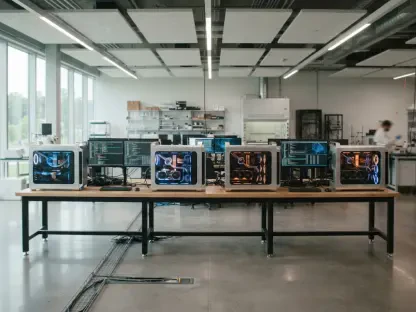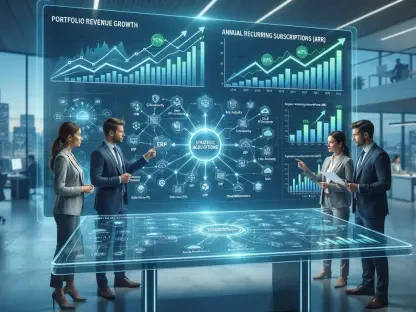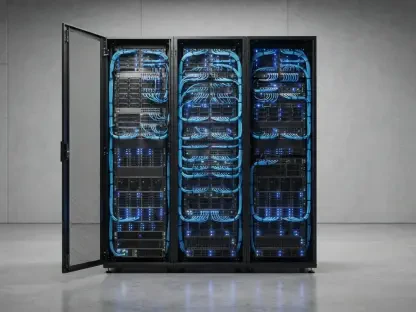

The sheer magnitude of Anthropic’s recent capital-intensive infrastructure pivot has fundamentally altered the paradigm of corporate resource allocation within the high-stakes landscape of artificial intelligence development. This shift signifies more than just a search for server space; it represents a comprehensive effort to secure the raw computational power required to sustain the next generation of generative models. In this environment, infrastructure has transitioned from a supporting utility to a primary operational differentiator. As the industry moves through 2026, the success of a developer is increasingly measured by its ability to navigate a market defined by hardware scarcity and the dominance of a few colossal cloud providers.
Scaling Compute in the Generative AI Era
The current technological era is defined by an unprecedented hunger for specialized chips and massive cloud capacity, making infrastructure the most significant operational priority for model developers. As artificial intelligence moves from experimental research to global commercialization, securing long-term, reliable access to hyperscale computing has become the primary differentiator between market leaders and those hindered by hardware shortages. This environment is shaped by a handful of dominant cloud providers and a rapidly evolving regulatory framework that monitors the concentration of technological power.
Companies are no longer just competing on algorithmic efficiency but on their ability to build and maintain the physical foundations of digital intelligence. This transition requires a level of capital expenditure that was previously reserved for national infrastructure projects or global energy conglomerates. The stakes are particularly high as the industry approaches a point where the availability of compute resources dictates the speed of innovation. Consequently, a developer must treat its hardware pipeline with the same strategic importance as its proprietary code.
Diversifying Partnerships Across the Hyperscaler Ecosystem
To mitigate the risks associated with provider lock-in and supply chain bottlenecks, a sophisticated multi-vendor strategy has become essential. By establishing significant agreements with Microsoft, Google, and Amazon, the company ensures it is not dependent on a single ecosystem for its survival. This diversification allows for leveraging the specific strengths of each provider—such as Google’s proprietary Tensor Processing Units or the global footprint of Amazon Web Services—while maintaining the leverage necessary to negotiate better terms in a highly competitive market.
Furthermore, this multi-cloud approach provides a necessary hedge against regional outages or localized hardware failures. By distributing training and inference workloads across different platforms, the company maintains operational continuity even if one provider faces a systemic challenge. This strategy also serves as a defensive measure against the pricing power of any single hyperscaler, ensuring that the company can pivot resources to where they are most cost-effective or technically advantageous.
Navigating Multi-Vendor Alliances with Industry Giants
The complexity of managing alliances with competing tech giants requires a delicate balancing act of financial and technical priorities. The agreement with Microsoft alone has escalated to nearly fifty billion dollars through 2033, illustrating the massive scale of these partnerships. These contracts are often non-cancelable, requiring the company to pay for capacity regardless of immediate use, which underscores the high stakes of securing future growth. This take-or-pay structure ensures that the provider allocates the necessary resources, but it also creates a significant financial burden that must be managed with precision.
Moreover, the relationship with Google involves not just traditional cloud hosting but also a massive commitment to specialized hardware between 2028 and 2031. This long-term planning is necessary to avoid the capacity shortages that have hindered product development in the past. By locking in these resources years in advance, the company can focus on the research and development of its models without the constant threat of running out of the computational fuel required to power them.
Analyzing Massive Financial Commitments and Performance Metrics
The scale of these cloud investments is nearly unprecedented, with aggregate spending commitments now approaching the trillion-dollar mark. Market data indicates a sharp trajectory in costs; quarterly infrastructure expenses rose from under a billion dollars in early 2025 to nearly ten billion by late 2026. While these contracts represent a massive financial weight, they are essential for avoiding the forecast gap where computing requirements exceed available supply. The goal is to ensure that the hardware is ready the moment the research team is prepared to launch a new training run.
Performance indicators show a clear priority for long-term stability over short-term cost efficiency. In the first nine months of 2026, a significant portion of spending was dedicated to short-term commitments, which are notably more expensive than long-term deals. This suggests that the company is willing to pay a premium to fill immediate gaps in capacity, emphasizing that the cost of inaction or delay is far higher than the cost of over-provisioning.
Overcoming Infrastructure Hurdles and Hardware Constraints
The primary challenge remains the volatility of the hardware supply chain, specifically the availability of high-end GPUs and specialized accelerators. To combat these obstacles, the company has expanded its reach beyond traditional cloud giants to work with specialized providers like SpaceXAI and Nscale. These partnerships provide access to dedicated clusters that might not be available through larger vendors, offering a different set of protections regarding service availability and delivery milestones.
However, administrative and logistical complexities, such as the leasing delays encountered with partners like Lambda, highlight the fragility of physical data center expansion. These setbacks demonstrate that even with billions of dollars in funding, the physical reality of building and cooling massive server farms can create significant bottlenecks. To hedge against these systemic industry issues, the strategy involves securing hardware and facility space twelve to eighteen months in advance, effectively betting on future needs to avoid being paralyzed by current shortages.
Compliance and Security in Global Cloud Operations
Managing nearly a trillion dollars in infrastructure requires navigating a complex regulatory landscape regarding data residency and security standards. Compliance with international laws is no longer just a legal requirement but a core component of the infrastructure strategy. Evolving standards govern how large-scale compute clusters are utilized and secured, particularly when they handle sensitive proprietary data or model weights. This necessitates a robust cybersecurity framework that is integrated directly into the hardware layer.
In addition to security, the company must address the environmental impact of its vast data center footprint. Adhering to local energy regulations and sustainability goals has become a prerequisite for operating in many international markets. This includes implementing advanced cooling systems and optimizing power usage to ensure that the massive energy requirements of AI training do not lead to regulatory or public relations backlash.
The Future of AI Infrastructure Strategy
As the landscape matures, the focus is shifting toward models that offer more operational control and flexibility. The industry is beginning to see a transition where the largest developers move away from simple cloud consumption toward a more hands-on approach to hardware management. This evolution is driven by the need to optimize every cent of capital expenditure in a market where margins are increasingly tight and the cost of entry is astronomical.
Shifting Toward the Anthropic Direct Leasing Model
A significant evolution is the pivot toward the Anthropic Direct model, which involves leasing hardware directly and hosting it in third-party managed facilities. This approach allows the company to decouple the long-term commitment for physical data center space from the rapidly changing requirements of compute accelerators. By securing the shells of data centers early, the company gains the flexibility to install the latest hardware only when it is needed, potentially reducing margins paid to cloud providers and increasing operational control.
This model also provides a pathway to customized hardware configurations that might not be available in a standard public cloud offering. By managing the physical placement and networking of the machines, the company can optimize for the specific communication patterns required for large-scale model training. This level of vertical integration is becoming a hallmark of the most successful firms in the sector, as it allows for a more efficient use of both capital and silicon.
Predicting Disruptors in the Computational Market
The future of the industry will likely be defined by the tension between fixed infrastructure costs and consumption-based revenue. Emerging technologies, such as next-generation liquid cooling systems and more efficient silicon designs, may disrupt current cost models and force a reevaluation of existing contracts. Furthermore, global economic conditions and potential shifts in energy policy could impact how companies manage their massive capital expenditures.
Innovation in hardware-software co-design will likely be the primary driver of growth as companies seek to turn their massive compute capacity into a sustainable competitive advantage. The ability to write software that extracts every ounce of performance from a chip will be just as important as having the chip itself. As the market evolves, the organizations that can bridge the gap between abstract research and the physical realities of the data center will be the ones that survive the impending consolidation of the AI sector.
Summary of Anthropic’s Strategic Financial Trajectory
The strategic financial trajectory of the past year demonstrated that securing computational dominance required a level of capital deployment previously unseen in the software industry. It was clear that a diversified cloud strategy successfully mitigated the risk of catastrophic supply failure by distributing dependencies across multiple hyperscalers. The implementation of the direct-leasing model provided a template for managing volatility, suggesting that decoupling physical assets from rapidly evolving computing power was an effective way to protect long-term margins. These developments established a foundation where infrastructure stability acted as the primary catalyst for commercial growth. The findings indicated that future success depended on the ability to transition from a consumer of cloud services to an active manager of global physical assets. Industry participants learned that over-provisioning capacity was a necessary insurance policy against the unpredictable nature of the hardware supply chain. Ultimately, the integration of rigorous compliance and energy management into the core infrastructure strategy ensured that the massive scale of operations remained sustainable in an increasingly regulated global market.