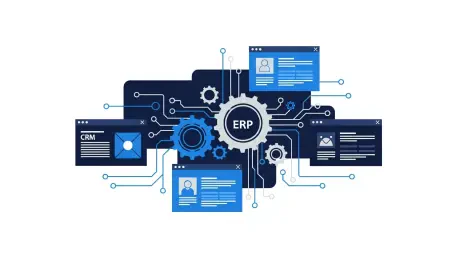

The invisible connective tissue of human effort that holds disparate enterprise applications together is finally dissolving as autonomous agents begin to bridge the manual gaps between siloed systems. For decades, the software industry flourished by building massive repositories for corporate data, yet these systems of record remained passive. Employees spent countless hours performing coordination work—transferring data, verifying information, and interpreting requests between platforms. This hidden manual labor represents a massive untapped market, estimated at $100 billion in the United States alone, where software finally transitions from a storage medium to an active participant in business execution.
The Evolution of Enterprise Software: From Systems of Record to Systems of Action
The current state of the software industry reflects a fundamental pivot from centralized data storage to autonomous execution. Historically, platforms like enterprise resource planning and customer relationship management served as static digital ledgers. However, the rise of agentic intelligence allows these tools to move beyond mere documentation. This shift addresses the coordination work market, a space where human intervention was previously required to navigate the friction between different software environments. By automating these interactions, software providers are no longer just selling a seat; they are selling the completion of the work itself.
Agentic artificial intelligence differs significantly from traditional automation by its ability to manage multi-step workflows across disparate systems. While legacy robotic process automation relied on rigid, rules-based scripts that broke when faced with minor UI changes or unstructured data, modern agents interpret context. They can read an incoming vendor email, verify the contents against a contract in one system, and initiate a payment in another, all while adhering to corporate policy. This capability transforms enterprise software into a system of action, where the software possesses the agency to fulfill complex business objectives with minimal human oversight.
The global economic scope of this technology suggests that the initial domestic estimates are only the beginning. When accounting for international markets, including the highly digitized economies of Europe and Oceania, the total addressable market expands to approximately $200 billion. This broader valuation considers the diverse regulatory and operational landscapes of global commerce, where the need for intelligent coordination is even more acute due to cross-border complexities and varying compliance standards. As businesses worldwide seek to optimize their labor costs, the demand for agentic capabilities continues to surge.
Technological influences are currently being shaped by a competitive tension between established incumbents and AI-native disruptors. Giants like Salesforce and Workday are aggressively integrating agentic layers into their existing ecosystems to prevent churn and capture new revenue streams. Simultaneously, a new generation of startups, such as Sierra and Harvey, is building specialized agents from the ground up. These disruptors often move faster, targeting specific high-value niches like customer experience or legal analysis, forcing the incumbents to accelerate their own research and development cycles or pursue strategic acquisitions.
Analyzing Market Dynamics and High-Growth Segments
Emerging Trends in Autonomous Workflow Automation
The decline of swivel-chair labor represents a primary driver of modern software adoption. This term describes the manual gap where employees must switch between different applications to complete a single task, such as reconciling an invoice or updating a lead status. Agentic AI addresses this inefficiency by intelligently interpreting unstructured data, such as emails or PDFs, and executing the necessary actions across the software stack. This effectively closes the loop on business processes that were previously fragmented and reliant on human persistence.
Moreover, the shift toward cross-workflow decision context is becoming a critical differentiator for top-tier providers. Successful agents do not operate in a vacuum; they understand the broader implications of their actions across different business functions. For instance, an agent handling a customer refund in a support tool must also understand the impact on the financial ledger and the customer’s long-term lifetime value. This level of contextual awareness ensures that autonomous actions align with overarching corporate goals, reducing the risk of unintended consequences in complex operational environments.
Consumer behavior in the business-to-business sector is also evolving rapidly as enterprise buyers demand outcomes rather than just platforms. Modern executives are increasingly reluctant to pay for software that requires significant human input to generate value. Instead, they seek solutions that provide finished work, such as a fully resolved support ticket or a completed financial audit. This demand is pushing the industry away from the traditional model of providing tools and toward a future where software functions as a digital workforce capable of delivering measurable productivity.
Projections and Performance Indicators for Enterprise Functions
The $20 billion sales and operations frontier stands as a prime target for high-value integration. Sales departments are traditionally labor-intensive, requiring a massive workforce to manage leads, schedule meetings, and update records. While these tasks are often complex, the sheer volume of personnel involved makes even incremental automation highly profitable. Agentic AI can take over the heavy lifting of lead qualification and data entry, allowing human sales representatives to focus on relationship building and high-stakes negotiation.
Hyper-automation is also gaining significant traction in research and development and customer support. These functions are particularly well-suited for agentic adoption because they often involve structured data and clear signals of success. In technical departments, agents can assist with code generation, testing, and documentation, showing an automation potential between 40% and 60%. Similarly, customer support agents can resolve standard inquiries autonomously, significantly reducing wait times and operational costs while maintaining high levels of service consistency.
Growth forecasts for finance and human resources suggest a steady adoption of AI agents in high-volume pockets such as payroll and accounts payable. These departments are often bogged down by repetitive verification tasks that are prone to human error. By deploying agents to handle routine financial transactions and administrative HR duties, organizations can ensure higher accuracy and faster processing times. While some areas of these functions still require human empathy and judgment, the technical side of the house is rapidly becoming the domain of autonomous software.
Navigating the Technical and Strategic Hurdles of AI Integration
Identifying the determinants of automation feasibility is essential for any organization planning an integration strategy. Six critical factors typically define the success of an agentic rollout: output verifiability, the consequence of failure, process variability, digitized knowledge, integration complexity, and control over the system of record. Workflows with low variability and high verifiability are the easiest to automate. Conversely, tasks that carry high risks or involve significant regulatory oversight require more sophisticated guardrails and human-in-the-loop checkpoints to ensure safety and compliance.
The data foundation crisis remains a significant barrier for many enterprises looking to capitalize on this trend. Much of the institutional knowledge required to train effective agents is currently locked in human experience rather than machine-readable databases. Without a structured repository of how decisions are made and why certain processes are followed, AI agents struggle to replicate human logic. Companies must prioritize the digitization of their internal playbooks and tribal knowledge to create a viable substrate for agentic intelligence to function effectively.
Integration complexity and the management of application programming interfaces also present technical friction. Orchestrating agents across multiple legacy and modern software environments requires a robust middle layer that can handle authentication, error catching, and data synchronization. Strategies for overcoming these hurdles often involve the use of specialized orchestration platforms that act as a central nervous system for various agents. As the ecosystem matures, the ability to maintain seamless connections between disparate tools will become a prerequisite for any agentic deployment.
The Regulatory Landscape and Security Standards for AI Agents
Compliance in high-stakes environments is a major concern for the legal and information technology sectors. As software agents gain the authority to make autonomous decisions, they must operate within strictly defined legal and ethical frameworks. Organizations are developing sophisticated monitoring tools to ensure that AI actions do not violate internal policies or external regulations. This is particularly important in industries like healthcare and finance, where an unauthorized data disclosure or an incorrect financial transaction can lead to severe legal penalties and reputational damage.
Data privacy and policy guardrails are also central to the governance of AI agents. Companies must ensure that the agents only access the data necessary for their specific tasks and that this information is handled according to global privacy standards. Establishing these boundaries requires a collaborative effort between legal, security, and engineering teams. By creating clear rules for agent behavior, organizations can mitigate the risks associated with autonomous decision-making while still reaping the benefits of increased operational efficiency and speed.
Security measures for multi-agent orchestration are becoming more complex as software agents gain the authority to execute financial and operational transactions. This introduces new vulnerabilities, such as the potential for agents to be manipulated through prompt injection or unauthorized access to their underlying models. Protecting the integrity of the agentic ecosystem involves implementing multi-factor authentication for agent actions and maintaining detailed audit logs of every decision made. Ensuring that these digital workers are as secure as their human counterparts is vital for maintaining trust in autonomous systems.
The Future Path: Innovation and New Economic Models
The death of seat-based pricing marks a significant shift in how software companies generate revenue. As the primary value driver moves from human labor to AI-driven output, charging per user no longer reflects the utility provided. Many providers are transitioning toward consumption-based or outcome-based monetization models. In this new landscape, a company might pay based on the number of successful customer resolutions or the volume of processed invoices. This alignment of cost and value creates a more equitable relationship between the vendor and the customer.
The build vs. buy dilemma is intensifying in the AI arms race as SaaS leaders weigh their options for closing the capability gap. Some organizations are investing heavily in internal research to build proprietary agentic platforms that offer a competitive advantage. Others are choosing to partner with specialized startups or engage in aggressive mergers and acquisitions to acquire ready-made talent and technology. This strategic positioning is crucial, as the window for establishing market leadership in the agentic space is closing fast, with latecomers risking irrelevance.
Emerging technologies and potential market disruptors are also challenging the dominance of incumbents by building agentic capabilities into their core architecture. These AI-native startups do not have the burden of legacy code or outdated business models, allowing them to iterate more quickly. By focusing on a frictionless user experience and seamless cross-platform integration, these new players are capturing the attention of forward-thinking enterprises. This pressure is forcing traditional software providers to modernize their offerings or face the threat of being replaced by more agile, agent-first alternatives.
Strategic Summary and the Road to Market Dominance
The analysis of the software landscape revealed that the transition from invisible manual effort to software-driven productivity became the primary value driver for the current decade. Organizations that recognized the potential of agentic intelligence found themselves at a significant advantage, as they were able to capture a portion of the vast coordination work market. This evolution moved the industry beyond the limitations of static data storage and into a realm where software actively contributed to business outcomes. The shift fundamentally altered the expectations of enterprise buyers and the strategic priorities of software developers.
SaaS providers were encouraged to deconstruct their workflows at a granular level to identify specific tasks ripe for autonomous intervention. Successful firms audited their data readiness and modernized their business models to align with the value delivered by agents rather than the number of human users. It was determined that the window of opportunity for these changes was narrow, requiring rapid adaptation to technical and regulatory shifts. Providers that failed to modernize their architectures or pricing structures risked losing market share to more innovative, agent-native competitors.
The final outlook on investment and growth highlighted the transformative potential of agentic AI to redefine the fundamental value proposition of the software industry. As autonomous systems took over more complex tasks, the distinction between a software tool and a digital employee became increasingly blurred. This transition facilitated a more efficient global economy, where human creativity was empowered by machine execution. Ultimately, the successful integration of agentic capabilities proved to be the defining characteristic of the market leaders who dominated the enterprise software space.