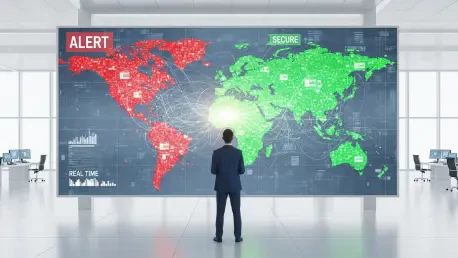

The digital landscape of the mid-twenties has been defined by a precarious reliance on a few dominant cloud providers, creating a fragile architecture where a single vulnerability can trigger a massive industrial collapse. This concentration of critical infrastructure within the Software-as-a-Service sector has shifted the primary concern for IT departments from aesthetic functionality to foundational operational resilience. When a central platform falters, the impact is no longer isolated to a single entity but cascades across entire global sectors, necessitating a complete re-evaluation of how digital dependency is managed. The breach of the Canvas learning management system in May 2026 served as a grim warning of this reality, impacting millions of users and thousands of educational institutions. The incident paralyzed operations and likely involved significant ransom demands, exposing a fundamental flaw in the SaaS value proposition that organizations must now address to ensure survival in a volatile digital environment.
The Evolution of Digital Dependency and Value
From Outsourcing to Systemic Risk
Organizations originally moved toward the SaaS model based on the promise that third-party specialists could manage complex hardware and software ecosystems more efficiently than internal IT teams. This transition saw a shift from renting physical server space to subscribing to full-service platforms where the provider manages every detail from the physical data centers to the final application layer. In the specific case of the Canvas platform, educational institutions have long paid for the promise of seamless integration, constant security patching, and high availability rather than just the software itself. However, this convenience carries hidden costs that are only now becoming apparent to the broader market. The very centralization meant to provide professional-grade security has instead created a massive and highly attractive target for sophisticated cybercriminals. This consolidation has turned what was once a distributed risk into a concentrated point of failure that threatens millions.
While institutions choose to outsource their core technology to specialists to gain access to superior security resources, this centralization effectively paints a bullseye on the largest providers. Cyber attackers have recognized that a single successful breach of a major SaaS hub yields a significantly higher return on investment than attacking individual organizations one by one. The May 2026 incident demonstrated that a failure in the cloud does not merely represent a technical glitch but can effectively shut down an entire industry’s ability to function. For schools and universities, the loss of access to their primary learning management system meant that grading, assignments, and communication were halted instantly. This vulnerability proves that the modern educational sector, like many others, is now inextricably linked to the stability of its chosen software vendors. The risk is no longer just about data theft; it is about the total cessation of essential services on a global scale.
The SaaS-pocalypse and the AI Influence
Artificial Intelligence is rapidly transforming the software landscape by making high-quality code and sophisticated user interfaces both easier and significantly cheaper to produce. As these traditional features become commodified, the industry is entering a phase often described as the SaaS-pocalypse, where the mere existence of a functional application is no longer a sufficient competitive advantage. In this new environment, the value of a software provider is shifting away from what the platform can do under ideal conditions toward its performance during a catastrophic crisis. The ability to generate complex features via automated tools means that slick designs are now a baseline requirement rather than a premium offering. Consequently, the true differentiator for any enterprise-grade SaaS company is now its operational durability and its capacity to withstand the increasingly sophisticated automated attacks that AI itself has helped enable for cybercriminal organizations.
The evolution of the market suggests that reliability at scale and the ability to maintain absolute transparency during a cyberattack are becoming more valuable than any specific set of functional features. In the wake of the Canvas breach, clients have begun to prioritize vendors that provide clear, real-time communication and robust disaster recovery protocols over those that simply offer the most modern aesthetics. When software becomes ubiquitous and easily replicated, the highest premium is placed on the intangible asset of trust. Providers are now being forced to prove their worth by demonstrating how they handle the inevitable moments of failure rather than just highlighting their uptime statistics. This shift signifies that the security of the underlying infrastructure is becoming the primary product. Success in the current digital economy is being redefined by a provider’s ability to protect the massive dependencies they have created while maintaining service continuity under pressure.
Strategic Responses and Future Resilience
Educational institutions and large enterprises must now approach the procurement process with a much more skeptical and technical lens than in previous cycles. It is no longer sufficient for decision-makers to be impressed by a smooth sales demonstration or a comprehensive list of integrations; instead, buyers must demand rigorous resilience frameworks. These frameworks should include clear, legally binding protocols for data portability and verifiable evidence of regular third-party security audits. The focus of the evaluation must shift toward minimizing downtime and establishing concrete fallback mechanisms. Organizations need to ensure that they are not held hostage by their own data if a provider suffers a catastrophic failure or falls victim to a ransomware attack. This requires a proactive strategy where the ability to migrate data to an alternative platform is treated as a core requirement of the initial contract rather than an afterthought considered only during a crisis.
The industry recognized that the era of blind trust in centralized software providers had officially ended following the fallout of the Canvas breach. Stakeholders discovered that true digital resilience required a multi-layered approach involving both provider accountability and independent organizational readiness. Moving forward, the implementation of localized data caches and the adoption of cross-platform interoperability standards became the new benchmarks for institutional safety. Leaders prioritized the development of internal crisis management teams specifically trained to handle SaaS outages without the aid of the vendor’s support staff. These shifts ensured that the education sector and other critical industries were better prepared for the inevitable disruptions of an interconnected world. By treating vendor security as a shared responsibility rather than an outsourced luxury, organizations successfully built a more robust foundation for their digital futures.