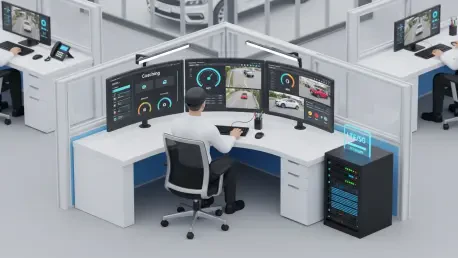

A wave of fleet spend is shifting from hardware refreshes to AI-driven outcomes, and the Powerfleet–TELUS pairing lands squarely in the slipstream by promising fewer blind-spot incidents, faster claims resolution, and tighter coaching cycles without adding operational drag. As budgets consolidate around platforms that turn video into verified risk reduction, this alliance positions Vision 360 Plus as a leverage point for measurable safety gains and recurring margin expansion.
Why This Market Move Matters Now
Fleet operators face a stubborn mix of visibility gaps, inflated litigation exposure, and fragmented point solutions that undercut adoption. Vision 360 Plus addresses those pain points by fusing wraparound, multi-camera coverage with AI detection and unified coaching, then anchoring it inside Powerfleet’s Unity platform for closed-loop improvement. The partnership with TELUS converts capability into reach, aligning premium software with telecom-grade connectivity and support to compress sales cycles.
Moreover, insurers and risk committees are rewarding evidence-grade telematics that reduces ambiguity after incidents and curbs preventable losses before they occur. That shift elevates data quality, event accuracy, and governance from nice-to-have to mandatory. The result is a market that prizes integrated platforms, calibrated models that avoid alarm fatigue, and deployments that scale from pilot to fleetwide without retraining managers on new workflows.
Market Dynamics: From Devices to Data Moats
Telematics has migrated from location tracking to AIoT, where cameras, vehicle sensors, and context are orchestrated to coach behavior and streamline claims. Competitive advantage now rests on how effectively providers transform raw video into standardized insights that legal, safety, and operations teams accept as system-of-record. In this environment, device commoditization pushes value to software layers, while distribution strategy determines who captures lifetime economics.
At the same time, recurring SaaS wins on predictability and upsell potential. Customers prefer platforms that unlock additional use cases—yard safety, urban delivery risk, exoneration workflows—without swapping hardware. Vendors that combine differentiated analytics with robust channels build durable data moats, as model performance improves with scale and feedback loops raise switching costs.
Product Differentiation: Closing Blind Spots, Closing Claims
Vision 360 Plus extends beyond a forward-facing dashcam by capturing side and rear perspectives where many low-speed collisions and disputes originate. The AI flags risky behaviors and contextual triggers, while Unity standardizes coaching, incident reconstruction, and policy tracking. This closes the safety loop: detect, intervene, document, and improve—reducing preventable collisions and accelerating claims adjudication.
The critical edge lies in calibrated detection and manager-friendly workflows. By reducing false positives and aligning alerts to policies, fleets keep driver trust intact and maintain consistent coaching cadence. Faster, cleaner evidence also improves insurer posture, supporting premium discussions and subrogation outcomes that ripple into total cost of risk.
Channel Economics: Telecom Distribution as a Force Multiplier
TELUS brings distribution depth, customer access, and reliable connectivity, enabling a single commercial motion that bundles hardware, data, and SaaS. That structure simplifies procurement, ensures upload reliability, and shortens time to value. For Powerfleet, it expands market coverage without diluting software margins, turning AI video into a repeatable, high-attach subscription engine.
The economic logic is straightforward: continuous data flow sustains AI efficacy, while verifiable outcomes sustain renewals and upsells across the Unity platform. As the installed base compounds, model accuracy and benchmarking improve, reinforcing the moat and lowering acquisition cost per retained dollar.
Adoption Realities: Enterprise Standards and Regional Nuance
Large buyers demand integration with safety policies, audit trails, and privacy controls that respect labor agreements and regional rules. TELUS’ footprint helps normalize service levels across varied coverage zones, while Powerfleet abstracts complexity into shared KPIs and workflows. Mid-market fleets, often overlooked, benefit disproportionately from 360-degree visibility because downtime and disputed incidents carry outsized financial impact.
Common misconceptions linger—that more cameras automatically equal safer operations, or that AI alone fixes culture. Performance depends on tuned detection, transparent coaching, and consistent follow-through. The best results pair technology with routine: defined KPIs, scheduled reviews, and insurer engagement from day one.
Outlook and Projections: Where Growth and Risk Converge
Growth is poised to concentrate in AI video tied to integrated platforms, on-edge processing for real-time interventions, and privacy-by-design architectures. Expect broader insurer-aligned programs that translate verified improvements into economic incentives. With resilient LTE and 5G coverage, upload reliability and video fidelity support continuous coaching and rapid claims resolution.
Competitive pressure will push vendors to prove ROI within quarters, not years. Providers without strong channels or cohesive platforms risk churn as customers consolidate around systems that unify telematics, safety, and risk management. Those with expanding datasets and coaching efficacy will set the benchmark for claims speed, exoneration rates, and training completion.
Strategic Implications: How to Position for Share and Profit
Operators should align outcome targets—preventable collision rate, claim cycle time, exoneration rate, coaching completion—before pilots, then benchmark rigorously. Calibration matters: tune detections, establish coaching cadence, and formalize governance to avoid alarm fatigue. Early insurer engagement can unlock premium conversations and claims workflow improvements that strengthen financial returns.
On the vendor side, the playbook is clear: pair differentiated AI video with telecom-scale distribution, embed into a platform that compounds insights, and structure contracts that reward verified outcomes. Expansion paths should prioritize high-risk use cases first, then broaden into analytics, benchmarking, and cross-fleet optimization.
Bottom Line: Safety, Scale, and Subscription Value
The analysis showed that Vision 360 Plus, amplified by TELUS, redefined the economics of fleet safety by uniting precise detection, credible evidence, and dependable connectivity. Fleets that operationalized closed-loop coaching, insurer engagement, and platform integration captured faster ROI and sturdier risk profiles, while vendors that married technical depth with channel strength gained share and pricing power. The next moves were practical: commit to outcome-based pilots, codify governance and calibration, and leverage telecom-backed reach to turn AI visibility into durable subscription value.