
The intricate physical demands placed upon the modern equine athlete necessitate a diagnostic precision that mirrors the complexity of their biological systems. When a high-performance horse or a cherished companion animal exhibits a subtle shift in gait or a sudden refusal to perform, the veterinarian is immediately tasked with unraveling a biological puzzle where the patient cannot speak and the symptoms are often misleading. Lameness, the most common reason for veterinary intervention, is rarely a straightforward diagnosis because the mechanical stress of a thousand-pound animal is distributed across delicate bones, ligaments, and tendons that are often hidden beneath thick musculature or dense hoof capsules. In the current landscape of 2026, the traditional “wait and see” approach has been largely discarded in favor of a sophisticated investigative framework. This evolution is driven by the realization that early, accurate detection is the only way to prevent a minor strain from escalating into a career-ending injury. By integrating advanced physics and digital processing into clinical practice, the veterinary community has transformed the way it perceives the internal environment of the horse, moving beyond external observations to witness the very cellular and structural changes that define health and disease.
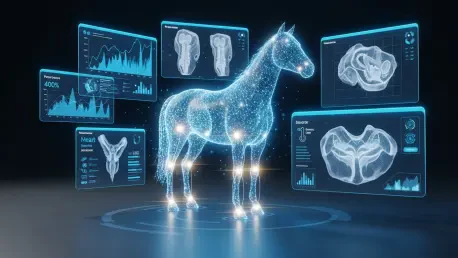
The shift toward high-tech diagnostics is not merely a matter of convenience; it represents a fundamental change in the standard of care for the equine industry. Historically, practitioners were forced to rely on visual assessments and manual palpations, which frequently led to symptomatic treatment rather than the resolution of the root cause. Today, the strategic application of five primary imaging modalities—ultrasound, radiography, computed tomography, magnetic resonance imaging, and nuclear scintigraphy—allows for a multi-dimensional understanding of an injury. This technological suite provides a “lens” for every scenario, whether it involves the metabolic activity of a developing stress fracture or the minute fiber disruptions within a suspensory ligament. By moving from a reactive to a proactive medical model, specialists can now pinpoint pathologies with such accuracy that treatment plans are tailored to the specific millimeter of damaged tissue. This precision not only improves the success rate of surgical and rehabilitative interventions but also ensures the long-term welfare of the animal by preventing the catastrophic failures that once plagued the industry.
Establishing a Systematic Diagnostic Roadmap
The journey toward a definitive diagnosis begins long before any high-tech machinery is powered on, as the veterinarian must first construct a logical roadmap based on clinical evidence. This foundational phase is characterized by a meticulous physical examination where the practitioner observes the horse in various states of motion and applies manual pressure to suspected areas of sensitivity. To narrow down the search, regional anesthesia, commonly known as nerve blocks, is employed to systematically desensitize specific parts of the limb. By observing the horse’s gait after each injection, the veterinarian can determine exactly where the pain signal originates; for example, if a horse that was previously limping suddenly moves with a fluid stride after a foot block, the diagnostic focus is immediately narrowed to the structures within the hoof. This localized data is the essential precursor to imaging, ensuring that the expensive and time-consuming process of scanning is directed at the correct anatomical region rather than being used as a generalized fishing expedition.
Choosing the appropriate imaging tool from the available arsenal requires a deep understanding of the strengths and limitations of each technology relative to the suspected pathology. Once the pain has been localized to a specific joint or soft tissue structure, the veterinarian must decide which modality will provide the most actionable information for that unique case. If the clinical exam suggests a bone-related issue, such as a suspected hairline fracture or degenerative joint disease, the path usually leads toward radiography or computed tomography. Conversely, if the heat and swelling are concentrated over a tendon, ultrasound becomes the logical next step. This tiered approach is critical for maintaining diagnostic efficiency and managing the costs associated with advanced veterinary care. Furthermore, it protects the horse from unnecessary radiation or the stresses of transport and sedation by ensuring that every diagnostic move is calculated and justified by the preceding clinical findings, thereby bridging the gap between raw data and a successful clinical outcome.
Primary Screening: The Roles of Ultrasound and Radiography
Ultrasound technology remains the cornerstone of soft tissue assessment in equine medicine, offering a non-invasive and real-time window into the internal architecture of tendons and ligaments. By utilizing high-frequency sound waves that reflect off different tissue densities, veterinarians can visualize the internal “echoes” to identify disruptions in fiber patterns that indicate tears or inflammation. This modality is particularly indispensable for managing the rehabilitation of “bowed” tendons, as it allows for the precise measurement of lesion size and the monitoring of collagen alignment as the horse returns to work. Beyond its diagnostic capabilities, ultrasound serves as an essential intra-operative and clinical guide, enabling the veterinarian to perform “needle-guided” injections. This ensures that regenerative therapies, such as platelet-rich plasma or stem cells, are delivered with mathematical precision into the heart of a lesion, significantly increasing the efficacy of the treatment compared to blind administration.
Radiography, or X-ray imaging, continues to be the primary defensive line for skeletal evaluation due to its speed and widespread availability. The transition to fully digital radiography has revolutionized field work, allowing practitioners to capture high-resolution skeletal images and review them instantly on a tablet or monitor beside the horse. This immediate feedback is crucial in emergency situations, such as acute trauma in the paddock, where a quick determination of a fracture’s stability can mean the difference between a successful repair and a catastrophic outcome. Modern digital systems allow for the manipulation of contrast and brightness, revealing subtle changes in bone density or the presence of small osteochondral fragments that might have been missed on traditional film. However, the inherent limitation of radiography is its two-dimensional nature, which can lead to the “superimposition” of structures where one bone hides another. While it remains the gold standard for screening, it often serves as a gateway to more advanced 3D imaging when the clinical picture remains incomplete.
Computed Tomography: High-Resolution 3D Visualization
Computed Tomography, or CT scanning, has redefined the boundaries of equine orthopedic imaging by providing a comprehensive three-dimensional view of complex anatomical structures. By rotating an X-ray source around the patient and using advanced algorithms to reconstruct the data, CT creates cross-sectional “slices” that eliminate the problem of overlapping bones seen in traditional radiography. This level of detail is a transformative asset for surgeons who must plan the repair of complex spiral fractures or comminuted injuries; they can now visualize the exact trajectory of every bone fragment and the required length of every screw before the first incision is ever made. Furthermore, CT is uniquely capable of detecting subchondral bone changes and “edema,” or fluid within the bone, which often precedes a full fracture. This ability to see inside the bone’s internal matrix allows for the detection of “silent” injuries that would otherwise go unnoticed until a major failure occurs during high-speed exercise.
The most significant advancement in this field is the widespread adoption of standing robotic CT units, which have addressed one of the greatest hurdles in equine medicine: the risk of general anesthesia. Horses are flight animals, and the process of inducing and emerging from anesthesia carries a risk of injury or cardiovascular complications. Standing CT technology allows the horse to remain awake and lightly sedated while the robotic arms maneuver around the limb or head to capture high-resolution data. This innovation has made advanced imaging far more accessible for routine screenings and has expanded the use of CT for the diagnosis of complex dental issues, sinus infections, and cervical spine problems. By removing the logistical and safety barriers of general anesthesia, veterinarians can now utilize 3D imaging as a frequent and repeatable part of a horse’s long-term health management, ensuring that subtle skeletal changes are caught in their earliest and most treatable stages.
Magnetic Resonance Imaging: The Definitive Diagnostic Standard
Magnetic Resonance Imaging stands alone as the gold standard for equine diagnostics because of its unparalleled ability to differentiate between various types of soft tissue and bone simultaneously. While CT excels at bone architecture, MRI uses powerful magnets to manipulate hydrogen atoms within the body, producing images that show the hydration levels and chemical composition of tissues. This makes it the only tool capable of truly deconstructing the “black box” of the equine hoof capsule—a rigid structure that prevents ultrasound waves from passing and hides many soft tissue injuries from X-rays. Within the foot, MRI can distinguish between navicular bone disease, deep digital flexor tendonitis, and collateral ligament tears with absolute clarity. For a horse suffering from “foot-soreness” that does not respond to traditional rest, an MRI often provides the definitive answer, allowing the veterinarian to stop guessing and start applying a targeted therapeutic protocol that addresses the specific damaged structure.
The application of MRI in equine medicine is bifurcated into high-field and standing units, each serving a specific clinical purpose based on the required resolution and the horse’s temperament. High-field MRI systems, typically 1.5 or 3.0 Tesla, require the horse to be in a recumbent position under general anesthesia, which provides the highest possible image quality for neurological assessments, brain imaging, and detailed investigations of the upper limbs. In contrast, standing MRI units offer a safe alternative for imaging the distal limbs of sedated horses, making it an ideal tool for sports medicine practitioners who need frequent, high-quality scans of the lower legs. Because MRI provides a complete anatomical picture, it is frequently the final destination for cases that have exhausted all other diagnostic avenues. The depth of information provided—ranging from the health of articular cartilage to the presence of subtle bone bruising—ensures that the subsequent rehabilitation plan is based on the most accurate possible understanding of the horse’s internal physiology.
Nuclear Scintigraphy: Mapping the Body’s Metabolic Response
Nuclear scintigraphy, or bone scanning, operates on a fundamentally different principle than other imaging modalities by focusing on the metabolic activity of the skeleton rather than its static structure. This process involves the intravenous injection of a radioactive isotope, Technetium-99m, which circulates through the bloodstream and is absorbed by areas of the body where bone is actively remodeling or where blood flow is increased due to inflammation. A gamma camera is then used to detect the radiation emitted by the horse, creating a map of “hot spots” that indicate physiological stress. The true power of scintigraphy lies in its sensitivity; it can detect changes in bone metabolism weeks before a structural change would be visible on an X-ray or CT scan. This makes it an essential tool for the early detection of stress fractures in the pelvis, humerus, or tibia—areas that are physically too thick for other imaging tools to penetrate effectively in a standing animal.
The clinical utility of a bone scan is most evident when a horse presents with “shifting” lameness or a generalized decline in performance that cannot be localized to a single joint. Because scintigraphy can survey the entire skeleton in a single session, it allows veterinarians to identify multiple subclinical issues that may be contributing to the horse’s overall discomfort, such as “kissing spines” in the back or sacroiliac joint inflammation. This holistic view is critical for the management of high-level performance horses that are subjected to repetitive strain across their entire bodies. However, it is important to note that a bone scan is highly sensitive but not always specific; while it identifies that a problem exists at a certain site, it may not reveal the exact nature of the lesion. Therefore, a “hot spot” found during scintigraphy is often followed up with a localized CT or MRI scan to confirm the diagnosis. Despite the requirement for a short quarantine period while the isotope decays, nuclear scintigraphy remains a life-saving tool in the prevents of catastrophic orthopedic failures.
Integrating Diagnostics Into a Holistic Philosophy of Care
The transition to an imaging-centric diagnostic model has fostered a new philosophy in equine healthcare that prioritizes the “voice” of the horse as expressed through objective biological data. In previous decades, a horse that resisted a specific lead or pinned its ears during a certain maneuver might have been labeled as temperamental or difficult. With the current availability of advanced imaging, the veterinary community has recognized that these behavioral cues are often the first signs of physical distress. By using these technologies to investigate subtle performance regressions, practitioners can identify issues like mild navicular inflammation or early-stage hock arthritis before they manifest as overt lameness. This proactive approach not only extends the competitive lifespan of the horse but also significantly enhances the animal’s quality of life by ensuring that chronic pain is addressed through medical intervention rather than being dismissed as a behavioral flaw.
Looking forward from the current state of veterinary medicine, the focus must shift toward the wider implementation of standing imaging technologies and the integration of artificial intelligence to assist in the interpretation of complex data sets. As these tools become more accessible, the goal is to incorporate “baseline” imaging into the regular wellness programs of horses, allowing for the comparison of scans over several years to detect the earliest deviations from the animal’s normal physiological state. Owners and trainers are encouraged to view advanced imaging not as a last resort for an undiagnosed problem, but as a strategic asset for long-term soundness and performance optimization. By maintaining a collaborative relationship with specialists and utilizing the full spectrum of modern diagnostics, the equine industry can move toward a future where every horse is managed with a level of precision and compassion that was once unimaginable, ensuring that their health is preserved with the same dedication they bring to their work. In this way, the “detective work” of the veterinarian evolved from a trial-and-error process into a high-resolution science that honors the physiology of the horse.