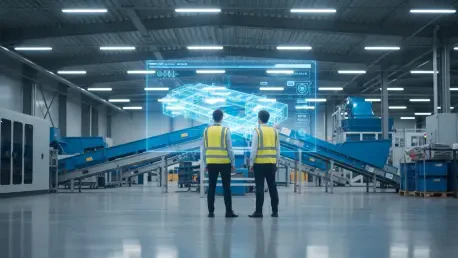

The waste management sector has long been the “unglamorous backbone” of the circular economy, operating on legacy systems that have remained virtually unchanged for decades. To explore how modern software architecture is finally disrupting this space, we are joined by Vijay Raina, a seasoned specialist in enterprise SaaS and software design. With his deep background in streamlining complex engineering workflows, Raina provides a unique perspective on how Spanish startup Humara is utilizing physics-based simulations and AI to drag waste plant design out of the era of static spreadsheets and into a future of real-time digital twins.
The following discussion explores the transition from traditional, months-long engineering cycles to rapid, data-driven design environments. We delve into the mechanics of simulating dozens of distinct waste streams, the tangible financial impact of material recovery optimization, and the role of AI copilots in empowering plant operators. Additionally, the conversation highlights the strategic importance of flexible infrastructure in navigating the 25-year lifecycle of waste facilities and the hurdles of scaling these digital solutions across diverse international markets.
Traditional waste plant engineering often relies on disconnected spreadsheets and CAD files, resulting in design cycles that last several months. How does moving to a physics-based simulation engine change the technical workflow, and what specific bottlenecks are removed when compressing this timeline down to just a few days?
The shift from static spreadsheets to a physics-based SaaS platform is a fundamental reimagining of how we handle industrial complexity. In the traditional model, an engineer might spend four months manually reconciling data between siloed CAD files and Excel sheets, a process where a single change in a waste stream’s density can trigger a week of recalculations across dozens of tabs. By implementing a centralized physics engine, we replace these disconnected files with a unified digital environment where mass balance, equipment sizing, and scenario comparisons happen simultaneously. This removes the “data integrity bottleneck,” where teams previously spent more time checking for manual entry errors than actually optimizing the facility’s layout. When a design cycle is compressed from months to days, it allows engineering firms to iterate through dozens of plant configurations that were previously too time-consuming to even consider, leading to a much more resilient final design.
Simulating over 80 distinct waste materials through real separation equipment is a complex engineering task. How do these simulations translate into a 4% reduction in landfill reject rates, and what are the specific operational steps required to realize an €800,000 annual profit uplift for a facility?
The power of simulating 82 distinct waste materials lies in the granular understanding of how different combinations of plastics, metals, and organics behave when they hit a specific piece of separation equipment. When you can model these interactions accurately before a single piece of steel is laid, you can fine-tune the plant’s “digestive system” to ensure that valuable recyclables aren’t accidentally discarded. This precision is exactly what drives the 4% reduction in landfill reject rates; you are essentially closing the gaps where profitable material used to slip through. To hit that €800,000 annual profit uplift, operators follow a workflow of constant scenario testing—adjusting the speeds of conveyors or the sensitivity of optical sorters based on the simulation’s predictive data. It transforms waste management from a reactive “process what arrives” mindset into a high-margin manufacturing operation where every percentage point of recovered material is accounted for in the bottom line.
Transitioning from static models to live digital twins involves integrating real-time SCADA signals and optical sorter data. How does an AI copilot help plant teams make decisions in seconds rather than hours, and what challenges arise when deploying these predictive insights on the plant floor?
Moving to a live digital twin environment means the plant is no longer a “black box” where operators only learn about problems after a shift ends. An AI copilot like Duplantis acts as a bridge between the complex SCADA signals and the human operators, translating millions of data points into actionable insights that can be executed in seconds. For instance, if an optical sorter detects a sudden change in the purity of a plastic stream, the AI can immediately suggest an adjustment to the belt speed to maintain recovery targets, rather than waiting hours for a manual lab test to confirm the drop in quality. The primary challenge in this deployment is often the “trust gap” on the plant floor, where veteran operators may be skeptical of an algorithm’s advice. Overcoming this requires the software to provide not just a recommendation, but the “why” behind it, showing the expected KPI impact to help the team feel confident in making high-stakes adjustments on the fly.
Waste infrastructure is built to operate for 25 years, yet waste streams are constantly changing. How does a flexible design approach help operators bid on complex RFPs with more confidence, and what are the primary hurdles when scaling these digital solutions across European and Latin American markets?
A 25-year lifespan is an eternity in the world of consumer packaging and environmental regulation, which is why designing for flexibility is the only way to ensure long-term viability. When operators use a physics-based design tool, they can demonstrate to municipal authorities that their plant can handle a 20% increase in cardboard or a total phase-out of certain plastics five years down the line, which provides a massive competitive edge during the RFP process. We have seen over 250 plants across Europe and Latin America use this approach to secure contracts with far more aggressive recovery targets. The hurdle in scaling across these diverse markets often comes down to the variance in waste composition—what works for a plant in the EU might not apply to the organic-heavy waste streams in parts of Latin America. However, because the SaaS platform is built on physics rather than just historical data, it can be quickly adapted to these local variables, allowing for a much faster international rollout than traditional consulting models.
Most waste plants are still engineered using legacy tools that have remained unchanged for decades. What is the process for training existing staff to move away from Excel-based planning, and how does this shift impact the overall operating expenses and material recovery rates of the facility?
The transition away from legacy tools is less about learning new buttons and more about adopting a new philosophy of “integrated engineering.” We find that when staff see they can achieve 70% cost savings on the design phase alone, the resistance to leaving Excel behind vanishes quite quickly. The training focuses on showing engineers how to use the “Operate” layer to connect their theoretical designs to the actual daily management of the facility, creating a feedback loop that never existed before. This shift has a massive impact on the facility’s health, typically resulting in a 5% to 7% lower operating expense per plant because maintenance becomes predictive rather than reactive. Ultimately, when the people on the floor are empowered by these tools, you see a consistent 4% higher material recovery rate because the plant is always running at its theoretical peak performance rather than being throttled by outdated, manual planning.
What is your forecast for the future of waste management infrastructure?
I believe the next decade will see the total disappearance of “static” waste plants in favor of autonomous, self-optimizing facilities that treat waste streams as dynamic feedstocks. We are moving toward a reality where every piece of infrastructure is a living digital twin, capable of reconfiguring its internal logic in real-time to meet the shifting demands of the global circular economy. This means that the distinction between a software company and a waste operator will continue to blur, as the winners in this space will be those who can harness data to turn 100% of what we currently call “trash” into standardized, high-value raw materials for industry.