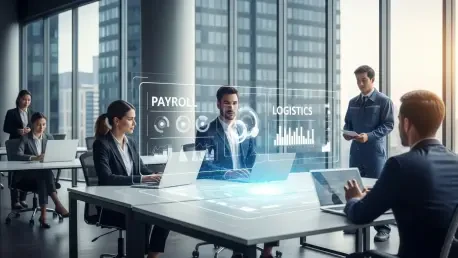

The traditional silos separating human resources, financial services, and operational logistics are rapidly dissolving into a singular, interconnected digital landscape designed to maximize human potential. Modern enterprises no longer view workforce management as a series of isolated administrative tasks but rather as a holistic ecosystem where financial wellness, productivity, and technology converge. This strategic shift addresses systemic economic challenges by moving beyond fragmented software toward platforms that support the entire lifecycle of an employee. The following analysis explores the current market trajectory, the transformation of Seamless Technologies, and the role of artificial intelligence in bridging the gap between desk-bound and frontline staff.
The Global Shift Toward Unified Workforce Platforms
Market Trajectory: The Rise of Embedded Services
Current data suggests that the HR technology market is experiencing a massive pivot as organizations prioritize “embedded finance” within their payroll systems. By merging financial services with daily work management, businesses can offer immediate liquidity and wellness tools that were previously out of reach for many workers. This integration is proven to increase employee retention and overall job satisfaction significantly across various industries.
Moving away from fragmented tools allows companies to maintain a unified data source, reducing administrative friction and costly errors. The growing adoption of these integrated platforms suggests that businesses are looking for comprehensive solutions that address the economic participation of their entire staff. As more organizations transition to these systems, the boundary between financial services and HR continues to vanish, creating a more cohesive corporate environment.
Real-World Application: The Evolution of Seamless Technologies
A notable case of this evolution is Seamless Technologies, which transitioned from a specialized HR provider into a multifaceted technology ecosystem. By structuring its operations into three core verticals—workforce management, fintech, and procurement—the entity provides a robust infrastructure for business scaling. This allows the flagship SeamlessHR platform to work alongside Breeze for financial services and SeamlessProcure for enterprise purchasing.
The introduction of the Blue Collar Operations Platform, or BWOP, specifically targets the digitizing of shift-based, frontline workforces. This tool ensures that attendance, payroll, and performance records are consistent across all levels of the organization, regardless of the worker’s location. Supporting this suite is Samira, a proprietary AI layer that automates repetitive tasks and provides intelligent insights, allowing users to interact more efficiently with the entire digital ecosystem.
Leadership Perspectives on Ecosystem Maturity
CEO Emmanuel Okeleji and CTO Deji Lana argue that connecting work management with financial tools creates a vital infrastructure for sustainable growth. They suggest that in emerging markets, technology must actively drive economic participation and productivity to be truly effective. By providing employees with access to credit and lifestyle services through their employer, these platforms foster a more resilient and economically stable workforce.
Chairman Irfan Keshavjee emphasizes that this rebranding signifies a high level of corporate maturity and a readiness to capture a larger addressable market. A unified identity facilitates international expansion while allowing specific product brands to maintain market clarity and operational focus. This strategic positioning ensures that the company can scale across different regions while delivering specialized value to each segment of the market it serves.
The Future of Workforce Prosperity and Technological Integration
The continued fusion of artificial intelligence and financial services will likely redefine the relationship between employers and employees by fostering greater transparency. As unified digital identities become more widespread, workers will benefit from the portability of their professional and financial history, easing the path toward career advancement. Organizations that adopt a “frontline-first” technological standard will be better equipped to manage the complexities of global enterprise operations.
However, the management of such multi-vertical digital infrastructures requires a constant focus on system security and user experience. The future of these ecosystems depends on their ability to remain intuitive while handling increasingly complex data sets across different industries. As financial inclusion becomes a standard byproduct of employment, the long-term impact on regional prosperity will be profound, provided that technology remains accessible and adaptable.
Final Assessment: Redefining the Infrastructure of Work
The transformation of workforce management into a comprehensive economic ecosystem demonstrated that siloed software was no longer capable of meeting the demands of a modern economy. Leaders recognized that by integrating financial services and operational technology, they could address systemic hurdles and improve the lives of millions of workers. This holistic approach successfully bridged the gap between different workforce segments, ensuring that productivity gains were shared across the entire organization.
The rebranding and strategic pivot of key players provided a roadmap for how technology companies could evolve to serve a global market more effectively. It was clear that the future of work depended on the ability to build infrastructure that fostered both corporate efficiency and individual prosperity. Moving forward, the focus will likely shift toward perfecting the AI-driven interactions that make these complex ecosystems accessible to every user, regardless of their technical proficiency.