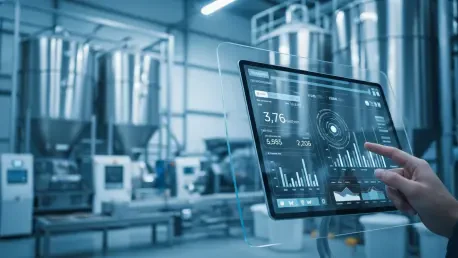

The global pet food industry has transitioned from a stable commodity market into a high-technology sector where precision engineering and real-time data management determine the thin line between operational excellence and costly systemic failure. Manufacturers are increasingly abandoning the heavy, inflexible anchors of legacy on-premises hardware in favor of agile, cloud-based infrastructures. This shift is not merely a technical preference but a strategic response to a market that demands instant adaptability. As the pet food sector grows in complexity within the broader food and beverage landscape, the reliance on real-time data has become the primary differentiator for companies seeking to maintain a competitive edge in a saturated market.
This evolution is fundamentally altering the financial structures of manufacturing firms, facilitating a move from heavy Capital Expenditure to a more fluid Operational Expenditure model. By offloading the burden of physical server maintenance and constant hardware cycles to specialized cloud providers, companies can preserve liquidity and redirect resources toward core product innovation. This financial flexibility allows mid-sized players to compete with industry giants by accessing the same high-tier technological tools without the massive upfront costs once required. The current market environment prioritizes high-speed, resilient production, where the ability to scale up or pivot recipes in response to supply chain fluctuations is vital for long-term survival.
Significant market players are driving this push toward digital maturity, recognizing that a disconnected plant floor is a liability. Modern production environments require a seamless flow of information from the loading dock to the executive suite to ensure that every decision is backed by current evidence. The digital transformation of the landscape has moved past the experimental phase, becoming the standard baseline for any facility that intends to operate beyond local or artisanal scales. In this environment, the cloud is no longer just a storage utility but the central nervous system of the entire manufacturing operation.
Navigating Current Market Dynamics and Technological Advancements
Emerging Trends in Cloud Adoption and Modular Ecosystems
The era of the monolithic, all-in-one Enterprise Resource Planning system is gradually giving way to a more sophisticated landscape of modular niche solutions. Manufacturers now prefer to build tailored ecosystems where specialized software for formulation, quality control, and logistics can communicate through robust integration layers. This modular approach prevents the vendor lock-in that often plagued earlier digital initiatives and allows facilities to implement improvements in phases rather than risking a total system overhaul. These specialized tools are designed to handle the unique nuances of pet nutrition, which often require more frequent adjustments than human food categories.
Mobile functionality and remote monitoring have moved from the periphery to the center of plant floor productivity strategies. Operators and floor managers are no longer tethered to fixed workstations or paper clipboards, as handheld devices provide instant access to production metrics and quality checks. This mobility reduces the lag time between identifying a deviation and implementing a corrective action, which is essential for maintaining high throughput. Furthermore, the evolution of formulation software has turned recipe management into a dynamic, controlled asset, allowing for precision adjustments that account for fluctuating ingredient costs and nutritional profiles in real time.
Integration through Electronic Data Interchange and advanced Application Programming Interfaces has redefined how manufacturers interact with their retail partners. Modern SaaS platforms enable a seamless flow of purchase orders, shipping notices, and inventory levels, reducing the administrative burden on both ends of the supply chain. This connectivity ensures that production schedules are tightly aligned with actual market demand, minimizing the risks of overproduction or stockouts. By bridging the communication gap between the factory and the retailer, these technologies foster a more collaborative and responsive manufacturing environment.
Market Projections and the Future of AI-Native Architecture
Growth forecasts for SaaS adoption within specialized manufacturing sectors suggest a period of rapid expansion through the end of the decade. As more firms realize the limitations of aging internal systems, the migration toward cloud-native architectures is expected to accelerate across all segments of the pet food industry. This growth is being fueled by a demand for greater transparency and the need to manage increasingly complex global supply chains. Financial analysts view this transition as a key indicator of operational health, as digital-first companies consistently demonstrate higher efficiency and lower waste compared to their analog counterparts.
Artificial Intelligence is playing an increasingly influential role in identifying operational inefficiencies that were previously invisible to human supervisors. AI-native architectures are being integrated directly into the core of manufacturing software, providing predictive insights that go beyond simple data visualization. Rather than merely recording what happened yesterday, these systems analyze sensor data and historical performance to suggest optimizations for energy usage, machine maintenance, and labor allocation. This shift toward predictive modeling allows managers to anticipate bottlenecks before they occur, transforming the production process from a reactive cycle into a proactive strategy.
Long-term performance indicators are shifting their focus toward the speed of deployment and the scalability of technological investments. In a market where consumer trends can change in a matter of weeks, the ability to launch new product lines or open new facilities with minimal IT friction is invaluable. Success is increasingly measured by a reduction in downtime and the ease with which a company can integrate new acquisitions or technologies into its existing framework. As the architecture of manufacturing software continues to evolve, those who embrace these innovations will likely see a significant reduction in the total cost of ownership over the lifecycle of their digital assets.
Overcoming Operational Complexities and Implementation Barriers
Internal resistance remains a significant hurdle for many organizations attempting to modernize their legacy workflows. This friction often stems from a workforce that is comfortable with established, albeit inefficient, manual processes. Effective change management requires a strategic approach that emphasizes user-centric design and clearly demonstrates how new digital tools will simplify the daily tasks of floor operators. When employees see that software reduces the burden of repetitive data entry or simplifies complex compliance reporting, the rate of adoption increases significantly, turning potential skeptics into advocates for the new system.
Strategies for mitigating integration drift are essential for maintaining the integrity of a connected manufacturing environment over time. As different software components receive updates, maintaining the seamless flow of data between them requires continuous technical support and a commitment to standardized data protocols. Manufacturers must prioritize partnerships with vendors who offer reliable long-term support and who are committed to maintaining the compatibility of their tools. Without this focus, the initial benefits of a digital transformation can quickly erode as disconnected data silos begin to reappear within the organization.
The challenge of data migration and workflow customization is particularly acute in highly regulated environments where historical records must be preserved with absolute accuracy. Moving from a paper-based or legacy digital system to a modern SaaS platform requires a meticulous mapping of every data point to ensure that no critical information is lost in transition. This process involves a deep dive into existing workflows to determine which processes should be digitized as they are and which should be re-engineered for greater efficiency. Successfully bridging the gap between high-level office planning and real-time floor execution is often achieved through the deployment of Manufacturing Execution Systems that act as the primary interface for production staff.
Regulatory Compliance and the Criticality of Food Safety
Quality Management Systems have become indispensable for maintaining the rigorous nutritional profiles demanded by both regulators and consumers. These digital platforms provide a structured environment for recording every test result and inspection, ensuring that every batch of pet food meets the specified standards before it leaves the facility. By automating the collection of quality data, manufacturers can eliminate the risks associated with human error and manual transcriptions. This level of oversight is crucial for building brand trust, as even a minor deviation in nutritional content can lead to significant regulatory scrutiny or consumer backlash.
The implementation of native track-and-trace functionality has revolutionized recall readiness, allowing firms to achieve a state of preparation that was once impossible. Modern software can trace the journey of a single ingredient from its point of origin through the entire production process and out to specific retail locations in a matter of seconds. This speed is a dramatic improvement over the hours or days required by traditional filing systems, potentially saving lives and protecting the company from catastrophic financial losses during a safety event. Achieving this level of transparency is no longer optional, as retailers and government agencies increasingly demand proof of robust traceability systems.
Meeting international standards for electronic record-keeping requires a commitment to maintaining immutable audit trails and secure data storage. Digital systems designed for the food industry include built-in features that prevent the unauthorized alteration of records, ensuring that the history of every batch is accurate and verifiable. This level of documentation is essential for passing both scheduled and unannounced audits from regulatory bodies. Furthermore, automated labeling and formula synchronization ensure that the information printed on every bag of pet food is a true reflection of its contents, protecting the manufacturer from legal challenges related to mislabeling or inaccurate health claims.
Innovation Frontiers and the Next Generation of Manufacturing
The potential of Artificial Intelligence to revolutionize ingredient sourcing is one of the most exciting developments on the technological horizon. As the industry looks toward alternative proteins and sustainable sourcing, AI can help formulators identify the most cost-effective and nutritionally sound combinations of raw materials. This capability allows for a more rapid response to ingredient shortages or price spikes, ensuring that production remains profitable even in volatile market conditions. The ability to simulate how different ingredients will behave in a finished product before they are ever introduced to the mixer is a powerful tool for reducing waste and speeding up the innovation cycle.
Future growth areas, such as personalized pet nutrition and hyper-local production scaling, will depend heavily on the flexibility provided by cloud-based systems. As consumers increasingly seek out diets tailored to the specific needs of their individual pets, manufacturers must find ways to handle smaller, more varied production runs without sacrificing efficiency. SaaS platforms are uniquely suited to manage the complex logistics of this high-mix, low-volume production model. This shift toward personalization represents a significant departure from the mass-production mindset of the past and will require a sophisticated digital foundation to be successful.
The convergence of Lab Information Management Systems with real-time production analytics is creating a more holistic view of the manufacturing process. By integrating laboratory results directly into the production dashboard, managers can see how minute variations in raw materials affect the final product quality. This level of insight enables continuous process improvement and allows for more precise control over the variables that influence palatability and shelf life. Anticipating global economic shifts and their impact on supply chain logistics will also become easier as companies leverage the massive data sets generated by their integrated digital ecosystems.
Strategic Recommendations for a Resilient Manufacturing Future
The transition toward cloud-based operations provided a clear competitive advantage for organizations that prioritized a single source of truth across their entire enterprise. Companies that successfully integrated their disparate data streams realized a significant improvement in operational consistency, as every department worked from the same real-time information. This alignment reduced the friction between procurement, production, and sales, allowing the businesses to respond more fluidly to market pressures. The move toward a digital-first strategy proved to be a fundamental requirement for maintaining agility in an environment where supply chain disruptions became a frequent reality.
Selecting the right vendor partners was a critical factor in determining the long-term success of these digital initiatives. Manufacturers that focused on scalability and industry-specific expertise, rather than just the lowest price, built systems that could grow alongside their operations. These partnerships allowed for the continuous introduction of new features and security enhancements, ensuring that the technological infrastructure did not become obsolete. The companies that viewed their software providers as strategic allies rather than mere utility vendors were better positioned to navigate the complexities of a rapidly evolving industry.
Ultimately, the digital transformation of the pet food manufacturing sector was driven by the necessity of meeting ever-increasing consumer expectations for safety and transparency. SaaS solutions provided the tools required to manage these demands without sacrificing the efficiency needed for profitability. As the industry continues to advance, the reliance on cloud-based ecosystems will likely become even more pronounced, with manual processes being relegated to the past. The organizations that embraced this change early established themselves as the leaders of a new era in pet food production, characterized by precision, resilience, and a commitment to data-driven excellence.