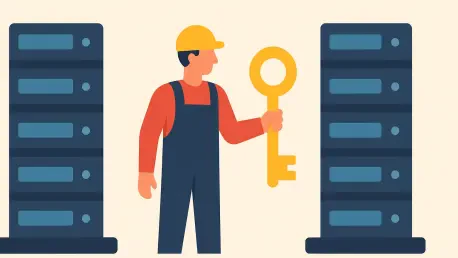

The sheer volume of artificial intelligence interfaces currently flooding the corporate landscape has reached a point where the average employee spends more time selecting a tool than actually completing a task. Organizations originally embraced generative models with the expectation of a radical surge in output, yet the reality in 2026 presents a much more complex and often frustrating picture of digital saturation. This guide serves as a strategic roadmap to help leadership and teams navigate the current technological surplus, moving away from the frantic accumulation of tools toward a streamlined, high-impact operational framework. By understanding the psychological and technical mechanics that govern digital work today, an enterprise can transform its current state of stagnation into a coordinated engine of value creation.
Navigating the Paradox of Plenty in the Modern Workplace
The current dilemma facing the modern enterprise is often described as the paradox of plenty, where an abundance of choices leads to a total inability to make a meaningful decision. For many years, the prevailing wisdom suggested that more technological options would naturally lead to higher levels of customization and efficiency. However, as the market for large language models and autonomous agents has matured, this wide variety has become a source of systemic friction rather than a facilitator of progress. When every department is allowed to pilot its own set of bespoke AI solutions, the resulting landscape becomes a patchwork of incompatible systems that drain more energy than they provide.
This state of affairs leads to a phenomenon where workers feel as though they are standing in a digital supermarket with infinite aisles, unable to choose the right ingredient for the task at hand. The primary goal of this guide is to demonstrate how to replace this “more is better” philosophy with a rigorous discipline focused on utility and integration. Success in this environment does not come from having access to the newest or most powerful model every week, but from the ability to settle on a stable infrastructure that allows for deep, uninterrupted work. Moving toward this level of maturity requires a fundamental shift in how organizations perceive the relationship between a human worker and their digital assistants.
The Philosophical and Technical Roots of Digital Stagnation
To effectively combat the current slowdown, one must first recognize that the problem is as much philosophical as it is technical. The modern workplace is currently suffering from a crisis of indecision that has been predicted for centuries, now amplified by the near-instantaneous speed of digital iteration. This stagnation is not merely the result of poor software design but is a byproduct of how humans interact with competing systems of logic and automation.
The Buridan’s Ass Metaphor in 2026
The historical allegory of Buridan’s Ass provides a chillingly accurate description of the modern white-collar professional. In this 14th-century thought experiment, a donkey is positioned exactly between two identical stacks of hay, and because it is unable to find a logical reason to prefer one over the other, it eventually starves to death. In the current year, workers find themselves in a similar position, paralyzed by the choice between multiple, equally capable AI platforms that all promise the same results. When a developer or an analyst has three different “copilots” available, the time spent debating which one will provide a slightly more elegant answer often consumes the time that should have been spent on the actual problem.
This philosophical paralysis has tangible costs, as it creates a environment where the path of least resistance is often to do nothing or to revert to manual methods out of sheer exhaustion. The “starvation” in the modern context is the lack of meaningful output and the erosion of creative momentum. Organizations must recognize that providing too many equivalent options is a form of cognitive cruelty that actively prevents employees from achieving a flow state. By narrowing the field of choice, leadership can provide the clarity necessary for the workforce to move toward their objectives without the weight of unnecessary deliberation.
The Burden of SaaS Sprawl and Fragmentation
The technical foundation of this crisis is the uncontrolled expansion of software as a service, which has reached a breaking point in the current enterprise ecosystem. Statistics indicate that the average large organization now manages over 600 distinct applications, with the vast majority of these tools operating in silos. This fragmentation means that data is scattered across hundreds of platforms, and the AI tools designed to process that data are often disconnected from the actual source of truth. The result is a massive waste of capital, as billions of dollars are poured into idle licenses that never see significant use because the barrier to entry is too high for the average user.
Furthermore, this sprawl creates a security and management nightmare that further slows down the pace of innovation. IT departments are so overwhelmed by the sheer number of platforms they must vet and maintain that they are unable to provide the deep integration necessary for AI to be truly effective. The lack of centralized control over the tool stack means that different teams are often paying for redundant services, leading to a financial drain that limits the budget available for high-value strategic initiatives. Addressing this sprawl is the first technical step toward reclaiming the productivity that was promised at the beginning of the AI revolution.
Understanding the “Toggle Tax” and Cognitive Drain
Every time an employee switches from one application to another, they pay a hidden “toggle tax” that siphons off their mental acuity. In the current work environment, the average professional toggles between different interfaces hundreds of times per day, a process that shatters focus and induces a state of chronic cognitive fatigue. AI tools, which were supposed to reduce this friction, have often added to it by introducing yet another layer of interfaces that must be managed alongside traditional software. The mental energy required to reorient oneself after each switch adds up to hours of lost productivity every single week.
This cognitive drain is particularly insidious because it is often invisible to both the worker and the supervisor. An employee may feel busy and engaged while jumping between a chat interface, a document editor, and an AI research tool, but the objective quality of their work often suffers as their “attention residue” builds up. To mitigate this effect, organizations must prioritize tools that offer deep integration within the existing workflow rather than those that require the user to step away into a separate environment. Reducing the number of clicks and context shifts is one of the most effective ways to increase the overall throughput of a department.
Solving the Crisis of Choice Through Strategic Constraints
The most effective way to restore productivity is not to find a better tool, but to implement a system of strategic constraints that limits the number of decisions an employee has to make. This approach requires a transition from a “maximizing” mindset, where one seeks the absolute best possible tool for every micro-task, to a “satisficing” mindset, where one selects a reliable tool that is consistently good enough for the majority of work.
1. Identifying the Psychological Trap of Maximization
The drive to find the perfect solution is often the greatest enemy of actual progress in the digital age. This psychological trap, known as maximization, forces individuals to spend an inordinate amount of time researching and comparing options, even when the marginal benefits of the best choice are negligible. In a world where AI models are updated almost weekly, a maximizer will never feel satisfied with their current toolset, leading to a permanent state of restless searching that prevents the mastery of any single system.
The Sisyphus Effect of Prompt Engineering
The pursuit of the “perfect prompt” has created a modern version of the Sisyphus myth, where workers spend hours refining instructions to a model in search of a slightly better output. While some level of prompt optimization is necessary, the obsession with marginal improvements often leads to a cycle of diminishing returns. This effect is particularly damaging when workers test the same prompt across four or five different models, analyzing the nuances of each response. This behavior creates a massive bottleneck in the workflow, as the time spent in the “testing” phase begins to outweigh the time saved by the AI in the “generation” phase.
Adopting a “Good Enough” Satisficing Mindset
To break the cycle of maximization, organizations must foster a culture that values “satisficing”—the ability to recognize when a result meets the necessary standards and then move on to the next task. This involves setting clear thresholds for what constitutes an acceptable AI-generated output and discouraging the endless iteration that often plagues creative and technical teams. When a team realizes that a “good enough” draft can be refined faster by a human than by ten more attempts at a prompt, the overall speed of the project increases dramatically. This mindset shift is essential for maintaining momentum in a fast-paced corporate environment where speed is often more valuable than theoretical perfection.
2. Bridging the 39-Point Perception Gap
One of the most dangerous illusions in the modern workplace is the gap between how fast workers feel they are moving and how much they are actually producing. Recent studies have highlighted a significant perception gap, where individuals believe that AI tools have made them vastly more efficient, while objective data shows that the total time to complete complex tasks has actually increased. Closing this gap is critical for any leader who wants to ensure that their investment in technology is actually yielding a return.
Counteracting the Dopamine Loop of AI Generation
The ability to generate a thousand words of text or a hundred lines of code in seconds creates a powerful dopamine loop that mimics the feeling of high productivity. Workers often mistake the speed of generation for the speed of completion, leading to a false sense of accomplishment. However, the initial burst of activity is often followed by a grueling period of verification and correction that negates the early gains. This “illusion of speed” can be addictive, causing employees to prioritize tasks that produce immediate AI feedback over deeper, more difficult work that requires sustained human thought.
Balancing Generation with Verification
As AI accelerates the production of content, it creates a “catastrophic traffic jam” at the verification stage, where human experts must audit the AI’s output for errors or hallucinations. If an organization doubles its output of code or documentation through AI but does not increase its capacity to review that work, the entire system grinds to a halt. The solution is to rebalance the workflow, ensuring that the senior staff responsible for auditing are not overwhelmed by the volume of “noise” generated by junior staff using AI. This requires a more intentional approach to what should be generated by a machine and what should be drafted by a human from the start.
3. Optimizing the Enterprise Tool Stack
A clean, standardized tool stack is the most effective defense against the chaos of choice paralysis. Rather than allowing for a free-for-all where every employee chooses their own favorite LLM, the enterprise must curate a small, powerful set of integrated tools that are sanctioned for use. This not only improves security and data privacy but also ensures that everyone is speaking the same technological language, facilitating better collaboration and training across the organization.
Distinguishing Between Code AI and Review AI
In the world of technical development, it is vital to distinguish between tools that simply generate more code and those that help analyze and review it. While generative tools are more common, they often increase the complexity and technical debt of a project by encouraging the creation of more code than is strictly necessary. In contrast, “Review AI” tools that focus on identifying bugs, vulnerabilities, and inefficiencies can reduce the total cycle time of a project by over half. By shifting the focus from generation to analysis, an enterprise can improve the quality of its software while simultaneously reducing the burden on its human developers.
Implementing “Project EAT” Style Standardization
Taking inspiration from large-scale corporate efforts like Google’s standardization initiatives, companies should move toward a unified infrastructure where the “which tool” question is answered at the institutional level. By enforcing a common set of AI APIs and interfaces, an organization eliminates the cognitive load of selecting a model for every new project. This allows employees to focus their entire mental capacity on the “how” of value creation rather than the “what” of tool selection. Standardization also makes it much easier to move employees between different teams and departments, as the underlying technology remains consistent throughout the entire enterprise.
4. Mitigating Cognitive Erosion and Digital Debt
The long-term health of an organization’s workforce depends on its ability to protect the cognitive resources of its employees. Constant exposure to fragmented AI tools can lead to cognitive erosion, where workers lose the ability to perform deep, focused work because they have become accustomed to the constant stimulation of digital assistants. Protecting against this erosion requires a proactive approach to workload management and tool design.
Managing Extraneous Load and Attention Residue
Cognitive load theory suggests that our brains have a limited capacity for processing information, and any energy spent on managing the tools themselves is energy taken away from solving the problem. Extraneous load—the mental effort caused by poor interfaces and disjointed workflows—must be minimized at all costs. This involves creating strict boundaries for when and how AI is accessed, preventing it from becoming a constant source of interruption. By fostering an environment where employees can retreat from the noise of the digital world, organizations can protect the “attention residue” that is necessary for high-level strategic thinking and innovation.
Eliminating the “Botsitter” Economy
A significant portion of the modern workweek is now spent “botsitting”—the act of supervising, correcting, and re-prompting AI systems that were supposed to be autonomous. This labor is often unacknowledged but represents a massive drain on human resources, as highly skilled professionals spend their time fixing the mistakes of robotic assistants. To eliminate this hidden economy, organizations must move toward more integrated, agentic systems that can handle entire workflows with minimal human oversight. The goal is to move the human from the role of a micromanager to that of a strategic orchestrator, where they provide the final approval rather than constant guidance.
A Summary of the Buridan’s AI Crisis
The crisis of Buridan’s AI is a multi-faceted problem that touches on psychology, technology, and organizational culture. At its core, it is a reminder that more options do not always lead to better outcomes. When a workforce is overwhelmed by an infinite supply of tools, the result is not peak efficiency but a state of cognitive starvation where the basic functions of the business begin to suffer. Decision fatigue becomes a daily reality, and the pursuit of the “next big thing” in AI often comes at the expense of the work that is already on the desk.
The productivity illusion further complicates this issue, as subjective feelings of speed often hide objective declines in actual organizational output. This disconnect creates a dangerous environment where management believes they are making progress while the underlying systems are becoming more congested and harder to manage. The human bottleneck remains the ultimate limiting factor, as the acceleration of content creation places an unsustainable burden on the senior staff who must verify every word and line of code. Finally, the rise of “Shadow AI”—the unauthorized use of tools by frustrated employees—creates a significant security risk that can undermine the entire digital strategy of a company.
Global Trends and the Future of Autonomous Workflows
The struggle against choice paralysis is a global phenomenon, yet different regions are developing unique strategies to cope with the influx of technology. In the United States, the market is defined by a hyper-abundance of options, which often leads to a cycle of pilot abandonment as companies chase the latest trend. In contrast, the European approach is increasingly defined by regulation, which, while sometimes viewed as a hindrance, inadvertently cures choice paralysis by limiting the number of sanctioned tools that companies can legally use. This forced constraint allows European firms to focus on deep integration rather than broad exploration.
Looking ahead, the next major shift in productivity will likely come from the rise of “Agentic AI”—systems that can operate independently in the background to complete complex, multi-step tasks. Unlike the current generation of conversational copilots that require constant human input, agentic systems can act as true digital employees, managing their own workflows and only involving humans at critical decision points. This transition will require a fundamental redesign of the corporate architecture, moving away from a collection of individual tools toward a unified, autonomous ecosystem. The organizations that successfully navigate this transition will be those that prioritize architectural coherence over tool variety.
Reclaiming Productivity Through Intentional Design
The initial excitement of the generative AI boom has given way to a more sober realization that technological potential does not automatically translate into measurable results. To escape the trap of Buridan’s AI, leadership must have the courage to enforce strict constraints on their tool stacks and prioritize the cognitive health of their employees over the pursuit of marginal speed gains. This involves a commitment to standardization, a shift toward analytical “Review AI,” and an investment in the next generation of autonomous agentic systems. By moving from a reactive state of “more AI” to a proactive state of “smarter integration,” the modern enterprise can finally begin to see the true benefits of the digital revolution.
In the past years, the organizations that thrived were those that realized that discipline is the ultimate competitive advantage in a world of infinite digital noise. They recognized that the human mind was not designed to juggle a hundred different assistants, and they responded by building a more human-centric technological environment. They moved away from the dopamine loops of instant generation and toward the steady, reliable output of integrated systems. As a result, they not only increased their productivity but also restored a sense of purpose and focus to their workforce. The path forward was paved by those who understood that the most powerful tool in any office is not a machine, but a human who has been given the space and the clarity to do their best work. This strategic shift allowed teams to regain the hours lost to the toggle tax and redirect that energy into genuine innovation. The transition from conversational copilots to autonomous agents was a key factor in this evolution, as it reduced the need for manual botsitting and freed up senior staff for high-level strategy. By auditing their tool sprawl and enforcing a unified infrastructure, these leaders turned the chaos of 2026 into a structured era of growth and stability. Ultimately, the lessons learned during this period of saturation provided a blueprint for the future of work, emphasizing that the value of technology is always secondary to the quality of the human intent behind it. Successful firms proved that by limiting the number of stacks in front of the donkey, they could ensure the animal not only survived but flourished. This focused approach became the new standard for excellence, proving that in the age of AI, less is often significantly more.