
OpenAI is leveraging Pierre’s Highlights tool to ensure that syntax visualization remains accurate and latency-free as code is streamed by high-speed AI agents in real-time. This strategic move, finalized on November 4, 2026, represents a fundamental shift in how the industry views generative artificial intelligence within the software development lifecycle. For several years, the focus remained on the model’s ability to predict the next token in a code block, but as projects grew in complexity and scale, the logistics of managing those tokens became the primary hurdle. The acquisition of Pierre Computer Company allows OpenAI to move beyond the role of a sophisticated text generator, transforming into a comprehensive infrastructure provider that manages the entire lifecycle of a software project. This transition reflects a calculated effort to unify disparate development stages, from initial repository initialization and directory structuring to the final stages of rigorous code review and deployment. By verticalizing its stack, the organization aims to eliminate the friction that has historically plagued the hand-off between human intent and machine execution, signaling a new era of integrated, agentic software engineering.
Understanding Pierre Computer Company’s Technical Portfolio
Specialized Tools: Enhancing Navigation and Visualization
The “Trees” library serves as the cornerstone of Pierre’s navigation philosophy, offering an interface solution that is uniquely capable of indexing and presenting the massive, often chaotic directory structures of modern enterprise software. In the current landscape of 2026, a single project may span hundreds of microservices and thousands of individual files, making manual navigation a significant cognitive drain for developers. Trees utilizes a structured, hierarchical approach that does more than just list folders; it provides a semantic understanding of project architecture, allowing for intelligent exploration and rapid reorganization of components. This capability is essential for AI agents that need to quickly locate dependencies or understand the relationship between a high-level API and its underlying data models. By integrating this technology, developers can maintain a bird’s-eye view of their logic while deep-diving into specific implementations without losing context, effectively solving the “lost in the codebase” problem that frequently stymies large-scale engineering efforts.
Parallel to navigation is the challenge of visualizing modifications, a task handled by Pierre’s “Diffs” technology. Unlike standard comparison tools that merely highlight text additions and deletions, Diffs is built for an interactive, multi-agent environment where code is constantly in flux. It provides a specialized “edit mode” within the comparison view itself, allowing reviewers to make surgical corrections to AI-generated suggestions without jumping back and forth between different windows or files. This reduces the mechanical friction of the code review cycle, which is often the most time-consuming part of the development process. As software creation accelerates, the ability to see exactly what has changed—and why—becomes the primary safeguard against the introduction of technical debt or security vulnerabilities. Pierre’s implementation ensures that these comparisons are not just static records of change but are active, collaborative spaces where humans can refine and direct the output of machine intelligence with high precision and minimal effort.
High-Performance Infrastructure: Git-Based Management and Visualization
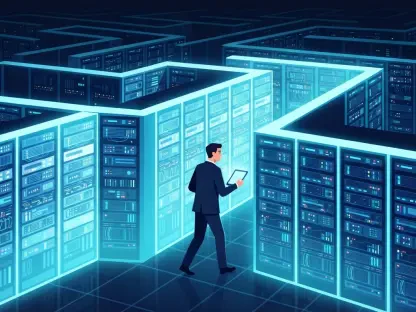
At the foundational layer of this acquisition sits “Code Storage,” a Git-based service specifically re-engineered for the demands of programmatic source code management. While traditional Git providers have long served the needs of human developers, they were never truly optimized for the sheer volume of operations generated by a swarm of autonomous AI agents. An AI agent might initiate hundreds of branches and execute thousands of commits in a fraction of the time a human would take to write a single pull request. Pierre’s Code Storage provides the high-concurrency backend necessary to track this rapid evolution, offering a robust history management system that ensures every version of a project remains retrievable and auditable. This infrastructure is vital for maintaining the integrity of the source of truth, especially when multiple machine agents are simultaneously modifying different parts of a complex system. By owning this storage layer, OpenAI ensures that its models have direct, low-latency access to the full repository history, which is critical for context-aware code generation.
The “Highlights” tool completes this technical suite by providing the performance-critical layer of syntax visualization. In an environment where code is being “streamed” by a model rather than typed by a person, traditional syntax highlighters often struggle to keep pace, leading to visual flickering or delayed formatting that disrupts the developer’s focus. Pierre’s Highlights is engineered to update with sub-millisecond latency, ensuring that as logic flows onto the screen at machine speeds, the visual representation—color-coding, bracket matching, and indentation—remains perfectly synchronized. This high-performance rendering is not merely an aesthetic choice; it is a functional requirement for effective human supervision. When a developer is monitoring an AI agent building a complex feature in real-time, the clarity of the visual information directly impacts their ability to spot errors or logic flaws immediately. By perfecting this “last mile” of the user interface, OpenAI is ensuring that the developer’s primary workspace is as responsive and clear as possible, regardless of the speed at which the underlying code is being produced.
The Strategic Convergence of Codex and Pierre
Transformation Strategy: From a Writer to a Manager
The integration of Pierre’s technology signifies a major evolution for Codex, moving it from a passive assistant that provides code snippets to an active manager of the entire development workspace. Previously, developers using generative AI faced a significant “context gap,” where the model could suggest a function but lacked deep insight into the broader architecture of the project stored in a separate repository. This forced engineers to act as manual intermediaries, copying code back and forth and reconciling discrepancies between the AI’s output and the project’s existing patterns. By incorporating Pierre’s navigation and storage tools, OpenAI is collapsing these boundaries. The platform now possesses a native understanding of the codebase’s history, its stylistic conventions, and its architectural dependencies. This allows Codex to offer suggestions that are not just syntactically correct but are architecturally sound, fitting seamlessly into the specific environment of the project without requiring extensive human refactoring or manual context-setting.
This new managerial role extends to the orchestration of the development workflow itself, where the platform can take over routine tasks like branch management and dependency updates. By owning the environment where the code is both written and stored, OpenAI can automate the “boring parts” of engineering that often lead to human error or burnout. For instance, instead of a developer manually creating a feature branch, updating the local environment, and then pushing to a remote server, the integrated Codex environment can handle these steps programmatically. This shift allows the human engineer to focus on high-level design and logic while the platform manages the underlying logistics. The goal is to create a singular, unified experience where the distinction between the “editor” and the “repository” disappears. In this integrated model, the software development environment becomes a living, breathing workspace where the AI has the authority and the tools to maintain the health and organization of the codebase alongside its human counterparts.
Technical Necessity: Why Version Control Dictates AI Success
The consensus among software architects in 2026 is that the primary bottleneck in automated development is no longer the generation of logic, but the management of that logic within a version control system. Traditional Git workflows were designed for human temporal scales, where a “fast” developer might commit several times a day. When AI agents enter the equation, the velocity of change increases by orders of magnitude. These agents can explore dozens of potential solutions in parallel, creating a tree of branches and commits that would be impossible for a human to navigate using standard command-line tools. Pierre’s Code Storage was specifically built to solve this scaling problem, providing a version control backend that can handle the high-frequency, high-volume transactions required by machine-driven development. Without this specialized infrastructure, the sheer amount of data generated by autonomous agents would lead to repository bloat, merge conflicts, and a complete loss of transparency for the human overseers.
By securing proprietary Git infrastructure, OpenAI is insulating itself from the limitations of third-party platforms that may not prioritize the needs of high-speed machine agents. This control allows for the implementation of “machine-native” versioning features, such as automated conflict resolution and semantic merging, which go beyond the simple line-by-line comparison of traditional Git. For “Agentic” development to be viable at the enterprise level, there must be a perfect record of every change made by every agent, along with a clear explanation of the reasoning behind those changes. The Pierre acquisition provides the technical framework to create these detailed audit trails. It ensures that even as the speed of development accelerates, the stability and reliability of the codebase remain intact. This focus on the “plumbing” of software development—the versioning, the storage, and the merging—is what will ultimately determine which AI platform can be trusted with mission-critical corporate infrastructure in the years to come.
Internal Infrastructure and Competitive Dynamics
Scalability and Performance: Pando and the Challenge of Growth
The disclosure of OpenAI’s internal Git backend, Pando, provides a critical glimpse into the massive engineering challenges the company has faced while scaling its own operations. Currently, Pando manages nearly a petabyte of Git data daily, a volume that would overwhelm most standard repository services. This internal system was developed out of necessity to reduce the latency associated with code pushes and pulls within OpenAI’s massive, globally distributed engineering teams. The success of Pando demonstrates that OpenAI has already mastered the backend “engine” of high-performance code management. However, while Pando is a powerful internal utility, it lacked the refined, user-facing interfaces required for a public-facing product. This is where the Pierre acquisition becomes vital, as it provides the sophisticated “dashboard” and visualization layer that Pando lacked. The synergy between a battle-tested backend and a high-craftsmanship frontend allows OpenAI to offer a complete, enterprise-grade solution that can handle the world’s largest and most complex software projects.
This internal-to-external pipeline is a proven strategy for tech giants, reminiscent of how Amazon transformed its internal server infrastructure into the industry-standard AWS. By combining the raw power of Pando with the elegant accessibility of Pierre’s tools, OpenAI is positioning itself to offer “Infrastructure as a Service” (IaaS) specifically tailored for the AI-era developer. This move addresses a growing demand from large organizations that find their existing development stacks are unable to keep up with the speed of AI-assisted engineering. As more companies adopt autonomous agents to maintain their legacy systems or build new features, the need for a Git backend that can scale with that machine velocity will only grow. OpenAI’s two-pronged approach—leveraging Pando for scale and Pierre for the developer experience—creates a formidable platform that is uniquely equipped to serve the next generation of high-velocity engineering teams, potentially setting a new standard for performance in the industry.
Market Positioning: Challenging the Dominance of GitHub
The acquisition of Pierre places OpenAI in a complex and competitive position relative to GitHub, the current market leader in repository hosting and collaboration. While OpenAI and Microsoft maintain a deep and mutually beneficial partnership, the development of a native, integrated development environment within Codex creates a direct alternative to the GitHub-centric workflow. For years, GitHub has been the “home” of the developer, providing the central hub for code storage, issue tracking, and peer review. However, if OpenAI can offer a superior experience where the AI, the editor, and the repository are part of a single, cohesive unit, the incentive for developers to leave the OpenAI ecosystem to manage their code elsewhere begins to diminish. This represents a fundamental shift toward “AI-native” development, where the primary workspace is defined by the intelligence of the platform rather than just the hosting of the files.
Despite this potential for competition, GitHub maintains a significant “moat” through its massive ecosystem and its deep integration into the security and compliance workflows of nearly every major corporation. Migrating a company’s “crown jewels”—its proprietary source code—is a high-stakes endeavor that involves rigorous security audits and cultural shifts. OpenAI will need to prove that its new platform is not just faster and more integrated, but also more secure and reliable than the established players. The challenge lies in convincing CTOs that moving to an AI-centric infrastructure is a necessary evolution rather than a risky experiment. While the Pierre acquisition provides the technical tools to build this platform, the battle for market share will likely be won or lost on the grounds of trust and reliability. OpenAI must demonstrate that its integrated stack can provide a level of oversight and control that traditional repository hosts cannot match in an era where more code is being written by machines than by humans.
Redefining the Developer’s Role
Collaborative Engineering: Transitioning to Agentic Development
The shift toward “Agentic” software development fundamentally redefines what it means to be a programmer, moving the human role from that of a “coder” who writes every line to an “orchestrator” who directs a fleet of intelligent agents. In this model, the developer focuses on high-level architecture, business logic, and security constraints, while the AI agents handle the mechanical tasks of implementation, testing, and debugging. For this transition to be successful, the human must have perfect visibility into what the agents are doing at all times. This is why the precision of Pierre’s Trees and Diffs tools is so critical. If a developer cannot quickly understand the changes an agent has made or see how those changes impact the broader file structure, they cannot effectively supervise the work. The acquisition is a bet that the most successful AI platform will not be the one that generates the most code, but the one that provides the best tools for a human to manage that code with confidence and ease.
In this environment, the developer’s workflow becomes more akin to a conductor leading an orchestra or a manager overseeing a high-performance team. They might define a goal, such as “refactor the authentication module to support OAuth 2.1,” and then watch as the AI agents create branches, explore different library integrations, and present a series of proposed modifications. The human then uses the integrated review tools to verify the logic, adjust the implementation where necessary, and merge the finalized work into the main codebase. This high-velocity collaboration requires a level of interface responsiveness and data clarity that traditional development tools simply weren’t built for. By focusing on the craftsmanship of the user interface through the Pierre acquisition, OpenAI is making it possible for a single human engineer to maintain the output of a dozen AI agents, dramatically increasing the productivity of individual developers while maintaining—or even improving—the quality of the final product.
Security and Governance: Social and Ethical Considerations
Moving the center of the development world into an AI-centric platform raises profound questions regarding security, transparency, and the future of open-source collaboration. For enterprises, the source code repository is the ultimate record of their intellectual property, and any platform that manages this code must provide ironclad guarantees regarding data privacy and access control. OpenAI’s integration of Pierre’s technology must address these concerns by building sophisticated authorization frameworks that ensure AI agents—and the humans who supervise them—only have access to the specific components they are cleared to see. Furthermore, the platform must provide detailed audit trails that can survive the most rigorous compliance checks. The goal is to create a “glass box” environment where every decision made by an AI agent is recorded, explainable, and fully reversible, giving organizations the confidence to let machine intelligence touch their most sensitive production systems.
The fate of the open-source community is another critical area of focus, as Pierre Computer Company was a respected contributor to the developer ecosystem. OpenAI has publicly committed to maintaining Pierre’s open-source projects, a necessary step to prevent alienating a community that is often skeptical of corporate consolidation. However, there is a nuance to this commitment; while the code may remain open, the roadmap and the “velocity” of these projects will inevitably align with OpenAI’s strategic goals. This creates a tension between corporate efficiency and community-driven innovation. Independent developers who have built their workflows around Pierre’s libraries must now adapt to a landscape where their favorite tools are owned by the most powerful company in the AI space. The success of this acquisition will be judged not just on its technical merits, but on OpenAI’s ability to foster a healthy, transparent relationship with the global developer community while simultaneously building a world-class proprietary platform for the enterprise.
Future Outlook for Customers and the Industry
Infrastructure Transition: Navigating a Period of Change
The acquisition of Pierre by OpenAI necessitated a careful transition period for existing customers of both platforms as they prepared for a unified ecosystem. During the initial integration phases, businesses that relied on Pierre’s Code Storage had to evaluate their long-term infrastructure roadmaps to ensure compatibility with the upcoming Codex features. OpenAI prioritized continuity, ensuring that the programmatic APIs and Git-based services remained stable during the merger. This was essential for maintaining the trust of early adopters who had integrated Pierre’s tools into their automated CI/CD pipelines. As the technologies were merged, the industry saw the first real-world examples of “hyper-scale” versioning, where companies began to leverage the Pando-backed infrastructure to manage repositories that were previously considered too large or complex for traditional Git hosting. This transition period served as a proving ground for the reliability and security of OpenAI’s expanded vision for software engineering.
The focus eventually shifted toward providing actionable pathways for enterprises to migrate their legacy workflows into the new AI-native environment. Organizations were encouraged to begin by integrating the “Trees” and “Diffs” components into their existing review processes to familiarize their engineering teams with the enhanced visualization capabilities. This phased approach allowed developers to experience the benefits of reduced cognitive load and faster review cycles before committing to a full infrastructure migration. By offering these tools as modular components of the broader Codex platform, OpenAI lowered the barrier to entry, allowing teams to adopt agentic development at their own pace. The actionable takeaway for engineering leaders was clear: the competitive advantage in the coming years would not come from the sheer number of developers on staff, but from the sophistication of the tools those developers used to oversee their AI counterparts.
Strategic Platformization: The New Standard for Software Development
The completion of the Pierre acquisition solidified the trend of “platformization” within the AI industry, where leading companies sought to own every layer of the value chain. This strategy moved beyond simply providing a large language model and entered the realm of providing the actual environment where that model’s output was refined and stored. For the broader tech industry, this signaled that the era of the “standalone AI assistant” was over, replaced by an era where the platform itself was the primary source of intelligence and organization. This shift forced other players in the space to reconsider their own infrastructure strategies, leading to a wave of similar integrations as competitors scrambled to offer their own unified development stacks. The result was a more fragmented but highly specialized market where the quality of the “developer experience” became the primary differentiator between competing AI platforms.
Looking ahead, the long-term success of this integrated approach was found in its ability to handle the increasing complexity of a world co-authored by humans and machines. By securing the infrastructure for navigation, review, and storage, OpenAI addressed the most significant logistical challenges of the AI era. The acquisition ensured that Codex was not just a tool for writing code, but a definitive workshop for building the next generation of global software. For developers and organizations alike, the actionable next step was to embrace this new role of orchestration, investing in the skills and systems necessary to manage the vast digital landscapes that AI agents were now capable of constructing. The focus turned away from manual line-by-line coding and toward the mastery of the systems that governed code at scale, marking a permanent change in the professional identity of the software engineer and the structural foundations of the technology industry as a whole.