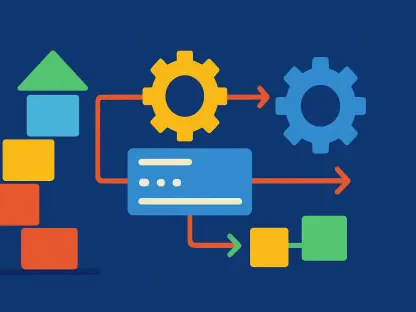

Integration of artificial intelligence into modern applications is most effective when inference engines are deployed as independently scaled microservices within a modular architecture. This realization marks the definitive shift away from the era where cloud-native was merely a marketing term for

Understanding the initialization phase of the Lambda execution model is critical for addressing the latency challenges commonly known as cold starts. As serverless architectures continue to dominate the modern computing landscape, developers must move beyond simple code execution to understand the

Organizations often discover that adding more security tools leads to less overall protection due to the complexity of managing disparate data streams. This paradox has become the defining challenge of the current cybersecurity landscape, where the sheer volume of independent security products has

Integrating Artificial Intelligence into the Modern Software Development Lifecycle Software engineering teams are currently navigating a monumental shift where the mere generation of code is no longer sufficient to maintain a competitive advantage in a crowded digital marketplace. Success now

Managing multi-cloud environments has shifted from a luxury to a baseline requirement for high-availability systems, where the ability to orchestrate resources across different providers determines the resilience of a modern tech stack. Infrastructure engineers often discover that the most

Cybersecurity professionals frequently encounter thousands of unique vulnerabilities across sprawling enterprise environments where manual intervention often fails to keep pace with rapid deployment cycles. This persistent challenge has driven a shift toward more sophisticated automated solutions