
Top-tier early adopters are already merging nearly 10% of their code through purely automated AI-driven reviews, bypassing traditional human sign-off processes. This trend signifies a monumental departure from the artisan-style development that defined the previous decades, steering the industry toward a rigid software factory methodology. In this new paradigm, artificial intelligence agents are no longer just assistants but are becoming the primary engines of the code production pipeline. The transformation is substantiated by extensive data across 1,300 organizations, highlighting a systematic move toward delegating complex and repetitive engineering tasks to autonomous systems. While human oversight remains the cornerstone of final delivery, its role is shifting toward strategic governance rather than line-by-line inspection. This structural transformation allows companies to treat software development as a scalable manufacturing process, which is essential for meeting the massive demand for digital infrastructure in the current 2026 landscape.
The Rapid Surge in AI Adoption
Evolution of the Modern Developer Workflow
Recent telemetry from approximately 276,000 developers indicates that the acceleration of AI adoption has occurred at a staggering pace within a very short timeframe. In the beginning of 2024, AI agents were involved in only about 2% of pull requests at the median company, a figure that represented little more than a technical curiosity for most engineering teams. However, by the end of the third quarter of that same year, the involvement of AI surged to nearly 28%, indicating that agents now touch more than a quarter of all code changes in professional environments. Today, this trend has solidified, with nearly a third of the modern codebase being machine-generated. This rapid integration proves that AI has transitioned from an experimental add-on to a foundational component of the professional workflow. The ubiquity of these tools suggests that the barrier between human intent and machine execution is thinner than ever before, creating a new standard for development productivity.
Assessing the Composition of Machine-Generated Code
Despite this aggressive expansion in machine participation, the final merging of code into production systems continues to be a territory largely controlled by human expertise. For the vast majority of companies, only about 0.5% of pull requests are finalized based on AI review alone, which underscores a persistent reliance on human gatekeepers to manage risks related to security and architecture. This dynamic creates a human-in-the-loop bottleneck that many organizations are now looking to solve through more robust automated governance. At the same time, the most advanced 10% of adopters are proving that high-trust automation is possible, as their share of purely AI-driven merges continues to climb. These forward-thinking firms are setting the blueprint for an industry-wide shift where the machine not only generates the solution but also validates its integrity. As organizations build more sophisticated testing suites, the necessity for human sign-off on routine changes is expected to diminish.
Building the Infrastructure for Automation
Defining the Software Factory and Its Economic Impact
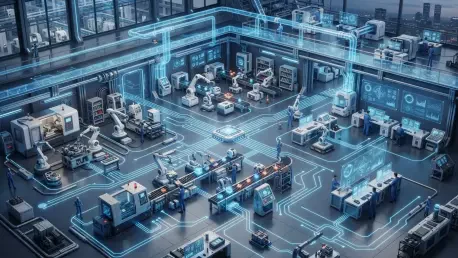
The concept of the software factory represents a sophisticated pipeline where planning, building, reviewing, and shipping are automated to minimize human friction. While the idea takes historical inspiration from the manufacturing principles of the late 20th century, its modern implementation relies on AI agents that can function as autonomous orchestrators. In a mature factory setting, the agent is not just completing a task assigned by a person; it is empowered to research solutions and resolve environment issues independently. This represents a significant milestone in organizational trust, signaling that a company has established sufficient technical context for the AI to understand what work provides the most business value. By offloading the “how” of coding to these systems, engineering leaders are attempting to break through the productivity limits historically imposed by human cognitive load and attention spans. This shift allows teams to scale their output without a linear increase in headcount.
Strategic Investments in Autonomous Agent Efficacy
Supporting such an advanced infrastructure requires a heavy financial commitment, with spending on specialized tools like Claude Code seeing a massive uptick. At the median level, companies are investing around $63 per developer weekly, but for those at the cutting edge of the industry, that figure can jump to over $1,666 monthly. This level of investment is not merely about procurement; it reflects a strategic belief that AI can provide a return on investment that far exceeds its cost by accelerating the time-to-market for new features. The turning point for this efficacy occurred in late 2023 when agents achieved the ability to handle end-to-end tasks without constant human surveillance. Since that time, the focus has shifted toward creating context files—custom instruction sets that serve as the specialized training manuals for these digital workers. These files ensure that the machine-generated output aligns perfectly with specific project requirements, coding standards, and unique business logic.
Navigating the Governance and Strategy Gap
Bridging the Divide Between Adoption and Oversight
Although developers have expressed immense enthusiasm for the utility of AI agents, there is a visible gap between personal adoption and corporate governance. Surveys show that while 88% of developers believe AI tools significantly improve the quality and speed of their work, only 62% feel that their organizations are successfully managing the risks associated with machine-generated code. This discrepancy highlights a lag in human change management, where corporate policies and security protocols have not kept pace with the rapid technological advancement seen on the ground. The challenge for modern leadership is to move beyond the simple procurement of software and instead focus on building comprehensive training programs. These programs are necessary to help developers transition from their traditional roles as individual contributors to orchestrators who oversee the output of multiple agents. Closing this gap is essential for ensuring that the rise of the software factory does not lead to a compromise in security or maintenance.
Actionable Frameworks for Future Engineering Resilience
To move forward, organizations identified the need to move beyond simple task delegation toward a holistic strategy that addressed the what and why of production. Engineering leaders recognized that every doubling of investment in high-quality context files resulted in a 29% increase in merged pull requests, providing a clear roadmap for productivity gains. They focused on building robust governance frameworks that allowed for automated reviews while maintaining strict standards for architectural integrity. Successful firms prioritized the education of their workforce, ensuring that senior engineers transitioned into architectural roles rather than competing with machine output. They also implemented rigorous testing protocols that served as the safety net for autonomous merging, which reduced the burden on manual gatekeepers. By treating the development pipeline as a manufacturing floor, these companies established a resilient foundation that thrived on machine speed while being guided by human ingenuity.