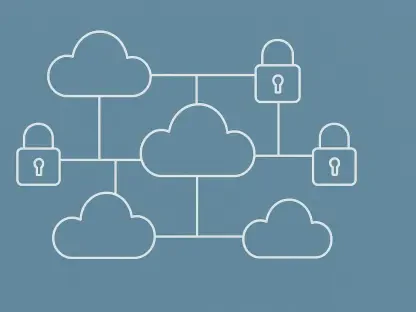

The seamless integration of cloud-based applications has quietly replaced the fortified walls of the corporate data center with a sprawling, interconnected web of digital dependencies that most organizations struggle to map. Modern business efficiency now relies on a vast, invisible infrastructure where human resources platforms, financial tools, and operational suites talk to one another through a constant stream of data. This shift represents the emergence of a decentralized frontier, where the concept of a single, defensible entry point has been traded for the convenience of global connectivity. By leveraging API-driven ecosystems, organizations have effectively outsourced their internal workflows to a web of third-party vendors, creating a digital supply chain that is as critical as it is complex.
Market leaders have prioritized interoperability, ensuring that enterprise tools can exchange information without friction. However, this interconnectivity means that an organization security posture is no longer determined solely by its own defenses but by the collective security of every integrated partner. As regulatory bodies enforce stricter privacy standards, the ability to manage and audit these external data flows has become a core requirement for institutional survival. The focus must shift from protecting internal servers to securing the invisible threads that bind the modern enterprise to its global partners.
The Decentralized Frontier: Understanding the Modern SaaS Supply Chain
The transition from traditional firewalls to a sprawling web of integrations has redefined the standard corporate architecture. In the past, data was kept behind physical and digital barriers, but the modern operation requires data to flow freely between disparate services. This interconnectedness allows for automation and real-time decision-making, yet it also creates a decentralized infrastructure where sensitive information resides in dozens of different environments. Every time a finance tool links to a bank or an HR platform connects to a recruitment site, the digital supply chain grows more intricate.
This invisible infrastructure is powered by API-driven ecosystems that allow different software packages to share credentials and data without human intervention. While these tools drive modern business connectivity, they also create a map of dependencies that few IT departments fully understand. Managing these external data flows is no longer just a technical challenge but a regulatory necessity in an era where data privacy standards dictate how information must be handled by third parties. Organizations are finding that their compliance status is now tethered to the practices of their least secure vendor.
Evolution of the Attack Surface and Market Trajectories
The Death of the Perimeter and the Rise of API-Centric Risks
The transition to remote work and cloud-native environments has effectively rendered the traditional corporate network perimeter obsolete. Security strategies that once relied on fortifying a single entry point have proven insufficient against threats that originate within trusted third-party applications. Today, the focus of cyber defense is shifting away from simple endpoint protection toward securing the persistent bridges created by OAuth tokens and API keys. These digital handshakes allow applications to talk to each other indefinitely, often without requiring the user to re-authenticate, which provides a permanent path for potential intruders.
Moreover, the rise of “Shadow IT” has significantly expanded the threat landscape as employees adopt unauthorized tools to bypass bureaucratic hurdles. These unauthorized applications often lack the security vetting required for enterprise-grade software, yet they frequently hold permissions to access sensitive company directories or email systems. When an adversary compromises one of these overlooked integrations, they gain a foothold that is invisible to traditional security monitoring. This lack of oversight means that the attack surface is constantly growing, often without the knowledge of the people responsible for defending it.
Quantifying the SaaS Explosion and Future Security Projections
Data indicates that the average enterprise now manages several hundred SaaS integrations, a number that continues to climb as specialized tools become more common. This growth has led to a massive increase in potential entry points, making it nearly impossible for human teams to monitor every connection manually. As a result, there is a rising demand for SaaS Security Posture Management (SSPM) tools that provide automated visibility into these complex environments. Organizations are increasingly seeking solutions that can map every integration and identify which ones pose the greatest risk to the core business.
The projected economic impact of supply chain breaches is expected to shape the global software market over the coming years. Analysts forecast that the cost of addressing vulnerabilities in the digital supply chain will become a major driver of cybersecurity spending. As the market matures, the ability to demonstrate a secure and resilient integration stack will become a competitive differentiator for software vendors. Companies that fail to address these risks face not only the direct costs of data breaches but also the long-term loss of customer trust and market share.
Navigating the Trust Paradox and Critical Vulnerabilities
The “Trust Paradox” presents a unique challenge for modern organizations, as hackers increasingly target officially approved and popular vendors to bypass internal skepticism. Because these platforms are widely trusted and deeply integrated, a breach at the source can provide an attacker with legitimate access to thousands of downstream companies. This strategy exploits the psychological tendency to lower defenses when dealing with a known and reputable brand. By targeting the tools that companies rely on most, adversaries can move through a network with a level of authority that internal security teams find difficult to challenge.
Another significant risk is “privilege creep,” where integrations established for temporary use retain high-level administrative access long after they have been abandoned. These neglected or obsolete connections create unmonitored backdoors that are often the first place an adversary looks for entry. The complexity of managing these “set and forget” integrations is often overwhelming for IT departments that are already stretched thin. Moving toward a model of continuous verification and skepticism is essential for closing these gaps and ensuring that access is only granted when it is actively required for business operations.
The Regulatory Climate and Global Compliance Standards
Global laws and frameworks such as GDPR, CCPA, and SOC2 now mandate that organizations protect data not just within their own systems, but across all third-party links. These regulations have turned vendor risk management (VRM) into a core business function, as the legal liability for a breach often extends to the primary data owner regardless of where the vulnerability originated. Meeting these compliance requirements requires a rigorous approach to auditing every application that enters the ecosystem. Massive legal liabilities and reputational damage await those who fail to maintain a clear audit trail of their external data movements.
The evolution of these security standards is forcing a transition from voluntary best practices to mandatory security audits. In the current regulatory climate, simply having a security policy is no longer enough; organizations must prove that they are actively monitoring and managing the risks associated with their SaaS stack. This shift is driving a new era of transparency where vendors must provide detailed security documentation to maintain their place in the enterprise ecosystem. Failure to meet these emerging standards can result in being excluded from major contracts and facing significant regulatory scrutiny.
Innovation and the Future of Integrated Security
Artificial intelligence and machine learning are playing an increasingly important role in monitoring the “invisible movements” of data between applications. These technologies can detect anomalous transfers and unauthorized access patterns that would be impossible for a human analyst to spot in real time. By analyzing behavior across the entire SaaS ecosystem, AI-driven tools can provide early warning signs of a compromise, allowing security teams to act before data is exfiltrated. This move toward automated oversight is essential for managing the sheer scale of modern digital environments.
The future of Zero Trust Architecture (ZTA) is also being refined to address the specific challenges of third-party integrations. This approach ensures that no application or user is granted inherent trust, regardless of their position in the network or their history with the organization. Market disruptors are building “security-by-design” into the next generation of collaborative tools, making granular permissions and robust encryption the default setting. As global economic shifts continue to influence cybersecurity investment, the prioritization of supply chain resilience will become a hallmark of any successful long-term growth strategy.
Securing the Interconnected Enterprise for Long-Term Growth
Visibility proved to be the foundational requirement for securing a modern, decentralized SaaS stack. It was clear that an organization could not protect what it could not see, and the audit of all digital connections became the first step in regaining control. The strategic roadmap for implementing the Principle of Least Privilege across all external links ensured that no single application possessed more power than was necessary for its function. This shift in methodology reduced the potential damage from any single point of failure and strengthened the overall integrity of the corporate network.
Fostering a culture of vigilance and proactive monitoring was the only way to ensure that the institution remained resilient against evolving threats. IT leaders who aligned their innovation goals with rigorous security standards successfully protected their digital ecosystems while allowing for rapid growth. The transition from a reactive posture to one of continuous verification ensured that the trust underpinning the digital supply chain was earned rather than assumed. Ultimately, the focus on securing interconnected systems protected the long-term viability of the enterprise and ensured that innovation did not come at the expense of safety.