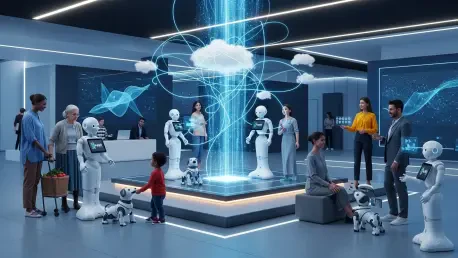

The rapid maturation of embodied artificial intelligence has effectively bridged the gap between sterile laboratory experiments and the complex, unpredictable environments of global eldercare facilities. This technological evolution represents a significant advancement in the robotics and healthcare sectors, moving beyond the limitations of standalone devices to a comprehensive infrastructure model. This review explores the transition from static software to a sophisticated framework that integrates physical hardware with cloud-based cognitive reasoning, providing a thorough understanding of the current capabilities and the potential trajectory of this transformative field.
The foundations of this technology rest upon the synergy between edge-side hardware and cloud-based intelligence, a combination that allows robots to function as autonomous, thinking entities. This full-stack approach addresses the inherent limitations of edge devices, such as restricted power and memory, by offloading intensive cognitive tasks to the cloud. Such a dual-engine architecture ensures that while the robot performs immediate, physical actions with low latency, its broader understanding of the world and the specific needs of its users is continuously refined through massive computational power.
In the broader technological landscape, this synergy is a direct response to the escalating demand for sophisticated robotic assistants capable of navigating human-centric spaces. The transition toward this integrated model signifies a shift in how intelligence is deployed, moving away from centralized servers and toward a distributed system where the physical and the digital are inseparable. This evolution is particularly relevant as society grapples with labor shortages in caregiving, necessitating a solution that is both physically capable and cognitively empathetic.
Foundations: Physical Intelligence and Edge-Cloud Synergy
The emergence of embodied artificial intelligence represents the culmination of decades of research into machine learning and robotics, but its current success is driven by the specific integration of edge-cloud synergy. Unlike previous generations of robots that functioned as isolated units with fixed programming, modern embodied AI leverages a custom system-on-chip that acts as the local nervous system. This local hardware handles the immediate data processing required for movement and object recognition, ensuring that the robot can react to its environment without the delays associated with distant data centers.
However, the true intelligence of these systems resides in the cloud, which serves as the “cognitive brain” for the physical agent. This cloud infrastructure allows for the storage and processing of massive datasets that would overwhelm local hardware, enabling the robot to engage in complex reasoning and long-term learning. The interaction between the edge and the cloud is a constant, bi-directional flow of information, where local observations inform cloud-based models, and those refined models are then pushed back to the edge to improve performance in real time.
This synergy is vital for the development of “full-stack” embodied AI because it allows for a level of operational sophistication that was previously impossible. In the context of a nursing home, for example, a robot must be able to recognize a resident’s face locally for immediate safety, while simultaneously accessing cloud-based medical history to provide personalized health advice. This balance of local responsiveness and global intelligence is what defines the current technological landscape and sets the stage for the next generation of service robots.
Primary Components: The Cognitive and Operational Framework
Generative Affective Engines and Multimodal Interaction
The introduction of generative affective engines has transformed robots from reactive tools into proactive agents capable of nuanced human interaction. These engines utilize affective computing to analyze emotional cues, such as vocal inflections, facial expressions, and physical gestures, allowing the robot to perceive the psychological state of a user. Unlike the scripted interactions of the past, this framework enables a machine to generate empathetic responses that are contextually appropriate, fostering a sense of genuine companionship for elderly users who may be experiencing social isolation.
Furthermore, the performance of multimodal frameworks is critical in managing the diverse array of data inputs that occur during natural human conversation. By synthesizing audio, visual, and tactile information, the AI can maintain a coherent dialogue even in noisy or unpredictable environments. This capability is not merely about understanding words; it is about interpreting the intent behind those words and responding in a way that feels natural and supportive. This proactive agency is a key differentiator from standard AI assistants, as the robot can initiate interactions based on its perception of a user’s needs.
Predictive Risk Management and Real-Time Data Pipelines
Safety in a healthcare setting is paramount, and the integration of AI time-series models provides a robust layer of predictive monitoring. These models analyze continuous streams of data from a user’s vital signs and movement patterns, identifying subtle deviations that might indicate an impending health crisis or a behavioral risk, such as a fall. By processing this information through high-speed data pipelines, the system can detect anomalies that a human caregiver might overlook, offering a level of constant, vigilant oversight that is both non-intrusive and highly effective.
The technical significance of these pipelines lies in their ability to ensure low-latency medical intervention through intelligent event routing. When a risk is identified, the platform does not simply generate an alert; it routes the information through an optimized path to the most appropriate responder, whether that is an on-site nurse or a remote medical specialist. This closed-loop system minimizes the time between the detection of an issue and the provision of care, which is a critical factor in managing the health of an aging population.
Digital Twin Infrastructure and Fleet Management
Managing a large-scale deployment of robots across multiple facilities requires a sophisticated operational hub, which is provided by digital twin infrastructure. A digital twin is a virtual representation of a physical robot, allowing operators to monitor its status, performance, and environment in a simulated space. This allows for shadow testing, where new AI strategies or software updates are evaluated in a virtual environment before being deployed to the physical fleet, significantly reducing the risk of operational errors or safety incidents during real-world rollouts.
The use of over-the-air (OTA) updates further enhances the functionality of the fleet management system, ensuring that every robot remains equipped with the latest cognitive models without the need for manual intervention. This hub serves as a central point of control for maintaining a secure and functional fleet, allowing for the simultaneous management of hundreds of units. This scalability is essential for institutional care providers who need to manage diverse robotic assets across geographically dispersed locations while maintaining a consistent standard of service and security.
Innovations: Integrated Intelligence and Industry Shifts
The rise of edge-cloud collaborative Large Language Model (LLM) routing engines represents a major breakthrough in optimizing robotic performance. These engines act as intelligent traffic controllers, determining whether a user’s request should be handled by a quantized, lightweight model on the robot’s local hardware or a high-capacity LLM in the cloud. This dynamic routing ensures that simple tasks are executed with zero latency, while more complex queries benefit from the advanced reasoning capabilities of the cloud, effectively balancing cost, speed, and intelligence.
Simultaneously, the robotics industry is undergoing a significant shift toward “SaaS-based” recurring revenue models, which is fundamentally changing the development of cognitive infrastructure. Instead of relying on one-time hardware sales, companies are now focusing on the ongoing value provided by their cloud-based platforms. This model encourages continuous innovation, as the software is constantly updated with new features and improved capabilities. This approach provides financial stability for developers and ensures that users always have access to the most advanced AI tools available.
Another critical trend is the use of retrieval-augmented generation (RAG) to eliminate the hallucinations that can occur in generative AI models. In specialized medical contexts, accuracy is non-negotiable; a robot providing health advice cannot afford to manufacture information. RAG allows the AI to pull from verified, professional nursing and medical knowledge bases, ensuring that every response is grounded in factual data. This technology is essential for building trust with both users and healthcare professionals, as it guarantees that the robot’s insights are reliable and medically sound.
Real-World Applications: The Global Silver Economy
The deployment of embodied AI in nursing homes and hospitals is providing a practical solution to the challenges of the global silver economy. In these settings, robots serve as dual-purpose agents, acting as both medical monitors and emotional companions for seniors. By taking over routine monitoring tasks and providing consistent social interaction, these machines alleviate the burden on human staff, allowing them to focus on more complex aspects of care. This implementation demonstrates how technology can be used to enhance, rather than replace, human labor in the healthcare sector.
There are notable use cases where “cloud brains” empower diverse fleets of service robots through a unified infrastructure, creating a cohesive ecosystem of care. For example, in a large eldercare facility, a variety of robots—ranging from delivery units to personal companions—can all be managed through the same cloud-based platform. This unified approach allows for better coordination of resources and a more holistic view of resident well-being. The robot becomes a persistent presence that understands the specific preferences and history of each individual, providing a bespoke care experience.
Furthermore, the impact of these applications extends to private eldercare settings, where robots allow seniors to maintain their independence for longer periods. By providing fall detection, medication reminders, and a connection to the outside world, embodied AI offers a sense of security for both the seniors and their families. This expansion into the home market represents a significant growth opportunity, as the infrastructure developed for institutional use is adapted to meet the needs of individuals, further embedding AI into the fabric of daily life for an aging population.
Barriers: Technical and Regulatory Constraints
Despite the rapid progress in the field, significant challenges remain regarding data privacy and the necessity of HIPAA-compliant transmission. The collection of sensitive health data and the use of cameras in private spaces require a rigorous approach to security. Bi-directional encrypted transmission with forward secrecy is essential to protect user data from unauthorized access. The complexity of maintaining these standards across a global infrastructure cannot be overstated, as different regions have varying regulatory requirements that must be navigated with precision.
Technical hurdles, such as edge-side de-identification, are also a major focus of ongoing development. To protect privacy, personal data must be stripped of identifying markers before it is ever uploaded to the cloud for processing. This requires sophisticated algorithms that can distinguish between the information needed for cognitive reasoning and the private details of a user’s identity. Balancing this need for privacy with the demand for personalized AI experiences is one of the most difficult tasks facing developers today, requiring a delicate integration of local and cloud-based processing.
Moreover, hardware limitations continue to pose a challenge, particularly concerning power consumption and thermal management in mobile robots. Running complex AI models on the edge generates significant heat and drains batteries quickly. To mitigate these issues, developers are turning toward quantized models and elastic microservices architectures that optimize resource usage. These techniques allow for a more efficient distribution of the computational load, but the physical constraints of the hardware remain a constant factor that must be managed through innovative design and engineering.
Strategic Outlook: Embodied AI Ecosystems
The future of embodied AI is moving toward the creation of personalized “Vector Memory,” which will allow for bespoke AI experiences tailored to individual users. This technology enables a robot to remember long-term preferences, past conversations, and specific health patterns, creating a truly personalized relationship between the human and the machine. This level of continuity is essential for providing effective care in the long term, as it allows the AI to anticipate needs and provide support that is deeply grounded in the user’s personal history.
Breakthroughs in affective computing are also expected to play a central role in the long-term impact of hardware-agnostic AI platforms on the service robot market. By creating software that can run on any physical form factor, developers can reach a wider audience and drive down the cost of entry for consumers. This democratization of technology will be crucial as demographic shifts and the growth of the elderly population drive future infrastructure requirements. The ability to deploy sophisticated AI on a variety of devices will ensure that more people have access to the benefits of robotic assistance.
As the global population continues to age, the demand for resilient and scalable AI infrastructure will only increase. The strategic transition toward these ecosystems will likely lead to a world where robotic companions are a standard feature of eldercare, providing a level of support that was once unimaginable. The focus will shift from the novelty of the machine to the quality of the service it provides, with a greater emphasis on the emotional and psychological well-being of the user. This long-term perspective is driving the current investment in the foundational technologies that will support this future.
Synthesis: The Technological Landscape
The convergence of edge hardware and cloud-based SaaS platforms represented a fundamental shift in the capabilities of service robotics. This dual-engine model provided the necessary balance between real-time responsiveness and deep cognitive intelligence, creating a framework that was both physically capable and socially aware. The integration of affective engines, predictive monitoring, and scalable fleet management addressed the most pressing needs of the healthcare sector, offering a reliable solution to the challenges of an aging population.
Ultimately, the development of this infrastructure demonstrated a sophisticated understanding of the interplay between hardware and software. By leveraging the strengths of both the edge and the cloud, developers created a system that was more than the sum of its parts. This approach not only improved the performance of individual robots but also established a resilient and scalable model for the entire industry. The transition toward recurring revenue and specialized medical intelligence ensured that the technology remained at the forefront of innovation while maintaining the highest standards of safety and privacy.
The impact of this technological landscape was profound, as it redefined the boundaries of what was possible in institutional and private care. The successful commercialization of embodied AI showed that machines could be more than just functional tools; they could be empathetic agents that enhanced the human experience. This synthesis of physical and digital intelligence laid the groundwork for a future where technology and humanity were more closely integrated, providing a decisive path forward for the global healthcare industry and the service robot market.