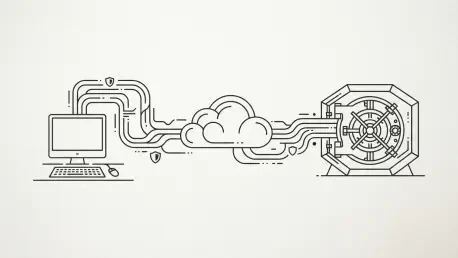

The persistent assumption that migration to a cloud environment inherently equates to foolproof data preservation remains a dangerous fallacy in modern enterprise information technology management. While software-as-a-service (SaaS) platforms offer unparalleled scalability and accessibility, the underlying reality of data ownership is often obscured by a false sense of security. This review examines the current landscape of SaaS data protection, identifying the critical gap between the high rate of cloud adoption and the significantly lower rate of professional-grade backup implementation. By exploring the mechanisms of cloud-to-cloud security, the analysis highlights why current native tools frequently fail to meet the rigorous demands of corporate compliance and disaster recovery.
Modern organizations have largely embraced cloud-native workflows, yet the psychological shift toward total data stewardship has lagged behind this technical transition. Statistics indicate a startling trend where nearly universal cloud usage is met with only a fraction of businesses employing third-party backup solutions. This discrepancy stems from a fundamental misunderstanding of what a service provider actually guarantees. As the industry moves through 2026, the focus must shift from mere application availability toward a comprehensive strategy for long-term data integrity and granular recoverability.
Core Pillars of Cloud-to-Cloud Backup Systems
The Shared Responsibility Model: Defining the Boundaries
The architecture of most SaaS environments operates under a shared responsibility model, which clearly bifurcates the duties of the provider and the client. In this framework, the vendor is responsible for the “security of the cloud,” including infrastructure, physical hardware, and the uptime of the software application. However, the client remains exclusively responsible for the “security in the cloud,” which encompasses the data itself, user access management, and the protection of information from accidental or malicious deletion. This distinction is critical because while a provider can ensure the system is running, they cannot distinguish between a legitimate administrative change and a destructive ransomware attack.
Reliance on the vendor for data recovery often leads to disappointment during a crisis. If a service provider suffers a massive infrastructure failure, they utilize system-wide snapshots to restore the entire environment to a functional state. However, these tools are not designed for individual customer recovery requests. A business that loses a specific set of records due to a synchronization error or a disgruntled employee will find that the vendor’s primary concern is platform-level consistency, not the surgical restoration of a single user’s lost documents or emails.
Granular Recovery and Data Retention Tools: Technical Realities
Native retention policies in popular SaaS suites are often surprisingly brief and lack the flexibility required for legal or operational continuity. For instance, many platforms maintain deleted items for only a short window, sometimes as little as two weeks to ninety days, before the data is purged from the system forever. These “recycle bin” features are not a replacement for a true backup, as they offer no protection against data corruption that goes unnoticed for several months. Moreover, the process of retrieving data from these native bins is frequently an “all-or-nothing” proposition that lacks the precision needed for complex enterprise environments.
Granular recovery allows IT administrators to pinpoint specific files, folders, or email threads and restore them to their original location without overwriting newer data. Without this capability, a simple restoration project can become a destructive event, where an entire site instance must be rolled back to a previous state, causing the loss of any work performed since the last snapshot. Third-party data protection layers solve this by maintaining independent, searchable archives that exist outside the primary SaaS production environment. This ensures that even if a user’s primary account is completely wiped, the organization can still access every historical version of their work.
Emerging Trends in Cloud Data Governance
The trajectory of data management from 2026 to 2029 is defined by a shift toward automated governance and specialized “cloud-to-cloud” backup strategies. Rather than relying on a single vendor, forward-thinking enterprises are now creating secondary copies of their critical information in separate public clouds or private repositories. This geographical and structural diversification prevents a single point of failure from crippling an entire business operation. It also facilitates a more robust defense against sophisticated cyber threats that specifically target cloud credentials to delete both production data and native backups simultaneously.
Moreover, a new category of platform-specific management tools has emerged to handle the complexities of data-heavy environments like Salesforce or high-velocity collaboration tools. These specialized solutions move beyond simple backup by incorporating “extract, transform, and load” processes that manage API limits and data lifecycle policies. By treating SaaS data as a fluid asset rather than a static archive, these tools allow for better compliance with global privacy regulations. This evolution marks the transition from reactive disaster recovery to a proactive state of data stewardship where information is protected, governed, and easily accessible across multiple cloud boundaries.
Real-World Implementation Across Business Sectors
The deployment of third-party SaaS protection is most visible in highly regulated sectors such as finance and healthcare, where the legal consequences of data loss are severe. In these industries, the implementation of independent backup layers serves as a mandatory compliance safeguard rather than an optional IT expense. By maintaining long-term archives that exceed the standard retention periods of SaaS vendors, these organizations can satisfy audit requirements and respond to discovery requests without the fear of data having been purged by the service provider’s automated cleanup routines.
Outside of the regulatory sphere, the education and manufacturing sectors have also adopted these systems to combat the rise of internal threats and accidental deletions. For example, a university managing thousands of student accounts uses granular recovery to mitigate the impact of accidental folder deletions in shared collaboration spaces. By having a separate protection layer, the IT department can restore specific academic records in minutes, ensuring that a single user’s mistake does not halt the progress of an entire department. These implementations prove that while the cloud provides the tools for productivity, the third-party backup layer provide the safety net necessary for operational continuity.
Technical Barriers and Contractual Limitations
Despite the clear benefits, widespread adoption of SaaS data protection faces hurdles related to API limitations and contractual misunderstandings. Many SaaS providers place strict limits on how much data can be extracted from their systems at any given time, which can slow down the initial backup process or delay a large-scale restoration. These technical bottlenecks require backup vendors to develop highly efficient, incremental synchronization methods that minimize the load on the production environment while still ensuring a recent copy of the data is always available.
Furthermore, the language found in standard service level agreements often creates a false sense of security for non-technical stakeholders. Contracts typically emphasize “uptime” and “availability” metrics, which many executives incorrectly interpret as a guarantee of data safety. In reality, these contracts explicitly disclaim responsibility for the loss of data resulting from user error or malicious attacks. This legal disconnect remains a significant barrier, as many organizations only discover the limitations of their contract after a data loss event has already occurred, leaving them with no recourse against the software provider.
The Future of Sovereign Data Management
Looking toward the developments expected between 2026 and 2030, the concept of data sovereignty is becoming central to SaaS protection strategies. As international laws regarding data residency become more stringent, organizations are seeking backup solutions that allow them to choose exactly where their secondary data is stored. This move toward decentralized management ensures that a business can maintain a copy of its information within specific national borders, even if the primary SaaS vendor operates globally. This flexibility is essential for maintaining compliance with regional privacy mandates that change rapidly.
Technological breakthroughs in artificial intelligence are also beginning to transform how backups are managed and monitored. Future systems will likely use predictive analytics to identify unusual patterns of data deletion or encryption in real-time, triggering an automatic “air-gapped” backup before a ransomware attack can spread. This transition from manual restoration to autonomous data resilience will redefine the role of the IT administrator. Instead of managing backup schedules, professionals will oversee intelligent systems that self-heal and automatically adjust retention policies based on the sensitivity and usage of the data.
Conclusion: Final Assessment of SaaS Resilience
The evaluation of the SaaS landscape proved that the convenience of cloud applications did not eliminate the fundamental necessity of rigorous data stewardship. It was observed that organizations which relied solely on native provider tools remained vulnerable to significant operational disruptions and compliance failures. The industry shifted its perspective, recognizing that while infrastructure could be rented, the responsibility for information integrity remained a core internal duty. This realization drove a surge in the adoption of third-party protection layers that offered the granularity and independence required for true resilience.
The analysis demonstrated that successful data management required a proactive approach to the shared responsibility model. It was determined that bridging the gap between application availability and data recoverability was the only way to ensure long-term stability. Businesses that took the actionable step of implementing cloud-to-cloud backups effectively shielded themselves from the limitations of service level agreements and technical bottlenecks. Ultimately, the transition toward sovereign data management and automated governance set a new standard for how modern enterprises protected their most valuable digital assets in a cloud-first world.