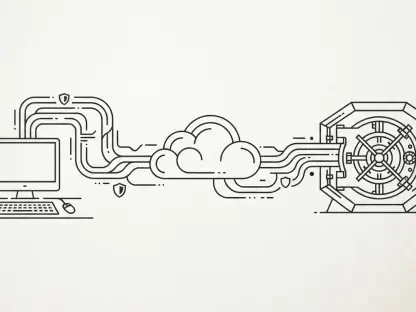

The widespread assumption that major cloud providers inherently safeguard every piece of corporate information has created a significant security blind spot for modern global business operations. Demystifying cloud residency begins with shifting the perspective away from the abstract concept of the cloud toward the concrete reality that information is simply stored on someone else’s computer. This shift reveals that inherent risks, such as infrastructure failures or account compromises, remain a constant threat regardless of where the hardware resides.
Defining the shared responsibility model is essential for any organization seeking to maintain data integrity. While a service provider is responsible for the uptime and availability of the platform, the customer retains full ownership and responsibility for the data itself. This clear divide means that if a user accidentally deletes a file or a malicious actor wipes a database, the provider is typically under no obligation to recover that specific lost information.
The current state of SaaS adoption reflects a total migration of core business functions to platforms like Microsoft 365, Google Workspace, and Salesforce. By 2026, these ecosystems have become the primary repositories for institutional knowledge, yet a significant data management gap persists. Corporate intelligence often bypasses traditional IT protection policies because cloud-resident information is perceived as self-sustaining, leaving it unshielded by the governance frameworks that once protected on-premises servers.
The Modern Reality: SaaS Data Sovereignty and the Shared Responsibility Model
Organizations must recognize that data sovereignty involves more than just physical location; it encompasses the legal and technical control over information assets. The migration to the cloud was often driven by the desire for accessibility, but this convenience should not come at the cost of oversight. Understanding that provider-side security focuses on the host rather than the content is the first step toward building a resilient data strategy.
The data management gap is further widened by the speed at which departments adopt new SaaS tools without consulting central IT teams. This decentralization makes it difficult to apply uniform security standards, as each platform operates as an isolated silo with its own unique retention rules. Without a centralized backup strategy, an organization’s most valuable digital assets remain scattered and vulnerable to localized failures or targeted attacks.
Market Dynamics: The Rapid Evolution of Cloud Protection Needs
Emerging Trends in Collaborative Data Security
The transition to remote work served as a massive catalyst for the adoption of collaborative platforms like Microsoft Teams, Slack, and Zoom. During this surge, the focus was almost entirely on maintaining communication, which led to a widespread neglect of backup planning. As these tools matured into primary work environments, the volume of sensitive data within them grew exponentially, creating an urgent need for specialized protection solutions.
Demand is now expanding beyond the major office suites to include niche SaaS silos such as GitHub, Zendesk, and Shopify. These platforms house critical intellectual property and customer support histories that are just as vital as email or spreadsheets. Furthermore, the rise of cloud-native backup solutions has changed the technical landscape, as third-party providers now run their services natively within the same ecosystems to minimize latency and improve performance.
Growth Projections and Industry Performance Indicators
Statistical disconnects continue to plague the market, with recent surveys indicating that nearly a third of users still mistakenly believe native provider tools are sufficient for disaster recovery. This misconception persists despite frequent warnings from analysts at ESG and IDC regarding the limitations of standard retention policies. As businesses reconcile their need for accessibility with strict data sovereignty requirements, the demand for third-party SaaS backup is expected to grow significantly from 2026 to 2028.
Market expansion forecasts suggest a move toward more streamlined, cost-effective recovery solutions for the mid-market enterprise. Organizations are shifting away from feature-heavy, complex platforms in favor of right-sized tools that offer reliable recovery without unnecessary administrative overhead. This transition reflects a maturing consumer behavior where the focus is on the speed of restoration and the immutability of the backup copy.
Technical Barriers: The Complexity of Granular Data Recovery
The architectural silo problem remains one of the greatest hurdles in the SaaS environment, as there is no uniformity across different service providers. Each platform uses a proprietary structure, necessitating bespoke backup solutions rather than a one-size-fits-all approach. This lack of standardization makes it difficult for IT teams to manage recovery processes across multiple applications with a single set of tools.
API bottlenecks also hinder the ability to restore specific records or chat histories with precision. Limited ingress and egress capabilities provided by SaaS vendors often prevent third-party tools from injecting data back into the system exactly as it existed before a loss. While extracting data for backup is becoming easier, the restoration of granular elements without overwriting existing data remains a complex technical challenge.
Protecting against malicious threats like ransomware is vastly different from addressing human error or accidental deletions. Ransomware within proprietary cloud environments can encrypt entire document libraries, while human error might involve the silent deletion of a single critical record. Strategic vendor innovation is currently focused on redesigning backup platforms to overcome these limitations, ensuring that recovery is both comprehensive and efficient.
The Regulatory Landscape: Compliance Imperatives for Cloud Data
A critical distinction must be made between native data retention and a true data backup. Native “trash bins” provided by SaaS platforms are often temporary and can be easily purged, whereas a true backup provides long-term, immutable storage that meets legal requirements. Organizations must ensure that their backup strategy aligns with global privacy standards such as GDPR and CCPA, which mandate strict controls over data residency and accessibility.
Auditability and legal discovery are becoming central to corporate governance, requiring independent data copies that can be produced during litigation or regulatory audits. Relying solely on a SaaS provider’s native tools can make it difficult to satisfy transparency requirements, as the data is not held in an independently managed environment. Independent backups provide a verifiable trail of data integrity that is essential for modern compliance.
Integrating SaaS protection into broader security frameworks is no longer an optional task for IT leaders. Disaster recovery protocols must treat cloud-resident data with the same rigor as traditional on-premises assets. By incorporating SaaS-specific recovery into organizational security standards, companies can ensure that they are prepared for both minor accidental losses and large-scale systemic failures.
Future Outlook: Navigating the Next Frontier of SaaS Resiliency
The industry is moving toward a more backup-friendly architecture as SaaS providers begin to standardize their API ecosystems. This shift will facilitate easier data portability and more reliable restoration processes, reducing the current friction between third-party backup tools and primary services. As these architectures evolve, the ability to move data seamlessly between different cloud environments will become a reality for most enterprises.
Emerging technologies like AI and automated governance are expected to close the data management gap by automatically identifying unprotected cloud assets. These systems will be able to scan an organization’s network to find SaaS applications that have been adopted without IT oversight, ensuring they are brought under the corporate protection umbrella. This proactive approach will reduce the risk of shadow IT leaving critical data vulnerable.
The convergence of proactive security and reactive recovery tools is another major trend defining the next few years. Instead of treating backup as a separate function, future platforms will integrate threat detection directly into the recovery process. Global economic influences will continue to drive investment in redundant cloud strategies, as businesses prioritize continuity in an increasingly volatile market where data is the most valuable currency.
Strategic Imperatives: Achieving True Data Resilience
The analysis of the current landscape revealed that reconciling convenience with security required IT leaders to take proactive ownership of cloud-resident information. It was determined that the essential role of third-party backup became undeniable for those seeking enterprise-grade recovery. Native tools were found to be insufficient for meeting the complex demands of modern business continuity and regulatory compliance.
Stakeholders successfully recognized that third-party solutions provided the necessary independence and granularity that native platforms lacked. By implementing redundant and independently managed strategies, organizations effectively mitigated the risks associated with the shared responsibility model. This shift in perspective allowed businesses to move beyond a reliance on service uptime toward a more holistic view of data sovereignty.
Recommendations for the future emphasized the need for a comprehensive audit of all cloud-resident assets to identify protection gaps. Implementing a strategy that prioritized accessibility, redundancy, and independent management was seen as the only viable path to true resilience. Ultimately, the industry moved toward a standard where data protection was treated as a core business function rather than a secondary consideration of cloud adoption.