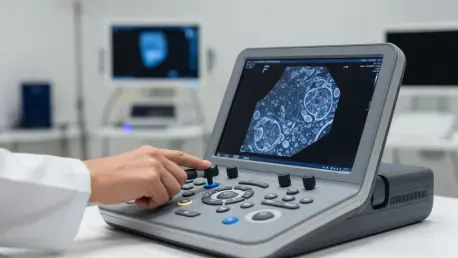

The sudden and unexpected shift of a dominant generative software entity into the complex world of medical hardware represents one of the most significant pivot points in the technology landscape. Midjourney has established itself as a premier destination for digital creativity, yet recent internal developments suggest a profound interest in moving beyond the pixel and into the physical realm. This transition is not merely a side project but appears to be a fundamental rethinking of how deep learning models interact with biological data. By recruiting elite engineering talent from established robotics and biotech firms, the company signals an intent to bridge the gap between abstract image generation and concrete diagnostic tools. Such a move raises critical questions about the transferability of aesthetic algorithms to functional healthcare systems. As the industry watches closely, the potential for the company to redefine its identity hinges on whether its expertise in pattern recognition translates effectively to medical hardware.
Evolutionary Integration of Hardware and Intelligence
Theoretical Foundations: From Artistic Style to Medical Imaging
The foundational technology that powers high-fidelity art generation relies heavily on the ability of neural networks to understand and reconstruct visual patterns from massive datasets. In the context of medical hardware, this expertise translates to the interpretation of noisy biological signals and their conversion into high-resolution diagnostic imagery. Current research within the company appears focused on utilizing diffusion models to enhance traditional scanning techniques by filling in gaps where data might be sparse or obscured. This is not about hallucinating anatomical features but rather using generative priors to refine the signal-to-noise ratio in real-time. By applying the same latent space principles used for digital painting to the reconstruction of three-dimensional biological structures, the firm aims to provide clinicians with a level of visual clarity that was previously unattainable with standard signal processing. This synergy between software and hardware could revolutionize non-invasive diagnostics.
Synthetic data generation represents another critical intersection between the company’s existing software stack and its new hardware aspirations. Developing medical devices requires immense amounts of high-quality, labeled data for training, which is often difficult to obtain due to privacy regulations and the rarity of certain conditions. Midjourney’s ability to generate photorealistic and anatomically accurate simulations allows for the creation of vast virtual patient cohorts. These synthetic models can be used to stress-test the hardware’s sensors and software long before the devices ever reach a clinical setting. This approach significantly accelerates the development lifecycle, as the AI can simulate millions of physiological scenarios to identify potential edge cases. Furthermore, this capability allows the hardware to be pre-trained on a diverse range of genetic variations, ensuring that the final product is robust across different populations. It effectively minimizes the logistical hurdles of clinical data acquisition.
Hardware Integration: Bridging Software Intelligence and Physical Sensors
Designing a physical interface for complex algorithms requires a shift from pure code to material engineering and sensor integration. The rumored hardware projects involve creating portable diagnostic tools that use advanced optics to capture physiological data, which is then processed through local neural engines. Unlike cloud-based art generation, medical hardware demands low-latency, on-device processing to ensure immediate feedback during patient examinations. This necessitates the development of specialized silicon optimized for the specific tensor operations used in generative reconstruction. The engineering challenge lies in maintaining high computational throughput while minimizing thermal output and power consumption in a handheld form factor. By controlling both the sensor array and the processing logic, the company can fine-tune the entire data pipeline to maximize the accuracy of the resulting visualizations. This holistic approach to design ensures that the hardware is not just a container for the AI but an extension of it.
The user experience of medical hardware also demands a level of ergonomic and functional precision that differs from consumer software interfaces. In a clinical environment, the hardware must be intuitive enough for practitioners to operate while focused on patient care, requiring haptic feedback and clear visual cues that transcend the traditional digital dashboard. The firm is reportedly exploring novel materials and industrial design languages to differentiate its medical tools from the sterile, utilitarian aesthetic of traditional hospital equipment. This design philosophy aims to reduce patient anxiety and improve the overall flow of clinical workflows through better human-machine interaction. By leveraging its background in visual communication, the company can create interfaces that present complex diagnostic data in a more digestible and actionable format for medical professionals. This focus on the interface layer is essential for the adoption of AI-driven hardware in high-pressure medical environments.
Strategic Obstacles in the Medical Device Sector
Regulatory Hurdles: Compliance and Clinical Validation Standards
Transitioning from a creative tool to a regulated medical device introduces a layer of scrutiny that is fundamentally different from the world of consumer software. While a glitch in an art generator might result in an odd visual artifact, a failure in a medical diagnostic tool carries life-altering consequences. Regulatory bodies demand rigorous proof of efficacy, safety, and reproducibility, which requires a shift from the experimental “black box” nature of many generative models toward explainable AI systems. The company must demonstrate exactly how its algorithms arrive at a specific visualization or diagnosis, ensuring that the output is grounded in verifiable biological facts rather than algorithmic probability. Engineering a hardware interface that can maintain this level of precision while operating in a dynamic hospital environment requires a radical departure from the rapid, iterative software releases that defined the firm’s early success. It demands a culture of absolute precision and long-term scientific accountability.
Beyond the software logic, the physical production of medical hardware involves navigating complex supply chains and stringent manufacturing standards. The purported medical devices being developed must not only house sophisticated processing units but also meet clinical requirements for durability, sterilization, and electromagnetic compatibility. This necessitates a massive investment in manufacturing infrastructure or the formation of strategic partnerships with established medical device makers. Such a move is risky, as it pits a relatively small software company against established giants with decades of experience in hardware logistics. The challenge lies in maintaining the creative and innovative culture of a startup while adhering to the slow, methodical processes required for medical-grade production. Balancing these two opposing operational styles will be the ultimate test for the leadership team as they attempt to scale their physical footprint. They must bridge the gap between silicon valley agility and clinical reliability.
Strategic Pathways: Implementing Generative Hardware in Clinical Settings
The strategic decision to move into the medical hardware space marked a pivotal transformation for the organization as it sought to diversify its technological portfolio. Success in this endeavor required a dedicated commitment to transparency and a fundamental redesign of existing neural architectures to prioritize clinical accuracy over aesthetic appeal. Industry leaders observed that the most effective path forward involved establishing collaborative ventures with research hospitals to facilitate long-term longitudinal studies. By integrating generative AI directly into the diagnostic workflow, the company provided a blueprint for how silicon-based intelligence could augment human expertise in the biological sciences. Future developments pointed toward a decentralized healthcare model where portable, high-intelligence sensors empowered practitioners in remote locations. Ultimately, the pivot served as a catalyst for a broader industry shift, proving that the boundaries between digital creativity and physical utility were increasingly porous.