
The fundamental transformation of industrial environments is no longer measured merely by the reduction of incident rates but by the predictive capacity to eliminate hazards before they manifest in reality. This shift marks a departure from the reactive era of paperwork and post-accident analysis toward a future defined by proactive intelligence and life-saving prevention. As organizations face increasing pressure to maintain operational resilience in a volatile global market, the integration of artificial intelligence into Environment, Health, and Safety (EHS) protocols has become a necessity rather than a luxury. This evolution reflects a broader industrial commitment to safeguarding human life through advanced computational models that identify risks invisible to the naked eye.
The significance of these AI-driven solutions lies in their ability to process vast amounts of environmental data to ensure global operational resilience. By transitioning from traditional data management to predictive analytics, companies can protect their workforce while simultaneously improving productivity and compliance. The demand for such technology has surged as industries recognize that safety is a foundational element of business continuity and corporate responsibility. Implementing these systems is no longer about checking a box for a regulator; it is about building a sustainable framework where human well-being and industrial efficiency are inextricably linked.
This analysis provides a roadmap of the market evolution, beginning with the shift from compliance to predictive safety and the importance of industry benchmarks. It further explores real-world applications, such as the VelocityEHS platform, and examines how integrated AI simplifies daily workflows for millions of workers. Insights from expert leadership highlight the necessity of a human-centered approach, combining scientific rigor with advanced data science. Finally, the discussion evaluates the future landscape of industrial safety, addressing the challenges of adoption and the broader implications for global sustainability.
The Evolution of Proactive Risk Management
Market Growth and the Shift Toward Predictive Safety
The transition from simple compliance to active prevention signifies a massive cultural and technological change within the enterprise software market. In the current landscape, the industry has moved away from legacy databases that merely record past accidents toward dynamic, AI-powered systems that mitigate risk in real-time. This trend is reinforced by international recognitions like the SaaS Awards, which serve as benchmarks for excellence and show how innovative solutions are redefining safety standards. Organizations now prioritize platforms that offer actionable insights rather than static reports, allowing them to intervene before a potential hazard leads to an injury.
Trust and reliability have become the most critical factors for market adoption, especially in high-risk sectors like chemical management and ergonomics. There is a growing demand for “trusted AI” that provides transparent, verifiable results rather than “black box” algorithms that lack accountability. As companies adopt these tools, the focus has shifted toward ensuring that the intelligence behind the software is both accurate and ethically deployed. This movement toward reliability is driving the rapid expansion of the safety software market, as businesses seek partners who can provide a scientific foundation for their digital transformation.
Real-World Implementation of AI-Driven EHS Platforms
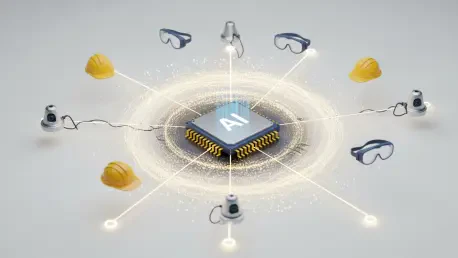
The Accelerate® Connected Platform provides a concrete example of how AI is integrated directly into the daily workflows of global organizations. Rather than functioning as a standalone tool that requires manual data entry, the VelocityAI layer acts as a cognitive engine embedded throughout the software. This integration allows safety professionals to manage complex tasks like hazardous material tracking and permit-to-work systems with greater speed and accuracy. By making AI a natural part of the user experience, the platform ensures that safety insights are available exactly when and where they are needed most.
Interdisciplinary applications of this technology demonstrate its versatility across various industrial functions, from physical ergonomics to contractor management. For instance, AI-driven motion analysis allows organizations to assess physical risks for workers on an assembly line without the need for expensive wearable sensors. This capability has a measurable impact on business value, protecting over 10 million workers worldwide while streamlining regulatory compliance. Such platforms allow global businesses to maintain a unified safety standard across multiple locations, ensuring that every employee operates under the same high level of protection.
Industry Insights on Human-Centered Innovation
A human-centered innovation philosophy is essential for the successful deployment of safety technologies in high-stakes environments. Experts like Dr. Julia Penfield emphasize that the role of artificial intelligence is to amplify human expertise, not to replace the critical judgment of safety professionals. In complex industrial settings, human intuition and experience remain invaluable; therefore, technology should serve as a powerful assistant that provides the best possible data for decision-making. This approach ensures that the “human-in-the-loop” remains the final authority in life-saving interventions, maintaining a balance between automation and accountability.
Perspectives from industry leaders and SaaS judges highlight that the most effective safety tools are built into the core framework of the software rather than being added as secondary features. Creating a seamless user experience requires a deep understanding of the daily challenges faced by workers on the factory floor or in the field. When AI is foundational to the platform, it can offer more accurate predictions and a more intuitive interface, leading to higher adoption rates. This commitment to building technology from the ground up ensures that the software remains a reliable partner in the long-term quest for incident-free operations.
Scientific rigor serves as the backbone of these advanced safety solutions, combining PhD-level data science with the practical knowledge of board-certified safety professionals. This multidisciplinary approach is necessary to ensure that the data being analyzed results in meaningful, life-saving outcomes. By marrying academic research with real-world safety experience, providers can create algorithms that account for the nuances of industrial work. This level of expertise builds the necessary trust for organizations to rely on AI when making decisions that directly affect the health and safety of their entire workforce.
The Future Landscape of Industrial Safety and Sustainability
The future of industrial safety will likely be characterized by the rise of autonomous risk detection and deeper predictive modeling. As the technology continues to mature, the marriage of domain expertise and computational power will enable systems to anticipate hazards with even greater precision. However, the path to this future requires overcoming inherent skepticism in high-risk industries through a commitment to data integrity and transparency. Adherence to international standards like ISO 27001 and SOC 2 compliance is non-negotiable for organizations that wish to lead the next wave of industrial safety innovation.
Broader implications for global business resilience include the critical role of AI in achieving Environmental, Social, and Governance (ESG) goals. By providing precise data on chemical usage and environmental impacts, these tools allow companies to create more sustainable and ethical operations. The long-term success of these technologies depends on finding a balance between technical achievement and the ethical deployment of safety measures. Organizations that prioritize responsible AI will not only protect their workers but also build more resilient operations that can withstand the complexities of a changing global economy.
Conclusion: A New Standard for Workplace Protection
The transition toward proactive workplace protection represented a significant milestone in industrial history as legacy systems were finally replaced by intelligent, predictive frameworks. Organizations that successfully leveraged human-centered AI models established new benchmarks for operational resilience, proving that the most effective safety solutions were those that prioritized human well-being through scientific rigor. These achievements served as a validation of the business case for responsible technology deployment, where technical achievement was balanced with ethical accountability. By fostering a culture of transparency and data integrity, the industry ensured that safety remained a fundamental human right rather than a mere regulatory requirement. The integration of these tools allowed companies to anticipate future challenges and implement preventative measures with unprecedented precision. Consequently, the adoption of “responsible” AI became the essential strategy for any organization seeking to maintain the highest standards of industrial safety and global sustainability.