
The transition period when a manufacturing facility halts production of one item to prepare for another represents one of the most significant threats to operational profitability in the modern industrial landscape. In an era where consumers demand an almost infinite variety of products delivered at breakneck speed, the traditional reliance on paper manuals and operator memory is no longer sufficient to maintain a competitive edge. This pressing need for agility has propelled the factory line changeover software market to the forefront of the digital transformation movement, as manufacturers seek to turn these historically chaotic periods of downtime into streamlined, data-driven procedures. These specialized software platforms are designed to plan, guide, validate, and analyze the setup sequences required for new product runs, ensuring that the transition occurs with minimal waste and maximum precision. By digitizing the changeover process, companies are finding they can significantly reduce setup loss, which encompasses both the literal downtime of the machinery and the quality errors that often plague the first few batches after a restart. As this technology matures, it is becoming a foundational element of the smart factory, serving as the connective tissue between the high-level production schedule and the physical reality of the shop floor.
The financial trajectory of this sector reflects its growing importance, with market valuations currently sitting at $780.6 million and projected to climb to $2,256.7 million by 2036. This growth represents a compound annual growth rate of 11.2 percent, a figure that highlights the aggressive adoption of digital tools across various manufacturing verticals. The expansion is largely fueled by a fundamental shift in how executive leadership views the changeover process; rather than accepting it as an unavoidable operational burden, managers now treat it as a manageable data point that can be optimized for measurable gains. In today’s high-mix, low-volume production environments, the frequency of line changes has increased exponentially, making the cumulative impact of even small inefficiencies devastating to the bottom line. Software solutions provide the necessary oversight to coordinate these complex maneuvers, allowing plants to navigate product variety without sacrificing their overall equipment effectiveness or eroding their profit margins through unnecessary idleness.
The Economic Logic: Why Digital Transitions Matter
The primary motivator for investing in digital changeover management is the aggressive protection of uptime in an increasingly fragmented market. As consumer preferences shift toward personalization and niche products, manufacturers are being forced to execute smaller batches, which naturally results in more frequent interruptions to the production flow. Each time a line stops, the clock begins ticking against the facility’s profitability, making the speed and accuracy of the subsequent setup critical. Without digital coordination, these frequent stops result in cumulative hidden losses that are often difficult to track or quantify through traditional means. Changeover software addresses this by providing a single source of truth for the entire setup process, allowing teams to identify exactly where delays occur and which steps are most prone to error. This transparency transforms the changeover from a “black box” event into a transparent series of tasks that can be refined and accelerated through continuous improvement initiatives.
Furthermore, the adoption of these platforms is driven by the need to mitigate the risks associated with the human element of manufacturing. In many legacy environments, the knowledge required to successfully reconfigure a complex machine is held by a handful of veteran operators who have learned the nuances of the equipment over decades. This “tribal knowledge” represents a significant single point of failure for an organization, especially as the workforce ages and retirement looms for many experienced technicians. Digital changeover software captures this expertise and formalizes it into structured, auditable workflows that can be followed by less experienced staff with a high degree of confidence. By institutionalizing this knowledge, companies ensure that their operational capabilities remain consistent regardless of individual employee turnover. This shift not only protects production capacity but also enhances safety and quality standards by removing the ambiguity that often leads to workplace accidents or defective product output during a hurried restart.
Artificial Intelligence: Refining Procedural Intelligence
As the market enters this current phase of maturity, the integration of artificial intelligence is becoming a standard feature rather than an experimental add-on. AI agents are now being deployed within changeover platforms to perform complex tasks such as comparing different versions of work instructions to identify procedural inconsistencies that might have been overlooked by human editors. These intelligent systems can analyze historical performance data to suggest optimizations for setup sequences, effectively acting as a digital consultant for the plant manager. For instance, if an AI detects that a specific step in a changeover consistently takes longer than planned, it can flag this anomaly and suggest alternative methods or tooling adjustments. This use of machine learning moves the technology beyond simple automation and into the realm of predictive intelligence, where the software anticipates problems before they manifest as downtime on the factory floor.
The impact of AI also extends to the digitization of worker knowledge, where it plays a crucial role in creating a more resilient and flexible workforce. Modern platforms use natural language processing and computer vision to help operators document their processes in real-time, which the AI then parses to create optimized digital guides. This ensures that the most efficient methods discovered by the best operators are immediately shared across the entire organization. Moreover, AI-driven validation tools can now monitor changeover activities through connected sensors or cameras, providing immediate feedback if a technician misses a step or installs a component incorrectly. This real-time quality assurance is vital for maintaining high standards in sectors where even a minor deviation in setup can lead to a massive batch of scrapped materials. By acting as a second set of eyes, these AI features provide a layer of security that traditional manual checklists simply cannot match.
Technical Architecture: Balancing Cloud and Edge
The current technological consensus among software providers emphasizes a hybrid approach to deployment that combines the scalability of the cloud with the reliability of edge computing. While cloud-based software-as-a-service models dominate the market due to their ease of deployment and lower upfront costs, manufacturers are increasingly wary of becoming entirely dependent on external network connectivity. In a high-stakes production environment, a momentary loss of internet access could theoretically halt a changeover in progress, leading to cascading delays across the entire facility. To prevent this, leading software architects are designing systems where critical changeover instructions and validation logic are stored locally on edge devices. This ensures that the production line remains functional and the setup can be completed even if the primary connection to the cloud is interrupted. Once the connection is restored, the edge device synchronizes its data with the central cloud repository to maintain an accurate record of the event.
This hybrid model also facilitates a “configure once, deploy everywhere” strategy that is particularly attractive to multinational corporations operating dozens of sites across the globe. Centralized cloud management allows corporate engineering teams to update a specific changeover procedure once and push that update to every relevant machine in the company’s global network instantly. This level of control ensures that a manufacturing innovation discovered in a plant in Germany can be immediately implemented in a sister facility in the United States or Mexico. However, while the cloud offers this incredible flexibility for management and reporting, the market still retains a segment for purely on-premise installations. These are typically favored by industries with extreme data security requirements or those operating in regions where internet infrastructure remains unreliable. For these organizations, the priority is data sovereignty and absolute control over the digital environment, even if it means sacrificing some of the rapid scalability offered by cloud-native solutions.
Core Capabilities: Digital Instructions and Scheduling
Within the broader suite of changeover software functionalities, digital work instructions are currently holding the largest share of the market because they address the most volatile variable in any factory: the human operator. Paper-based manuals are often out of date, difficult to navigate, and easily damaged in a shop floor environment, leading to confusion and errors during high-pressure transitions. In contrast, digital instructions are auditable, visual, and can be updated in real-time to reflect the latest engineering changes. These instructions often incorporate photos, videos, and 3D models to guide the technician through each step of the setup, ensuring that there is no ambiguity about which tool to use or which setting to adjust. By providing this clarity at the point of use, manufacturers can drastically reduce the cognitive load on their employees, which leads to faster completion times and a significant reduction in the risk of post-changeover quality failures.
Beyond guiding the physical actions of the workers, modern changeover software also plays a vital role in scheduling and tooling management to ensure that all necessary resources are aligned before the line stops. Advanced scheduling tools can analyze the production queue and recommend the most efficient sequence of product runs to minimize the total amount of changeover time required throughout a shift. For example, the software might suggest grouping products that share similar tooling requirements to reduce the complexity of the intervening transitions. Simultaneously, tooling management features track the location and condition of the physical assets needed for each setup, such as molds, dies, or specialized fixtures. This prevents the all-too-common scenario where a changeover is delayed because a critical piece of equipment cannot be found or is in need of repair. By integrating these logistical elements with the procedural guides, changeover software creates a cohesive ecosystem where everything needed for a successful transition is ready and waiting at the exact moment it is required.
Industry Verticals: Automotive and High-Tech Needs
The automotive sector remains the most significant consumer of changeover software, a fact driven by the sheer complexity and scale of modern vehicle assembly. Automotive production lines are marvels of synchronization, involving thousands of precisely timed steps and a high density of robotic systems that must be reconfigured for different car models or trim levels. In this environment, even a minor error in a fixture change or a software parameter can result in astronomical scrap costs or, worse, a safety defect that triggers a massive recall. Consequently, automotive manufacturers use changeover software to provide rigid governance over every model transition, ensuring that every digital and physical adjustment is validated against strict engineering standards. The high volume of production in this industry means that saving even a few minutes during a changeover can result in millions of dollars in recovered capacity over the course of a fiscal year, making the return on investment for this software exceptionally clear.
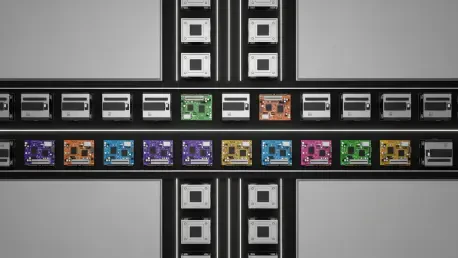
In the electronics and high-tech manufacturing industries, the demand for changeover software is driven by a different set of pressures, namely the rapid lifecycle of consumer products and the need for extreme agility. Companies in this space must be able to reconfigure their assembly lines almost instantly to keep up with the constant stream of new designs and seasonal demand spikes. The precision required for surface-mount technology and micro-electronics assembly means that changeovers must be handled with surgical accuracy to avoid damaging sensitive components. Software platforms in this sector often focus on the seamless integration of machine recipes, allowing operators to push new firmware and operational parameters to hundreds of machines simultaneously. This agility is a key competitive differentiator in a market where being the first to launch a new product can determine its ultimate success. For these manufacturers, changeover software is not just a tool for efficiency; it is an essential component of their innovation pipeline that allows them to move from design to mass production with unprecedented speed.
Regulated Sectors: Safety and Traceability Standards
For manufacturers in the food and beverage industry, the adoption of changeover software is primarily motivated by the critical need for consumer safety and allergen management. Cross-contamination is a constant risk when a production line switches from a product containing allergens, such as peanuts or dairy, to one that does not. Traditional cleaning and validation processes are often labor-intensive and prone to human error, which can lead to life-threatening situations for consumers and devastating legal consequences for the company. Changeover software mitigates this risk by enforcing strict cleaning protocols and requiring digital sign-offs for every sanitation step. The software can even prevent the line from restarting until all safety checks have been completed and verified, providing an unbreakable digital safety net. This level of oversight is becoming a standard requirement as global food safety regulations become more stringent and consumer transparency demands increase.
The pharmaceutical and medical device industries face even more rigorous demands, where every aspect of the manufacturing process must be validated and documented to satisfy regulatory bodies like the FDA or EMA. In these sectors, digital changeover software is a necessity for maintaining the “validated state” of the production environment. Every change to a machine’s configuration must be tracked with a detailed audit trail that includes who performed the change, what was changed, and who verified the result. Digital platforms streamline this process by automating the collection of this data and providing standardized templates for regulatory reports. This not only reduces the administrative burden on the plant staff but also ensures that the facility is always audit-ready. By moving away from paper-based logs, pharmaceutical companies can ensure the total integrity of their production data, which is vital for maintaining the high levels of product quality and safety required in the healthcare industry.
Regional Dynamics: Global Market Variations
The growth of the factory line changeover software market is manifesting in distinct ways across different geographical regions, reflecting the unique industrial priorities of each area. Mexico has emerged as a significant export powerhouse, with its manufacturing sector deeply integrated into the global automotive and aerospace supply chains. In this region, the focus is largely on achieving restart stability and ensuring the traceability of model changes to meet the demanding requirements of multinational vehicle programs. For Mexican manufacturers, changeover software is a critical tool for maintaining the thin profit margins typical of high-volume contract manufacturing. By improving the reliability of their setups, these facilities can offer better delivery windows and higher quality guarantees, making them more attractive partners for global brands. The emphasis here is on standardization and the ability to replicate complex procedures across a diverse workforce with varying levels of technical training.
In contrast, the market in the United Kingdom is characterized by a concerted effort to bring digital tools to small and medium-sized enterprises (SMEs). Government-backed initiatives and industrial consortia are working to lower the barriers to entry by providing the education and technical guidance necessary for smaller shops to adopt advanced manufacturing technologies. The goal is to democratize the benefits of changeover software, allowing smaller manufacturers to compete more effectively with larger, more established entities. This regional push is fostering a vibrant ecosystem of software providers who specialize in modular, easy-to-use platforms that do not require a massive IT infrastructure to maintain. Meanwhile, in the United States, the primary challenge lies in the integration of modern software with a vast landscape of legacy factories. American manufacturers are meticulously vetting how new changeover platforms interact with existing control systems and older machinery, with a heavy emphasis on cybersecurity and data ownership to ensure that modernization efforts do not inadvertently create new vulnerabilities.
Germany remains the global standard-bearer for precision engineering and advanced industrial applications, where changeover software is viewed as a natural extension of formal engineering change control. In this mature market, the focus is on the extreme precision of the digital-to-physical interface, ensuring that every digital tweak to a setup procedure is documented and approved within a strictly governed system. German manufacturers often lead the way in integrating changeover software with high-fidelity digital twins, allowing them to simulate and optimize a transition in a virtual environment before a single machine is stopped. Across the globe in Japan, the market is shaped by a philosophy of continuous, incremental improvement, or Kaizen. While Japan has some of the highest robot densities in the world, the adoption of changeover software is often geared toward reinforcing existing human-centric work routines. The software is designed to support the human operator rather than replace them, ensuring that the high standards of quality and stability for which Japanese manufacturing is known are maintained even as production becomes more flexible.
Implementation Challenges: Legacy Systems and Data
Despite the clear economic and operational benefits, the journey toward a fully digitized changeover process is often fraught with technical and organizational obstacles. One of the most significant barriers is the presence of legacy equipment that was manufactured long before the era of the industrial internet of things. These older machines often lack the necessary sensors or communication protocols to export data to a modern software platform, requiring companies to invest in specialized connectors and custom engineering work to bridge the gap. This “retrofitting” process can be both time-consuming and expensive, often delaying the realization of a return on investment for the digital transformation project. Furthermore, some legacy systems are so closed that any attempt to integrate them with external software could void warranties or introduce instability into the machine’s control logic, forcing manufacturers to make difficult choices between modernization and operational risk.
Another critical challenge involves the quality and organization of the data that fuels these software platforms. For a changeover system to be effective, it requires clean, centralized data regarding product specifications, tooling requirements, and machine parameters. However, in many organizations, this information is siloed across different departments or exists only in the form of unstructured documents and spreadsheets. A lack of organized data can stall project rollouts and lead to inconsistencies where the digital instructions do not match the physical reality of the machines. Success in this area requires more than just a software purchase; it demands a fundamental commitment to data governance and a cultural shift toward treating information as a strategic asset. Organizations that fail to address these underlying data issues often find that their digital tools create more confusion than they resolve, leading to frustration among the shop floor staff and a lack of trust in the new system.
Future Trajectories: Digital Twins and Beyond
The industry recognized that the path to reaching a $2.25 billion market valuation required more than just the deployment of software; it demanded a fundamental shift toward a culture of continuous, data-backed validation. Stakeholders across the manufacturing spectrum determined that the most successful implementations occurred when legacy hardware was properly bridged with modern IoT sensors, creating a seamless flow of information between generations of technology. Manufacturers who adopted these strategies early saw a marked improvement in their overall equipment effectiveness and a significant reduction in the hidden costs of production transitions. These organizations demonstrated that the successful digitization of the factory floor was as much about human change management as it was about technical integration. By empowering workers with better tools and clearer instructions, they were able to foster an environment where efficiency and quality were mutually reinforcing goals.
Moving forward, the focus shifted toward the use of high-fidelity digital twins and replayable operations to drive the next wave of optimization. This approach allowed engineers to synchronize machine telemetry with human actions in a single, unified timeline, providing the ability to play back a problematic changeover to identify the exact moment a deviation occurred. These final considerations proved that the integration of human insight with machine telemetry was the definitive solution for the challenges faced in the mid-decade production landscape. The lessons learned during this period established a new standard for industrial agility, where data was no longer just a byproduct of manufacturing but the primary driver of operational excellence. As companies look toward the next decade, the foundations laid by changeover software will continue to serve as the blueprint for the truly autonomous and resilient factories of the future.