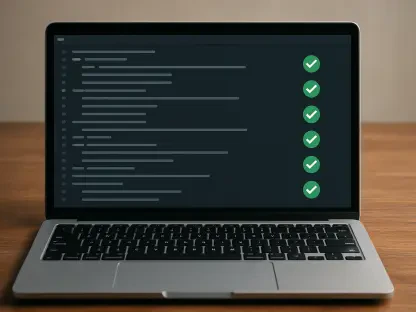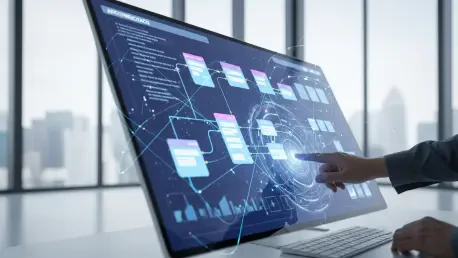

The traditional image of a lone programmer hunched over a keyboard for twelve hours straight is rapidly fading into obscurity as sophisticated artificial intelligence takes over the heavy lifting of modern software engineering. While early iterations of automated assistants were little more than glorified autocomplete systems, the current landscape features integrated environments capable of reasoning through complex architectural requirements and generating functional components in seconds. This transformation marks a fundamental shift in the developer’s role, transitioning from a manual laborer of syntax to a strategic orchestrator of logic. By 2026, the baseline expectation for any competitive engineering firm involves a seamless symbiosis between human intuition and machine efficiency. This integration does not merely accelerate the pace of production but also reshapes the very nature of digital innovation, enabling teams to tackle challenges that were previously deemed too resource-intensive or technically daunting.
Technical Mechanisms Powering Modern Code Generation
At the heart of this technological revolution lies the advancement of large language models specifically optimized for the nuances of programming logic and syntax structures. These models are built upon massive datasets encompassing billions of lines of open-source repositories and detailed technical documentation from the past several years. By utilizing transformer architectures, the AI analyzes the statistical relationships between various code snippets, learning not just the keywords of a language like Python or Rust, but the deeper semantic patterns that govern efficient execution. This deep learning foundation allows the system to recognize how specific libraries interact with hardware and how different frameworks manage state across distributed systems. Consequently, the AI develops a comprehensive understanding of diverse coding paradigms, ranging from functional programming to object-oriented design, allowing it to offer suggestions that are contextually relevant to the specific problem at hand.
When a developer initiates a project in a modern integrated development environment, the AI assistant performs a real-time analysis of the existing codebase to maintain structural harmony. It evaluates variable naming conventions, imported dependencies, and local file structures to ensure that any generated code aligns perfectly with the established architectural patterns. This context-aware processing goes beyond simple pattern matching; it involves predicting the developer’s intent by observing the flow of comments and recent edits. As the user accepts or modifies these suggestions, the underlying model engages in a continuous feedback loop, refining its outputs to better match the specific preferences of the engineering team. This iterative learning process ensures that the tool becomes more valuable over time, effectively specializing in the unique idiosyncrasies of a company’s proprietary stack while maintaining high standards of logical coherence and performance optimization across the entire application lifecycle.
Economic and Operational Impact of Automated Programming
The immediate advantage of incorporating AI into the development pipeline is a dramatic reduction in the time required to manage repetitive and boilerplate coding tasks. Developers no longer need to manually construct standard API endpoints or boilerplate database schemas, as these components can be generated through simple natural language descriptions or high-level outlines. This efficiency gain allows software companies to move from conceptualization to deployment at speeds that were unthinkable only a few years ago, significantly shortening the interval between product iterations. Furthermore, the technology acts as a force multiplier for smaller teams, enabling them to compete with larger enterprises by automating the mechanical aspects of the build process. By shifting the focus away from the minutiae of syntax, engineers are granted more space to engage in high-level problem solving and creative design, which are the true drivers of competitive advantage in a crowded digital marketplace.
Beyond the acceleration of production timelines, AI-driven development significantly enhances the overall quality and security of the software being produced today. Modern tools are equipped with sophisticated static analysis capabilities that allow them to identify potential logical errors and security vulnerabilities long before the code reaches the testing phase. By cross-referencing new snippets against known patterns of common exploits like SQL injection or cross-site scripting, the AI serves as a proactive defense mechanism that strengthens the final product. Additionally, these systems help maintain a high level of consistency across massive, multi-contributor projects by enforcing standardized documentation and style guides. This level of rigor ensures that even when dozens of different engineers contribute to a single repository, the resulting code remains maintainable and readable. The reduction in technical debt and the increase in system stability provide long-term financial benefits by lowering maintenance costs.
Current Toolsets and Specialized Industry Applications
The current market for developer tools has reached a state of maturity where specialized AI assistants are tailored to specific sectors like data science, mobile app development, and cloud infrastructure. GitHub Copilot remains a foundational presence in the industry, offering a broad range of general-purpose coding assistance that integrates directly into the most popular text editors. However, newer entrants like Cursor and Amazon CodeWhisperer have carved out significant niches by offering deeper integration with enterprise-grade security protocols and specialized cloud environments. These platforms provide more than just code completion; they offer conversational interfaces that allow architects to discuss system-wide changes and receive holistic advice on infrastructure scaling. In fields like data engineering, AI tools can automatically generate complex ETL pipelines and visualization scripts, allowing analysts to focus on extracting insights rather than writing the plumbing for data transport.
In the realm of DevOps and site reliability engineering, the application of artificial intelligence has revolutionized the way deployment pipelines are managed and monitored. Modern AI agents can now write and debug configuration-as-code files, automate container orchestration, and even predict potential system failures by analyzing historical performance data. This level of automation ensures that the transition from a local development environment to a global production stage is handled with minimal human intervention, reducing the risk of manual errors that lead to downtime. Furthermore, security-focused AI tools are being used to perform deep-dive audits of legacy codebases, identifying outdated dependencies and suggesting modern alternatives that improve both performance and safety. By providing a comprehensive suite of utilities that span the entire development lifecycle, these tools ensure that software is not just written faster, but is also built on a foundation that is resilient to the evolving threats found in the modern digital landscape.
Managing Risks and the Path Toward Autonomy
While the benefits of AI coding are substantial, the industry must remain vigilant regarding the inherent risks of relying on models that may occasionally produce logically flawed or insecure output. The phenomenon known as “hallucination,” where an AI generates code that appears correct but contains subtle errors or references non-existent libraries, remains a primary concern for lead engineers. To mitigate these dangers, organizations are adopting a rigorous “human-in-the-loop” strategy that emphasizes the importance of manual verification and comprehensive unit testing. Developers are encouraged to treat AI suggestions as a first draft that requires a critical eye and thorough peer review before integration. This approach ensures that the final product adheres to the highest standards of safety while still benefiting from the speed of automation. As the models evolve, the focus is shifting toward prompt engineering as a core competency, where the ability to communicate clearly with the AI is as vital as coding.
Looking toward the immediate horizon of 2027 and beyond, the trajectory of this technology points toward the rise of autonomous agents capable of managing entire project lifecycles with minimal oversight. These next-generation systems will likely move beyond simple code suggestions to proposing comprehensive architectural redesigns and managing the deployment of complex, multi-service applications. This shift will further elevate the role of the human developer to that of a high-level strategist and quality assurance lead, focusing on aligning technical execution with broader business objectives. The distinction between writing code and directing artificial intelligence will continue to blur as natural language becomes the primary interface for software creation. Organizations that successfully navigate this transition will be those that foster a culture of continuous learning and adapt their workflows to leverage the full potential of machine intelligence. The focus will remain on building robust, scalable systems that can adapt to changing user needs.
Strategic Integration for Future Software Success
The industry shifted its focus from basic automation to a holistic integration of machine intelligence across all stages of the software development lifecycle. Teams that adopted these tools early recognized that the primary challenge was not the technology itself but the cultural shift required to manage AI-generated assets effectively. They established rigorous protocols for testing and validation that ensured safety without sacrificing the immense speed gains provided by the models. By treating artificial intelligence as a collaborative partner rather than a simple replacement for human talent, engineering leaders successfully navigated the transition toward a more efficient and creative development environment. These early adopters laid the groundwork for a new era where technical proficiency was defined by the ability to oversee complex systems rather than the rote memorization of syntax rules. The success of these strategies proved that the future of engineering depended on a balance between the raw processing power of the machine and the nuanced judgment of the human architect.