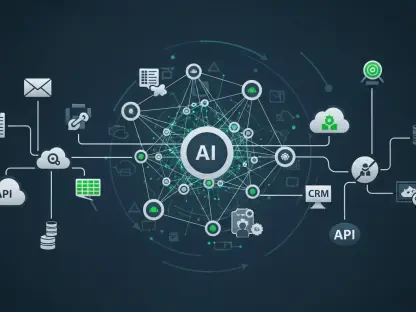

A groundbreaking alliance signed late last year is poised to fundamentally re-architect South Korea’s technological landscape, pairing the world’s most recognized AI pioneer with the nation’s most formidable industrial conglomerate. The exclusive agreement making Samsung SDS the first official reseller of OpenAI’s ChatGPT Enterprise in the country is far more than a simple distribution deal; it is the public face of a deep-seated collaboration designed to accelerate enterprise AI adoption and establish a new technological paradigm. This partnership acts as a powerful catalyst, merging Silicon Valley’s advanced software innovation with Korea’s unmatched hardware and industrial prowess, potentially setting a new global standard for how nations integrate artificial intelligence into their economic fabric.
A Landmark Alliance Forging a New AI Ecosystem
South Korea’s artificial intelligence sector has been on a steep upward trajectory, powered by a vibrant ecosystem of domestic giants like Naver and SK Telecom, alongside a burgeoning startup scene. The government has further fueled this growth through significant investments and supportive policies, aiming to position the nation as a global AI powerhouse. Yet, the entry of OpenAI through a formal, localized partnership with Samsung SDS represents an inflection point. This collaboration provides Korean enterprises with a streamlined and secure pathway to adopt one of the world’s most advanced generative AI platforms, bypassing the complexities of direct international procurement.
The strategic significance of this alliance cannot be overstated. For many Korean corporations, the primary barriers to adopting generative AI have been concerns over data security, regulatory compliance, and the challenge of integrating new technology with decades-old legacy systems. By tasking Samsung SDS with managing these hurdles, the partnership effectively de-risks the adoption process. The agreement is comprehensive, extending well beyond a simple reselling license. It encompasses full-service integration, localized technical support in the Korean language, and customization services to ensure ChatGPT Enterprise can be seamlessly woven into existing corporate workflows and enterprise resource planning (ERP) systems.
This full-spectrum support model is what distinguishes the partnership. Samsung SDS will not only sell access to the platform but will also act as a crucial intermediary, ensuring the technology is tailored to the unique linguistic and operational needs of the Korean market. This includes providing the enhanced data privacy protocols and advanced administrative controls inherent to the enterprise version, which are critical for businesses handling sensitive information. Consequently, this arrangement creates a trusted, end-to-end solution that empowers local companies, from major conglomerates to mid-sized businesses, to leverage cutting-edge AI without assuming undue technical or compliance burdens.
The Driving Forces and Market Momentum of Enterprise AI
Strategic Pivots and Global Ambitions Fueling the Partnership
For Samsung, this partnership marks a decisive and strategic pivot. Long known as a global leader in hardware, from semiconductors to consumer electronics, the conglomerate is now aggressively repositioning itself as an integrated AI solutions provider. This shift, championed by Chairman Lee Jae-yong, is part of a broader vision to dominate the next wave of technological innovation. By securing the exclusive rights to resell ChatGPT Enterprise, Samsung SDS gains a significant first-mover advantage, positioning itself to capture a substantial share of the burgeoning enterprise AI market and serve its extensive network of high-profile clients, including other “chaebols” like Hyundai and LG.
On the other side of the Pacific, the alliance is a cornerstone of OpenAI’s calculated expansion into Asia. Rather than pursuing a direct-to-market approach, CEO Sam Altman has favored forging deep relationships with established local leaders who understand the nuances of their respective markets. His strategic visits to Seoul and meetings with Samsung executives laid the groundwork for this collaboration, which allows OpenAI to scale its technology rapidly in a linguistically and regulatorily distinct environment. The establishment of an OpenAI office in Seoul earlier this year, coupled with public statements from regional leaders about Korea’s high adoption rates for paid ChatGPT services, underscores the company’s commitment to the region as a priority market.
Quantifying the Surge: AI Adoption Rates and Economic Forecasts
The timing of this partnership aligns perfectly with a groundswell of AI adoption across South Korea. Market data reveals an explosive growth in interest, with ChatGPT usage alone reported to have quadrupled over the past year. This enthusiasm is reinforced by robust government initiatives, including substantial subsidies for domestic chip manufacturing and the construction of new data centers, creating a highly fertile ground for AI investment. The Samsung SDS and OpenAI deal is set to pour fuel on this fire, making enterprise-grade AI more accessible, affordable, and manageable for a much broader segment of the corporate world.
The projected economic impact of this accelerated adoption is substantial and spans multiple key industries. In South Korea’s world-class manufacturing sector, the integration of generative AI promises to optimize complex supply chains, enable predictive maintenance for factory equipment, and accelerate research and development cycles. Similarly, the financial services industry stands to benefit from customized AI chatbots capable of handling sophisticated customer inquiries with greater speed and precision. Early reports from Korean firms that have begun piloting these integrations already indicate significant gains in productivity and operational efficiency, signaling a transformative shift that is just beginning to unfold.
Navigating the Complexities of a New AI Frontier
Despite the immense potential, the path to widespread AI integration is paved with significant technical challenges. Many large Korean corporations operate on complex, decades-old legacy software and ERP systems. Integrating a sophisticated AI platform like ChatGPT Enterprise into this existing infrastructure without disrupting critical business operations requires deep technical expertise and careful planning. Samsung SDS’s role is pivotal here, as its teams are tasked with bridging the gap between OpenAI’s cutting-edge cloud-based models and the on-premise realities of its corporate clients.
This landmark deal also intensifies the competitive landscape for domestic AI developers. Homegrown tech giants like Naver, which has invested heavily in its own large language model, HyperCLOVA X, and SK Telecom with its “A.” platform, now face a formidable new challenger. The combination of OpenAI’s globally recognized brand and Samsung’s deep enterprise relationships creates a powerful market force that could exert significant pressure on local players. This will likely spur a new wave of innovation and competition as Korean companies race to refine their offerings and highlight their unique advantages, such as models trained on more extensive Korean-language data sets.
Beyond the technical and competitive hurdles lie complex ethical considerations. The widespread deployment of generative AI in the enterprise raises critical questions about data bias, accountability, and the potential for job displacement. As companies begin to rely on AI for decision-making, customer interaction, and content creation, establishing clear governance frameworks and ethical guidelines becomes paramount. Navigating these issues will require a collaborative effort between technology providers, corporate adopters, and regulators to ensure that the deployment of AI is both responsible and beneficial for society at large.
The Regulatory Gauntlet: Data Privacy and National Compliance
One of the most critical aspects of this partnership is its approach to navigating South Korea’s stringent regulatory environment. The nation maintains some of the world’s most robust data sovereignty and privacy laws, which dictate how personal and corporate data can be stored, processed, and transferred. These regulations have historically been a significant hurdle for foreign technology companies seeking to offer cloud-based services in the country. Failure to comply can result in severe penalties and reputational damage, making it a top concern for any enterprise considering AI adoption.
Samsung SDS’s crucial role in this alliance is to serve as the gatekeeper for compliance. The company is responsible for ensuring that every implementation of ChatGPT Enterprise adheres strictly to local laws, effectively acting as a regulatory shield for its clients. This involves configuring the platform to meet Korean data handling standards and providing assurances that sensitive information will not be used to train OpenAI’s public models. By taking on this responsibility, Samsung SDS removes a major barrier to entry and provides the legal and operational certainty that Korean businesses require before committing to a new technology platform.
Ultimately, this collaboration establishes a powerful blueprint for how global AI firms can successfully enter regulated markets across Asia and beyond. Instead of attempting to navigate a complex web of local laws alone, partnering with a trusted domestic entity that possesses deep institutional knowledge and a strong compliance track record proves to be a far more effective strategy. This model of localized partnership not only accelerates market entry but also builds trust with both customers and regulators, creating a sustainable foundation for long-term growth and innovation.
Blueprint for Tomorrow: Synergies in Hardware and Software
The reseller agreement announced in December is merely the most visible component of a much deeper, more strategic alliance between Samsung and OpenAI that was formalized in October. This foundational collaboration is aimed at jointly advancing the future of global AI infrastructure and encompasses a wide range of initiatives in next-generation semiconductors, cloud services, and even maritime technologies. A cornerstone of this broader partnership is the ambitious “Stargate” initiative, a multi-year project focused on building massive, state-of-the-art data centers required to power the next generation of AI models.
This alliance creates a powerful synergy between Samsung’s world-leading hardware manufacturing capabilities and OpenAI’s cutting-edge AI software. Samsung is a dominant force in the production of high-bandwidth memory (HBM) chips, a critical component for the intensive computational workloads involved in training and running large language models. The collaboration is expected to facilitate the co-design of future hardware, including Samsung’s forthcoming HBM4 memory, optimized specifically for OpenAI’s AI architectures. This vertical integration promises to yield significant performance gains and provide Korean firms with a distinct competitive advantage through access to tightly coupled hardware and software systems.
Looking ahead, the collaboration is poised to expand into new and exciting domains. Future initiatives could include offering other OpenAI products, such as the DALL-E image generation model or custom GPTs tailored for specific industrial applications, through the Samsung SDS channel. There is also immense potential for integrating ChatGPT’s capabilities directly into Samsung’s vast consumer product ecosystem, from Galaxy smartphones and smart home appliances to its enterprise software suites. This long-term vision represents a complete fusion of hardware and software, where ambient, intelligent assistance becomes a seamless part of everyday life and work.
A Defining Moment for Korea’s Technological Sovereignty
The collaboration between Samsung SDS and OpenAI served as a powerful bridge, effectively connecting Silicon Valley’s relentless software innovation with South Korea’s deeply entrenched industrial and hardware dominance. It was a partnership that recognized the symbiotic relationship between advanced AI models and the specialized hardware required to run them, creating a virtuous cycle of co-development that benefited both entities immensely. This synergy not only provided Korean enterprises with unparalleled access to world-class AI but also solidified Samsung’s critical role in the global AI supply chain.
This agreement became the definitive catalyst for nationwide AI adoption, transforming how Korean industries from manufacturing to finance operated and competed on the global stage. By localizing technology and ensuring regulatory compliance, the partnership democratized access to enterprise-grade AI, fueling a wave of innovation and productivity growth across the economy. It established a new precedent for international tech collaborations, demonstrating a model of shared success built on mutual respect for local expertise and global ambition.
Ultimately, this alliance marked a pivotal moment in South Korea’s journey toward technological sovereignty. It was the point at which the nation fully leveraged its strengths in manufacturing and semiconductors to move beyond being a fast follower and instead became a co-architect of the global AI future. The partnership did not just import technology; it integrated it, shaped it, and used it as a foundation to build a more resilient and innovative economic future, firmly positioning South Korea as an indispensable leader in the dawning AI era.