
Vijay Raina is a seasoned authority in the enterprise SaaS landscape, specializing in the intersection of software architecture and organizational efficiency. With a career dedicated to deconstructing how technology manages human capital and business operations, he offers a unique perspective on the silent evolution currently reshaping the software industry. By focusing on how platforms bridge the gap between isolated tasks and global orchestration, Vijay helps organizations move beyond simple digitization toward a future where technology acts as an invisible, intelligent coordinator of complex work.
The following discussion explores the “Workflow Gravity Principle,” a concept explaining why all successful enterprise software eventually matures into a workflow engine. We delve into the critical distinction between building standalone features and designing adaptable business processes, using real-world examples like multi-country employee onboarding and complex leave approvals. Vijay also outlines a five-stage maturity model for digital transformation, highlighting why the most sophisticated systems are the ones that prioritize flexibility and friction-less collaboration over lengthy feature lists.
When you look at the natural lifecycle of a successful software product, how does the “Workflow Gravity Principle” shift the focus from solving isolated tasks to managing a web of interconnected business needs?
The “Workflow Gravity Principle” is something I began to notice after observing how different industries interact with their software as they scale up. Every SaaS product starts with a very specific, narrow goal—perhaps it’s just a tool to store a customer’s phone number or a way to log an employee’s start date. But as a business grows, that single data point starts to exert a kind of “gravitational pull” on every other department, because no business action happens in a total vacuum. What begins as an isolated task, like recording a sale in a CRM, naturally starts demanding approvals, triggering sales pipelines, and involving customer success teams.
I’ve seen this play out across every major category of enterprise software, where the product is essentially forced to become a workflow engine to stay relevant. In HR platforms, for instance, you see a transition where the software moves from being a simple digital filing cabinet for employee records to a central hub that orchestrates onboarding, performance reviews, and leave management. The same thing is happening in finance, where applications are now expected to connect procurement, compliance, and payment processes into one seamless thread. Behind the scenes, these tools are evolving into intelligent engines that ensure work moves forward with less manual effort and far greater consistency across the entire organization.
Why is it that simply adding new features is no longer enough for modern enterprises, and how does the shift toward building workflows actually solve deeper business problems?
There is a fundamental, almost structural difference between a feature and a workflow that many people overlook when they are just glancing at a marketing brochure. A feature is designed to complete a single, discrete activity—it’s the button you click to submit a request or the form you fill out to enter data. A workflow, however, is a much more sophisticated beast because it has to connect multiple people, systems, and decisions into one continuous, logical process. In an enterprise environment with thousands of employees, this distinction becomes a matter of survival because no two organizations actually operate in the exact same way.
For example, think about something as seemingly “simple” as a request for annual leave. In a small startup, that might just be a notification to a single manager who clicks “approve.” But in a large global corporation, that same request might trigger a cascade of events: approvals from a reporting manager, HR, and Finance, all while checking against local compliance rules and employee grades. The real challenge for software design today isn’t just building a “leave request” button; it’s building a system that can adapt to those specific, often messy, organizational rules without breaking.
Could you take us behind the curtain of a “simple” user action, such as a new hire clicking a link, to show the hidden complexity that a workflow engine must manage in a global company?
To understand the power of orchestration, you have to look at what happens when a company with, say, 5,000 employees brings someone new into their Singapore office. To that new marketing hire, the experience feels refreshingly simple and almost effortless—they just fill out a few digital forms, upload their ID, and get ready for their first day. But that “simple” experience is actually a mask for an incredibly complex set of invisible gears turning in the background to ensure everything is ready the moment they walk through the door.
While the employee sees one smooth process, the workflow engine is simultaneously firing off dozens of interconnected tasks across entirely different departments. It is provisioning email and application access through IT, sending salary data to payroll, and initiating building security protocols for their access badge. It’s also routing equipment requests to the right supply department and alerting the reporting manager to prepare an onboarding schedule. This is where enterprise software becomes truly powerful; it’s not about the screen the user is looking at, but about the quiet coordination of complex operations that prevents the employee from ever having to think about the administrative hurdles.
Beyond just saving time, what is the deeper impact of intelligent automation on the daily productivity and morale of a workforce?
We often talk about automation in terms of efficiency and “time saved,” but the true value is much more human—it’s about the total removal of friction from the workday. Think about how much mental energy and time is wasted when employees have to send “just checking in” emails, follow up on stalled approvals, or manually copy data from one system to another. These tiny, repetitive interactions are like sand in the gears of a company, and together they can consume hours of potentially creative and productive time every single week.
When you implement intelligently designed workflows, those frustrating, low-value interactions simply begin to disappear from the employee’s life. Managers suddenly have real-time visibility into every pending request without having to go on a “treasure hunt” for information, and leadership can finally trust that business processes and governance are being followed consistently. The most significant benefit isn’t just that the work gets done faster; it’s that people are finally freed from the burden of managing the process itself. This allows them to shift their focus back to the high-value work they were actually hired to do, which creates a much more engaging and rewarding professional experience.
You’ve described a “Workflow Maturity Journey” consisting of five stages; could you explain these levels and why many companies struggle to move past the initial digital phases?
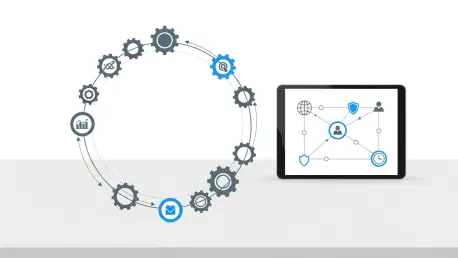
I find it very helpful to view digital transformation through five distinct stages of maturity, because it helps organizations realize that just “going paperless” is only the beginning. Level 1 is the most basic, where work is manual and dependent on spreadsheets and paper. Level 2 is where many companies get stuck; they’ve replaced the paper with software, but their departments are still operating as isolated islands. They’ve digitized the forms, but the “silos” are still very much intact, which means the data doesn’t flow between teams.
True transformation really begins at Level 3, where routine notifications and approvals start happening automatically. From there, you move to Level 4, which is “Connected Workflows,” where HR, Finance, IT, and Operations finally start functioning as part of one unified, connected process rather than a collection of separate applications. Finally, at Level 5, you reach “Intelligent Operations,” where AI and analytics are used to identify and fix bottlenecks before they even become a problem for the business. Personally, I believe the real shift happens when technology stops just “recording” what happened and starts actively “connecting” the work as it happens.
What have you observed about why enterprise customers are now prioritizing flexibility and integration over the traditional “list of features” when choosing a SaaS platform?
It has become very clear to me that enterprise customers are no longer shopping for a long list of standalone features. Instead, the most common questions I hear today are centered entirely around flexibility: “Can our approvals change automatically based on the situation?” or “Can this platform actually talk to our existing systems?” They are looking for software that is agile enough to adapt to their organization’s unique culture and structure, rather than a rigid tool that forces the company to change its way of working.
This observation is backed up by significant research from major institutions like Gartner, Deloitte, and Microsoft’s Work Trend Index, all of which suggest that the greatest value in digital transformation comes from removing friction and simplifying how work flows. Customers are essentially asking for software that can handle the exceptions and the nuances of their business units without requiring a manual workaround. They want a system that stays in the background, handling the repetitive “grunt work” and intervention-free tasks so that their teams can collaborate more effectively across different departments.
What is your forecast for the future of enterprise SaaS?
My forecast is that we are entering an era where the best enterprise software will become almost invisible. For a long time, software companies competed on who could have the biggest dashboards and the most “visible” features, but I believe the next generation will be judged by how much friction they can remove from the workday. The platforms that will truly dominate the market aren’t going to be the ones with the longest feature lists; they will be the ones that allow technology to fade into the background because the systems simply work without human intervention.
We are moving away from software that merely acts as a storage vault for information and toward systems that intelligently connect people, processes, and decisions. When approvals happen automatically and the right information reaches the right person at the exact moment they need it, employees stop thinking about the tool and start focusing on the outcome. Ultimately, the greatest achievement for any enterprise platform won’t be how sophisticated or “big” it looks on a screen, but how effortlessly it enables an organization to focus on creating real value while the software quietly handles the complexity behind the scenes.