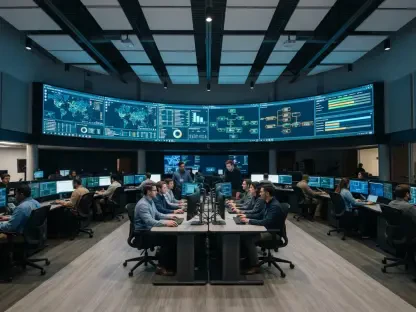

The sight of a manager or business owner huddled over a cluttered spreadsheet at midnight is a haunting relic of an era when labor logistics were dictated by guesswork and intuition rather than real-time data. For decades, the process of aligning available personnel with the shifting demands of a business was a tedious administrative burden that often resulted in missed opportunities and exhausted employees. In the current landscape of 2026, the transition from these reactive, manual processes toward proactive, strategic systems has become a fundamental necessity for survival. Historically, scheduling relied on “gut feelings” or historical anecdotes, which frequently led to costly errors such as overstaffing during quiet hours or employee burnout during unexpected surges. This legacy approach is increasingly incompatible with the volatility of the modern economy, where every minute of labor must be optimized to maintain profitability.
Modern workforce management (WFM) has evolved far beyond the simple act of filling shifts, transforming into a sophisticated pillar of corporate strategy driven by artificial intelligence. Leading the charge in this technological renaissance are platforms such as Legion Technologies, Quinyx, Deputy, UKG, and Rotageek, which have successfully solved the complexities that once plagued human schedulers. These tools use machine learning to synthesize vast streams of information, including demand forecasting, employee preferences, and local labor laws. By moving away from the static “pen-and-paper” methods of the past, industries like retail, healthcare, and logistics are finally able to deploy their human capital with surgical precision. This shift represents a move toward a more intelligent, humane, and efficient way of managing people.
The emergence of AI-driven platforms has effectively bridged the gap between operational needs and human capability. These systems do not merely automate a schedule; they analyze millions of data points to predict the future with remarkable accuracy. In contrast to the manual methods that once dominated the industry, modern AI-native platforms are built to learn from every interaction and shift. This means that as a business grows and its needs change, the software evolves alongside it, ensuring that workforce logistics remain a competitive advantage rather than a logistical bottleneck. The focus has shifted from “how do we fill this shift” to “how do we optimize the entire operational flow.”
Evolution of Modern Labor Logistics
The path toward the current state of labor logistics began when the limitations of spreadsheets became an undeniable barrier to growth. Manual workforce management was essentially a game of probability, where managers guessed staffing needs based on the same week of the previous year. This approach often ignored the granular realities of modern business, such as sudden weather changes, local events, or digital shopping trends. By 2026, the adoption of AI replaced these shaky foundations with predictive models that are both robust and flexible. Platforms like Legion Technologies have introduced capabilities such as “Agentic AI,” where the system does not just suggest a schedule but actively identifies inefficiencies and proposes solutions before a human manager even notices a discrepancy.
Furthermore, the integration of these systems into the broader corporate ecosystem has redefined the role of a manager. Instead of spending ten to fifteen hours a week on scheduling, leaders are now free to focus on coaching, mentoring, and improving the customer experience. This transformation was necessitated by the rising complexity of the global labor market, where worker expectations for flexibility have reached an all-time high. Manual systems simply could not handle the millions of permutations required to balance a fair schedule with the profit-driven needs of a large enterprise. The rise of AI has effectively democratized advanced logistics, allowing even smaller operations to benefit from tools that were once the exclusive domain of tech giants.
The technological consensus across the industry suggests that workforce management is no longer a back-office function but a frontline strategy. As platforms like Quinyx and UKG have matured, they have moved toward a unified approach that combines payroll, compliance, and engagement into a single, intelligent interface. This consolidation has eliminated the data silos that used to lead to payroll errors and scheduling conflicts. By 2026, the standard for excellence in labor management will be defined by how well a company can synchronize its human talent with its operational goals in real-time, a feat that would be impossible without the computational power of artificial intelligence.
Comparing AI-Driven Systems and Manual Methods
Operational Precision and Demand Forecasting
The most striking difference between AI-driven systems and manual methods lies in the precision of demand forecasting. Manual scheduling typically relies on broad historical data that lacks the granularity needed for modern operations. A manager might look at sales from the previous June to predict needs for the upcoming month, but this fails to account for the minute-to-minute fluctuations that define the current retail or service environment. In contrast, AI platforms like Quinyx and Rotageek utilize granular forecasting to predict customer traffic and operational demand in 15-to-60-minute intervals. This level of detail allows businesses to “right-size” their staffing, ensuring they are neither wasting money on idle workers nor losing sales due to understaffing.
Rotageek, for example, specializes in ingesting highly specific data points that go far beyond simple sales figures. In a healthcare setting, the platform can analyze patient check-in volumes or clinical transaction data to ensure that staffing levels in emergency rooms or clinics are perfectly aligned with anticipated patient needs. In a logistics hub, the same technology might analyze incoming shipment data to prepare the floor for a sudden influx of inventory. This technical shift moves businesses from a reactive stance, where they are constantly playing catch-up, to a state of high-precision, data-backed execution. The mathematical models employed by these systems can account for variables that no human brain could manage simultaneously, leading to a much more stable operational flow.
Moreover, the forecasting capabilities of AI-driven systems are continuously improving through machine learning. Each time a schedule is executed, the platform compares the predicted demand with the actual outcome, refining its algorithms for the next cycle. This creates a feedback loop of increasing accuracy that manual methods can never replicate. While a manual scheduler might eventually develop a “feel” for the business, that knowledge often leaves the company when the manager moves on. AI-driven forecasting, however, creates a permanent, institutional intelligence that grows more valuable over time. This ensures that the business remains agile and responsive to the rapid changes of the 2026 market.
Employee Experience and Flexibility
One of the most profound impacts of shifting from manual scheduling to AI-driven systems is the improvement in the employee experience (EX). Manual processes are often rigid and struggle to account for the personal lives and preferences of individual workers. This can lead to a sense of unfairness, especially if certain shifts are consistently assigned to the same individuals regardless of their availability or desire for work-life balance. AI-native solutions like Legion Technologies and mobile-first apps like Deputy have flipped this dynamic by prioritizing the worker’s perspective. These platforms offer self-service options that allow employees to claim open shifts, swap assignments with colleagues, and set their own availability directly from their smartphones.
The use of an AI assistant, such as “Ava” on the Quinyx platform, provides a conversational interface that makes managing a work schedule feel as simple as texting a friend. Employees can ask Ava about their next shift, request time off, or inquire about company policies without having to track down a busy manager. By balancing mathematical optimization with human welfare, these AI systems help maintain high levels of morale and job satisfaction. This is particularly critical in industries with high turnover rates, as workers who feel their time is respected and their preferences are considered are far more likely to remain with their employer. Manual “pen-and-paper” methods, which often feel arbitrary or biased, simply cannot compete with the transparency and fairness of an automated system.
Furthermore, AI platforms are designed to ensure fair shift distribution, preventing “clopening” shifts (where an employee works a late closing shift followed immediately by an early opening shift) that contribute so heavily to burnout. By integrating fatigue management directly into the scheduling algorithm, tools like UKG and Legion protect the health and productivity of the workforce. This proactive approach to employee well-being is a far cry from manual scheduling, where a manager might accidentally overlook an employee’s rest period while trying to fill a sudden gap. In 2026, the ability to offer a flexible, predictable, and fair work environment is a key differentiator in the war for talent.
Regulatory Compliance and Risk Management
Managing complex labor laws across different jurisdictions has become a significant burden for businesses still relying on manual scheduling. Between 2026 and 2028, the legal landscape for hourly labor is expected to become even more complex, with new regulations regarding predictive scheduling, overtime, and mandatory rest periods. For a manual scheduler, keeping track of these changes while managing a large team is an invitation to accidental violations and costly legal infractions. Large-scale enterprise systems like UKG (Ultimate Kronos Group) act as “automated guardians,” integrating collective bargaining agreements and multi-jurisdictional tax compliance directly into the daily workflow.
These platforms use artificial intelligence to detect payroll anomalies and automatically prevent legal infractions. For instance, if a schedule is created that violates a local labor law regarding maximum weekly work hours, the system will flag the error and suggest a correction before the schedule is even published. This level of risk management is impossible to achieve through manual oversight alone. While a human manager might overlook a required break during a busy holiday rush, the AI remains vigilant, ensuring that every shift remains within the bounds of federal, state, and local regulations. This not only protects the company from fines but also shields it from the reputational damage associated with labor disputes.
Additionally, AI-driven WFM systems provide an audit trail of all scheduling decisions, which is invaluable during a legal challenge or an internal audit. Because every shift assignment and schedule change is recorded and tracked, businesses can easily demonstrate their compliance with labor standards and fair labor practices. Manual records are often incomplete or inconsistent, making it difficult to defend against claims of unfair treatment. By automating the enforcement of compliance rules, organizations can significantly reduce their risk profile while ensuring that all employees are treated according to the law. In 2026, the peace of mind provided by these “automated guardians” is one of the most compelling reasons for the total abandonment of manual scheduling.
Challenges and Considerations in Implementation
Transitioning to AI-driven workforce management presents several practical obstacles, especially for large organizations with entrenched legacy systems. One of the primary hurdles is the technical integration of specialized AI solutions, such as Legion Technologies, into existing payroll and human resources ecosystems. Many older platforms were not designed to exchange data with modern machine learning algorithms, leading to friction during the initial setup. For a seamless transition, companies must often invest in middleware or custom API development to ensure that information flows correctly between the scheduling engine and the payroll department. Without this connectivity, the AI may make decisions based on incomplete or outdated data, which undermines the entire purpose of the upgrade.
There is also the significant challenge of “explainable AI,” which has become a major talking point in 2026. As algorithms take over responsibility for shift assignments and performance tracking, businesses must be able to explain how and why certain decisions are made. This is essential for maintaining trust within the workforce and for ensuring that AI does not inadvertently make biased or discriminatory decisions. For example, if an algorithm consistently assigns the most profitable shifts to a specific demographic, the company must be able to audit the logic behind those choices to ensure fairness. Transparency in AI decision-making is no longer a luxury; it is a requirement for maintaining an ethical and legally compliant workplace.
Furthermore, smaller businesses using tools like Deputy must navigate the balance between simplicity and the need for more advanced features as they grow. While an intuitive, mobile-first app is perfect for a single-location restaurant, a growing franchise may find it needs more robust forecasting and compliance tools. The risk of “feature creep” or choosing a system that the business will eventually outgrow is a constant concern. Additionally, the shift toward “Agentic AI”—where systems take action, such as contacting employees to cover a shift without human intervention—requires a high level of trust in underlying data accuracy. If the initial data input is flawed, the AI could trigger a cascade of automated errors that are difficult to undo manually.
Strategic Recommendations for Workforce Optimization
The choice between AI-driven platforms in 2026 depends heavily on the specific scale and complexity of an organization. There is no “one-size-fits-all” solution, and businesses must carefully evaluate their unique pain points before committing to a platform. For massive enterprises requiring a comprehensive “one-stop shop” that handles everything from payroll to long-term human capital management, UKG remains the most stable and integrated powerhouse. Its ability to handle deep-tier reporting and multijurisdictional complexity makes it the gold standard for organizations that prioritize stability and deep integration over the agility of a standalone tool.
Organizations with highly volatile demand, such as healthcare facilities or large logistics hubs, should prioritize the specialized forecasting capabilities found in Rotageek. When the stakes of understaffing involve patient safety or the total breakdown of a supply chain, the precision of demand-to-labor alignment becomes the most important factor. In these environments, general-purpose software may not offer the granularity needed to handle the rapid fluctuations of the workday. Selecting a “surgical tool” like Rotageek ensures that staffing levels are always optimized for the specific demands of the hour, rather than just the general trends of the week.
For retail organizations with large hourly workforces looking for the most advanced mathematical modeling, Legion Technologies is the recommended choice. Their focus on agentic AI allows for a level of automation that reduces the administrative burden on managers to nearly zero. Between 2026 and 2028, an AI’s ability to not only predict a problem but also solve it autonomously will be the primary driver of efficiency. Meanwhile, multinational companies that need to balance deep forecasting with a strong focus on frontline worker communication across different cultural contexts will find Quinyx to be the most balanced option. Its conversational AI assistant, Ava, bridges the gap between complex data and the human experience.
Finally, for small and midsize businesses that require agility and ease of use without a massive IT budget, Deputy remains the standard-bearer. Its mobile-first approach and intuitive interface allow managers to get up and running in a matter of days, providing immediate visibility into attendance and labor costs. Regardless of the specific tool chosen, the transition away from manual scheduling is a non-negotiable step for any business looking to remain competitive. Investing in AI-driven workforce management can yield between 1% and 5% in labor cost savings. For a large-scale operation with an annual labor expenditure of $195 million, even a modest 1% gain in efficiency translates to $1.95 million in annual savings, while a 5% gain represents nearly $10 million in found money.
The transition to AI-driven workforce management represented a necessary response to rising labor costs and the increasing volatility of global demand. While each platform discussed had its own strengths, the overall movement toward automation provided a clear path to both profitability and employee satisfaction. Organizations that successfully integrated these tools were able to move past the limitations of the spreadsheet era, creating a more synchronized and responsive operational environment. By 2026, it was evident that the goal was no longer just filling shifts, but creating a workplace where the needs of the business, the customer, and the employee were met simultaneously. The future of labor optimization rested with those who replaced intuition with intelligence.