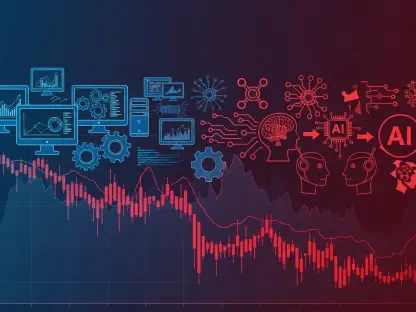

The traditional corporate dashboard, once the glowing altar of modern productivity, is rapidly fading into a relic of a bygone manual era. For decades, the primary value of enterprise software was measured by the elegance of its user interface and the ease with which a human could navigate its menus. Today, that paradigm has been inverted as businesses prioritize systems that do not need to be seen to be effective. The digital workspace is no longer a collection of tools for humans to use; it has become an environment where autonomous agents execute complex business logic with minimal oversight.
The Great Decoupling: Transitioning From Static SaaS to Autonomous Service Models
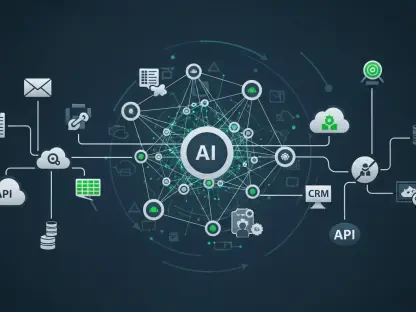
The shift from interfaces to outcomes marks a fundamental departure from the human-centric design of the last twenty years. In the old model, software functioned as a static container for data, requiring a human “bridge” to move information between silos. Now, API-driven autonomous execution allows systems to talk directly to one another, bypassing the need for a visual front end entirely. This decoupling means that the success of a platform is no longer tied to how much time a user spends inside it, but how effectively it contributes to a finished business objective.
The current enterprise landscape is witnessing an evolution of the digital employee experience where manual data orchestration is becoming obsolete. Previously, a marketing manager might have spent hours reconciling lead data between a CRM and an email tool. Today, AI agents handle this orchestration as a background process, treating software applications as utility providers rather than primary workspaces. This transition toward “headless” software allows the enterprise to operate at a speed that was previously impossible when human clicks were the primary bottleneck.
As software transitions from a workspace to an underlying utility, the very definition of a “user” is changing. In this new framework, the primary consumer of a SaaS product is often another piece of software rather than a person. This shift requires a reimagining of how applications are built, moving away from pixel-perfect buttons toward robust, high-bandwidth data pathways that allow agents to extract and input information without friction.
Market Dynamics and the Evolution of Autonomous Workflows
Emerging Trends in Agentic Orchestration and Collaboration
The industry has moved decisively beyond simple generative assistance toward agents that execute multi-step business processes independently. While early AI tools focused on suggesting content or summarizing text, modern agentic systems are capable of managing entire lifecycles, from procurement to customer support. These agents do not just offer advice; they take action, making choices based on real-time data and predefined company goals.
The interoperability revolution is currently breaking down the long-standing data silos that have plagued the enterprise. Frameworks like the Model Context Protocol and Microsoft’s Work IQ have created a standardized language for agents to communicate across different platforms. This connectivity allows for the rise of collaborative agent ecosystems where a logistics agent can share state and context with a finance agent, ensuring that a delay in shipping automatically triggers an invoice adjustment without human intervention.
Growth Projections and the Economic Impact of Autonomous Productivity
Capital allocation is shifting rapidly from traditional seat-based software licenses to agent-driven consumption models. Enterprises are increasingly reluctant to pay for “empty” seats, preferring instead to invest in AI-as-a-Service models where costs are tied to successful outcomes. This economic shift is forcing legacy SaaS providers to pivot their pricing strategies, moving away from the headcount-based metrics that defined the previous decade of cloud computing.
Performance indicators for the agentic era are being redefined to prioritize objective-driven ROI. Traditional metrics like “time on task” or “daily active users” are becoming irrelevant in a world where the most efficient process is the one that requires the least human time. Organizations are now measuring the velocity of autonomous workflows and the accuracy of agent-led decisions, treating AI agents as a digital workforce whose productivity is tracked with the same rigor as human employees.
Navigating the Technical and Operational Hurdles of Autonomy
The integration paradox remains a significant challenge as companies attempt to connect legacy infrastructure with modern agentic layers. Many organizations are finding that while their new AI agents are highly capable, the aging databases and on-premise systems they must interact with are not ready for the speed of autonomous queries. Solving this complexity requires a significant investment in “middleware for agents” that can translate high-level autonomous requests into legacy system commands.
Bridging the governance gap is equally critical as the risk of “shadow AI” grows within departments that deploy agents without central oversight. When agents make decisions autonomously, the lack of a clear audit trail can lead to compliance disasters or financial errors. Organizations are struggling to implement monitoring tools that can keep pace with the sheer volume of actions performed by an interconnected network of agents across the enterprise.
The Regulatory Landscape and the Mandate for AI Governance
Standardizing trust has become a prerequisite for scaling autonomy, with frameworks like ISO 42001 serving as essential benchmarks. These standards provide a roadmap for responsible AI, ensuring that every autonomous action is traceable and every decision is grounded in verified data. Without these guardrails, the risk of “hallucinated” business logic could lead to systemic failures that are difficult to diagnose after the fact.
Data privacy in a collaborative environment presents a unique set of security risks as agents share sensitive context across diverse platforms. To maintain security, enterprises must develop sophisticated permission structures that follow the agent, not just the user. This ensures that even as an agent moves between a public cloud and a private database, it only carries the specific data necessary to complete its current task, preventing unauthorized context leakage.
The Future of the Enterprise: A World Without Dashboards
Technical roles are undergoing a dramatic transformation, giving rise to the “architects of agency.” These professionals no longer focus on building interfaces or writing boilerplate code; instead, they spend their time designing high-level guardrails and defining the logic that governs autonomous behavior. Their primary value lies in their ability to translate complex business strategies into executable constraints for agentic networks.
Disruptive innovations on the horizon suggest that agent-to-agent communication will soon become the primary driver of market value. As these systems become more ubiquitous, the competitive moat for a company will shift from the data it owns to the efficiency of its orchestration layer. Mastery of these autonomous workflows is becoming the primary differentiator for market leaders, as those who can execute faster with fewer errors will naturally dominate their sectors.
Strategic Imperatives for the Autonomous Era
The transition from manual software interaction to unified autonomy is now an operational reality. Businesses that successfully navigated this shift moved away from seeing AI as a tool and started treating it as a foundational layer of their infrastructure. This evolution required a total commitment to API-first ecosystems and the abandonment of the idea that humans must be the primary operators of every digital process.
Investment strategies for the coming years should prioritize governance infrastructure over shiny new front-end tools. Building a robust layer of oversight and ensuring that data is accessible to agents are the most important steps toward achieving long-term efficiency. The focus has moved toward creating a “liquid” data environment where information flows seamlessly between autonomous entities under the watchful eye of human supervisors.
The long-term outlook for the enterprise is defined by a landscape where efficiency and interoperability are the default. Those who built their strategy on the mastery of agentic orchestration secured a significant lead, while those who clung to human-centric SaaS models found themselves burdened by high labor costs and slow execution speeds. The era of the dashboard ended not because the data disappeared, but because the need for a human to look at it finally did.