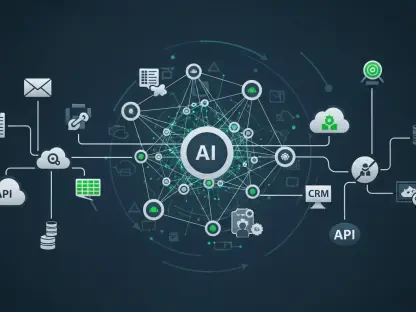

The rapid integration of artificial intelligence into core business functions has triggered a fundamental shift in enterprise security, creating a landscape where traditional defenses are proving woefully inadequate. As organizations race to harness the power of AI for innovation and efficiency, they are confronting a critical challenge: security models built for human users simply cannot govern the autonomous, high-velocity operations of AI agents. In this new paradigm, where intelligent machines access sensitive data and perform critical tasks at scale, identity has unequivocally become the new security perimeter. Securing the modern enterprise is no longer about building digital walls around networks but about meticulously managing and governing every single identity—human and machine—that interacts with corporate assets. This evolution has transformed a modern identity security strategy from a compliance-driven best practice into an absolute necessity for the safe and scalable adoption of AI.
The New Scale of Identity Complexity
The modern enterprise is navigating a complex and fragmented ecosystem of identities that extends far beyond its direct employees, now encompassing a vast network of contractors, partners, suppliers, and a rapidly expanding universe of non-human entities. This includes a dizzying array of service accounts, machine workloads, APIs, and IoT devices, each requiring specific access to different systems and data across a hybrid environment that blends on-premise data centers with multi-cloud infrastructures. Traditional identity management tools, designed for a simpler time with more predictable access patterns, were never engineered to handle this level of complexity, diversity, or sheer scale. This mismatch leaves organizations dangerously exposed to security gaps, compliance failures, and sophisticated attack vectors that exploit ungoverned identities, turning what should be a business asset into a significant liability that hinders digital transformation.
This challenge has been magnified exponentially by the emergence of AI agents as the fastest-growing and most powerful class of non-human identities. Unlike human users who operate within predictable work hours and behavioral patterns, AI identities function continuously at machine speed, making autonomous decisions and interacting with both human and other non-human counterparts without direct oversight. To perform their designated functions effectively, these agents often require privileged access to vast and sensitive datasets, creating an unprecedented and dynamic risk surface. The core security problem becomes one of governance at an entirely new scale and velocity. Properly provisioning AI access, continuously monitoring its activities for anomalous behavior, and securely de-provisioning it once a task is complete is a challenge that legacy systems, with their manual review cycles and static policies, simply cannot address.
A Strategic Pivot from Compliance to Enablement
This evolving threat landscape has forced a profound re-evaluation of identity security, elevating it from a back-office compliance function to a strategic business enabler that is central to corporate innovation. It now serves as the essential guardrail that allows organizations to confidently deploy powerful AI technologies while ensuring that their operations remain aligned with corporate policy, regulatory requirements, and overall risk tolerance. A robust, modern identity framework provides the granular structure and continuous oversight necessary to prevent data breaches, insider threats, and the misuse of resources by autonomous systems. Without this foundational layer of control, the immense transformative potential of artificial intelligence is fundamentally undermined by an unacceptable level of security risk, making identity the linchpin for responsible AI adoption and sustainable growth in the digital age.
To meet this critical demand, a new generation of AI-powered identity security platforms has emerged as the definitive solution to the complexities of the modern enterprise. These unified solutions consolidate previously siloed security functions—including identity governance and administration (IGA), privileged access management (PAM), and application access governance—into a single, cohesive system capable of managing the entire digital ecosystem. They are purpose-built to oversee the complete lifecycle of both human and non-human identities, governing their access with precision across all applications, data repositories, and infrastructure. Crucially, these advanced platforms leverage AI-enabled intelligence to automate historically cumbersome processes like access reviews, entitlement management, and provisioning. This creates a powerful feedback loop where the intelligence of AI is used to manage the security challenges that AI itself creates, ensuring governance can operate at the speed of business.
The Definitive Market Endorsement
The strategic importance of this new, identity-first approach to security is not just a theoretical concept; it is being decisively validated by major movements in the financial markets, signaling a clear industry consensus. The recent infusion of hundreds of millions of dollars into leading identity security firms by sophisticated, tier-one investors represents a powerful market endorsement of this vision. This massive influx of capital is a calculated bet that a modern, comprehensive identity platform is the critical infrastructure required for the next decade of enterprise technology. Investors with deep, long-standing experience in the cybersecurity sector recognize that such a platform is not an optional add-on but a fundamental prerequisite for achieving global scale and sustainable growth in an economy increasingly driven by artificial intelligence. Their significant financial commitments underscore a shared belief that the future of enterprise security is built on a foundation of identity.
This strategic investment is earmarked to fuel the next wave of innovation in the identity security space, with a sharp focus on accelerating product development and research tailored specifically to AI-based utilities and enhanced non-human identity management. A primary objective is to facilitate the migration of enterprises from outdated, siloed legacy systems to a modern, integrated platform that can handle the demands of the AI era. By deepening integrations with global cloud hyperscalers and strengthening go-to-market channels through partnerships with leading professional services firms, these platforms are being positioned to become the core identity fabric of the enterprise. This concerted effort is designed to provide the secure and governed foundation necessary for organizations to confidently pursue their modernization initiatives and unlock the full potential of their AI-powered future.
A New Foundation Was Forged
In the end, the narrative of enterprise technology underwent a fundamental revision. The conversation shifted from building taller walls to understanding who, and what, was inside them. Identity security ascended from a tactical, compliance-driven necessity to become the strategic bedrock upon which the entire AI-powered enterprise was built. Organizations that successfully navigated this transition and embraced a comprehensive, identity-first security model were the ones positioned to innovate securely and lead in their respective industries. They understood that providing the structure, oversight, and control necessary to govern every identity type at scale was not a barrier to progress but the very key that unlocked a future of safe, efficient, and transformative artificial intelligence. This critical pivot ensured that as technology grew more intelligent, the frameworks governing it grew wiser.