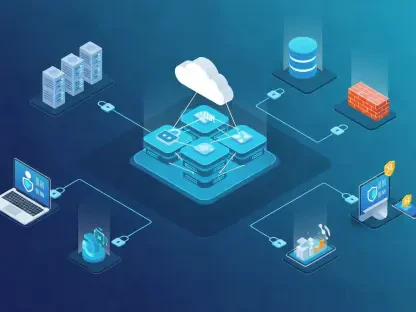

The relentless pace of modern software development, fueled by the vast ecosystem of open source components, has fundamentally reshaped how applications are built and delivered. This review will explore the evolution of repository security firewalls, a critical technology designed to protect the software supply chain. We will examine its key features, operational mechanics, and the impact it has had on application security. The purpose of this review is to provide a thorough understanding of the technology, its current capabilities, and its potential future development in an era of escalating supply chain threats.
Introduction to the Modern Software Supply Chain Threat
The landscape of application security is undergoing a seismic shift, driven by attackers who have moved their focus from exploiting downstream applications to poisoning the upstream sources. This evolution in tactics targets the very foundation of modern development: the open source supply chain. In this context, repository security firewalls have emerged as a necessary defense, operating on the principle that it is far more effective to prevent a threat from entering an environment than it is to find and remediate it later. Traditional security models, which often react to known vulnerabilities, are struggling to contend with novel threats like intentionally malicious packages, establishing the firewall’s relevance as a frontline defense.
The Inadequacy of CVE-Based Security
For years, security programs have been anchored by Common Vulnerabilities and Exposures (CVEs) cataloged in public databases. While this system provides a standardized language for known flaws, it is increasingly strained by the volume and velocity of modern threats. A significant delay often exists between the public disclosure of a vulnerability and its formal entry and scoring in a database like the NVD. This lag creates a critical window of exposure during which an automated attack can be launched and widely weaponized before many organizations are even aware of the risk.
Furthermore, a reliance on CVEs alone can lead to significant operational challenges. Many vulnerabilities in public databases lack a precise severity score, forcing security teams into a cycle of guesswork and manual prioritization. Conversely, inflated or contextually irrelevant scores can trigger a flood of alerts, creating a state of fatigue where genuinely critical issues are lost in the noise. This model functions for well-documented, unintentional flaws but falters completely when faced with threats that have no CVE assigned at all.
Differentiating Vulnerabilities from Intentional Malware
A crucial distinction in modern supply chain security is the one between a vulnerability and malware. A vulnerability represents an unintentional weakness or error in otherwise legitimate code, which an attacker might exploit. Malware, in contrast, is a component designed with malicious intent from the outset, engineered specifically to compromise systems, exfiltrate data, or cause other harm. This fundamental difference demands a separate risk calculus and response strategy.
An organization might decide to accept the risk of a low-severity vulnerability in a non-critical application, perhaps with compensating controls in place. However, a malicious package is never an acceptable risk under any circumstance. Its very presence within a development environment, even on a single developer’s machine for temporary experimentation, constitutes a security breach. Waiting for a scheduled software composition analysis (SCA) scan to detect such a component is a reactive posture that concedes the initial entry to the attacker.
Primary Attack Vectors: Proxy Repositories and Shadow Downloads
Attackers exploit two primary pathways to inject malware into a software development lifecycle. The most common is through proxy repositories. Most enterprise development teams use a repository manager to cache components from public ecosystems like npm, PyPI, or Maven Central. Without a security firewall, this manager will indiscriminately download and store any requested package, including newly published malware, packages from hijacked maintainer accounts, or cleverly disguised typosquatted libraries that mimic popular ones. Once cached internally, these malicious components are trusted and distributed throughout the organization.
The second vector is through shadow downloads. This occurs when developers bypass the centralized repository manager and download components directly from public sources. These actions create a significant blind spot for security and governance teams, as there is no central record of what has been downloaded and no way to enforce organizational policies. This ungoverned access provides a direct, unmonitored channel for malicious code to enter the development environment, completely sidestepping any centralized security controls.
A Deep Dive into Repository Firewall Technology
At its core, a repository security firewall functions as an intelligent gatekeeper positioned at the edge of the software development environment. It intercepts every request for an open source component made through a repository manager and evaluates it against a set of security and governance policies in real-time. This proactive stance contrasts sharply with traditional scanning tools that analyze code after it has already been downloaded and integrated. By providing a defense mechanism at the earliest point of entry, the firewall fundamentally alters an organization’s security posture from reactive detection to proactive prevention.
Real-Time Monitoring and Behavioral Analysis
A key function of repository firewall technology is its ability to perform continuous, real-time monitoring of major open source ecosystems. Instead of relying solely on periodic updates from public vulnerability databases, these systems actively observe the publication of new components and releases. This allows them to identify suspicious packages almost immediately after they appear.
This monitoring is coupled with sophisticated analysis that goes far beyond simple signature matching. Firewalls employ behavioral and contextual analysis, examining signals such as a component’s structure, metadata, and code patterns for indicators of malicious intent. For example, a package that attempts to access sensitive system files or make unexpected network connections during installation can be flagged as suspicious, even if it has never been seen before. This allows the technology to detect novel, zero-day malware before it can be widely distributed or publicly identified.
Automated Policy Enforcement and Blocking
The intelligence gathered through analysis is made actionable through automated policy enforcement. Repository firewalls allow organizations to define a granular set of rules that dictate which components are permissible. When a developer or a build system requests a component, the firewall intercepts the request and evaluates the component against these policies. If a violation is detected—such as the presence of malware, a high-severity vulnerability, or a non-compliant software license—the download is automatically blocked.
This automation is critical for maintaining security at the speed of modern development. It removes the burden of manual review and ensures that policies are applied consistently across all teams and projects. By blocking non-compliant components at the source, the firewall prevents security debt from accumulating and ensures that only vetted dependencies enter the software supply chain, dramatically reducing the organization’s attack surface without creating a bottleneck.
Curated Intelligence vs. Public Database Feeds
A significant differentiator for repository firewall technology is its reliance on curated, proprietary threat intelligence. While public feeds like the NVD are a valuable resource, their utility is limited by the inherent delays in their reporting and analysis processes. This lag creates a dangerous exposure window between when a malicious package is published and when it is officially documented.
In contrast, leading firewall solutions are powered by dedicated security research teams that actively hunt for and analyze emerging threats. These teams perform deep-dive analysis on suspicious components, enriching the raw data with expert context and verification. This curated intelligence is often delivered to the firewall in near real-time, enabling it to block threats hours, days, or even weeks before they appear in any public database. This speed and accuracy provide a decisive advantage in outpacing adversaries who specialize in supply chain attacks.
Latest Developments and Strategic Shifts
The industry is experiencing a profound strategic shift, moving away from a mindset of periodic, reactive scanning toward a philosophy of continuous, proactive prevention. This change acknowledges that identifying a malicious component after it has been integrated into a codebase is far more costly and disruptive than blocking it at the perimeter. Repository firewalls are at the forefront of this evolution, embodying the principle of “shifting left” by embedding security at the very beginning of the software development lifecycle. This proactive stance is becoming recognized not as an optional add-on but as a foundational element of a mature application security program.
Real-World Applications and Use Cases
The practical application of repository security firewalls extends across the development organization, providing tangible security improvements and enforcing governance standards. These tools are not just theoretical constructs but are actively deployed to solve pressing challenges in securing modern software delivery. By acting as a central checkpoint, they offer a scalable solution for managing the risks associated with open source consumption, preventing malicious code from ever gaining a foothold within a company’s internal ecosystem and ensuring that development teams can innovate safely.
Protecting CI/CD Pipelines from Poisoned Components
Continuous Integration and Continuous Deployment (CI/CD) pipelines are the engines of modern software delivery, but their automated nature also makes them a prime target for supply chain attacks. A single poisoned dependency pulled into an automated build can compromise countless applications and services without any human intervention. This makes the security of the build environment a paramount concern.
A repository firewall serves as a critical line of defense for these pipelines. By sitting in front of the artifact repository that the CI server uses, it ensures that every dependency fetched during a build process is automatically inspected against security policies. If a malicious or non-compliant component is requested, the firewall blocks the transaction and can fail the build, preventing the poisoned artifact from being created and deployed. This provides an automated, reliable safeguard that protects the integrity of the entire delivery process.
Enforcing Open Source Governance for Development Teams
Beyond blocking outright malware, repository firewalls are powerful tools for enforcing broader open source governance policies. Organizations must manage not only security risks but also legal and operational risks associated with license compliance, component age, and architectural standards. Manually enforcing these policies across dozens or hundreds of development teams is an intractable challenge.
The firewall centralizes and automates this enforcement. Administrators can create policies that block components with restrictive licenses, flag outdated libraries that no longer receive security updates, or prevent the use of dependencies that do not meet architectural standards. These rules are applied universally to every download request, ensuring that all teams adhere to the organization’s governance framework. This approach provides consistency and reduces legal exposure without requiring manual oversight or post-facto remediation efforts.
Implementation Challenges and Best Practices
Despite their advantages, the adoption of repository security firewalls is not without its challenges. The technology introduces a new control point that can, if poorly implemented, create friction for developers accustomed to unrestricted access to open source components. Successfully deploying a firewall requires more than just technical configuration; it demands careful planning, cross-functional collaboration, and a commitment to clear communication to ensure that security enhancements do not come at the cost of development velocity.
Aligning Risk Tolerance Across Development and Security
One of the primary hurdles to successful implementation is aligning the priorities of development and security teams. A security policy that is overly restrictive may be perceived by developers as an impediment to innovation and speed, leading to frustration and attempts to bypass controls. Conversely, a policy that is too lenient will fail to provide meaningful protection.
The most effective approach involves establishing a collaborative process for defining risk tolerance. Security, development, and operations leaders must work together to define clear, reasonable policies that balance security requirements with business objectives. This includes creating a transparent and efficient process for managing exceptions, allowing developers to request and justify the use of a blocked component when a legitimate need arises. This collaborative governance model fosters buy-in and turns security into a shared responsibility rather than a source of conflict.
Educating Teams to Minimize Workflow Disruption
Effective communication and education are crucial for minimizing workflow disruption. When a download is blocked, developers need immediate, context-rich feedback that explains precisely why the action was taken and what steps they can take to resolve the issue. Vague error messages lead to confusion and lost productivity.
Best practices include integrating firewall notifications directly into developer tools and providing clear, accessible documentation on security policies and the exception-handling process. By educating teams on the nature of software supply chain threats and the role the firewall plays in mitigating them, organizations can transform the perception of the tool from a roadblock into a valuable safety net. This empowers developers to make more secure choices upfront and reduces the friction associated with policy enforcement.
Future Outlook for Proactive Supply Chain Security
The trajectory for repository security technology points toward deeper integration and greater intelligence. These firewalls are poised to become a standard, non-negotiable component of any mature application security program, much like network firewalls are for infrastructure security. Future developments will likely involve tighter integrations with other tools across the SDLC, such as providing real-time feedback directly within a developer’s Integrated Development Environment (IDE) or linking policy enforcement to source code management systems. The use of advanced machine learning models will also continue to evolve, enhancing the ability to detect increasingly sophisticated and novel attacks.
Looking further ahead, the collective impact of widespread firewall adoption could significantly raise the security posture of the entire open source ecosystem. As it becomes more difficult for attackers to distribute malware through public repositories, they may be forced to abandon certain tactics, leading to a safer environment for all developers. The focus will also likely expand beyond just package repositories to encompass other elements of the software supply chain, such as container images and Infrastructure-as-Code modules, providing a unified, proactive defense for every asset that enters the development pipeline.
Final Assessment and Key Takeaways
The emergence of repository security firewalls represented a pivotal evolution in application security, marking a deliberate shift from a reactive stance of finding vulnerabilities to a proactive strategy of preventing threats. This technology directly addressed the critical blind spot that traditional, CVE-based security models left exposed—the growing danger of intentionally malicious software injected into the open source supply chain. Its core function of inspecting and blocking components at the point of entry proved to be the most effective way to counter this rising threat vector.
Ultimately, the implementation of a repository firewall became a defining characteristic of a mature security program. It provided the means for organizations to enforce security and governance policies at scale without impeding the rapid pace of modern development. The ability to stop malicious components before they were ever downloaded made this technology an essential pillar for any organization serious about securing its software and protecting itself from a sophisticated class of supply chain attacks.