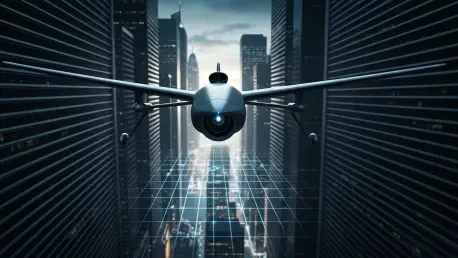

With a deep understanding of enterprise SaaS technology and software architecture, Vijay Raina provides critical insights into the platforms shaping our future. His work offers a thought-leadership perspective on the convergence of software and hardware in some of the most demanding industries. In this interview, we explore the rise of AI-driven solutions in both space and defense, delving into how startups are tackling challenges from propellantless propulsion and GPS-denied navigation to new financial instruments for the space economy and the immense difficulty of deploying AI at the edge.
This list features both space and defense startups like Astrum Drive and Hance. What does this convergence signify for the industry, and could you walk us through the unique technological hurdles each company must overcome in its respective field, from deep space to the battlefield?
This convergence is one of the most significant trends we’re seeing. The line between commercial space and national defense is blurring because the underlying technologies—autonomy, advanced materials, resilient communication—are fundamentally dual-use. For a company like Astrum Drive, the hurdle is immense and purely physics-based. They have to prove that their propellantless system can generate meaningful thrust reliably over years in the vacuum of space, enduring radiation and extreme temperatures. It’s a battle against the harsh realities of the environment. Hance, on the other hand, faces a data and environment problem. Their challenge is making an AI that can function in the chaotic, unpredictable sensory overload of a battlefield, isolating a single human voice from explosions, vehicle noise, and garbled radio chatter in real-time. One is a deep tech hardware challenge; the other is a sophisticated software and AI challenge against pure chaos.
Astrum Drive’s propellantless system is noted for extending craft lifespans. Could you explain the step-by-step process of how this electricity-only propulsion works and share some metrics on how it could lower costs for a typical deep space mission compared to traditional fuel?
While the proprietary specifics are theirs, an “electricity-only” system fundamentally changes the mission equation. Instead of carrying finite chemical fuel, you’re carrying a power source—solar panels, for instance. The system likely uses this electricity to generate electromagnetic fields that accelerate charged particles or plasma to create thrust. The process is continuous and extremely efficient, a “low and slow” burn. The cost savings are monumental. A satellite’s life is often dictated by how much fuel it has for station-keeping. By eliminating that, Astrum Drive could potentially double or triple a craft’s operational lifespan, meaning the multi-hundred-million-dollar asset generates revenue for far longer. For a deep space mission, this is even more critical. You’re not just saving the weight of the fuel, which can be over half the mass of the spacecraft at launch; you’re enabling missions that were previously impossible because you couldn’t carry enough fuel to get there and maneuver.
Airbility’s eVTOL uses a unique fixed-wing design and distributed electric fan-jets. Can you break down how this combination makes the aircraft more light and maneuverable? Perhaps share a specific scenario where this versatility would be a game-changer over other designs.
It’s a really clever engineering trade-off. A fixed-wing design is fantastic for efficient, fast forward flight, just like a conventional airplane. But it can’t take off vertically. A multi-rotor design is great at vertical lift but terribly inefficient in forward flight. Airbility blends these. By distributing smaller, electric fan-jets across the structure, they get the vertical lift they need without the massive, complex, and heavy mechanics of tilt-rotors. This distribution also allows for incredibly precise control; by varying the power to each fan-jet independently, the aircraft can achieve a level of maneuverability that’s difficult for a helicopter with a single main rotor. Imagine a military extraction or medical evacuation in a dense urban environment. A helicopter needs a large, clear landing zone. An Airbility craft could potentially descend into a much tighter space, like a small courtyard, making it a game-changer where infrastructure is damaged or non-existent.
Skyline Nav AI’s software combats GPS jamming using scene recognition without expensive GPUs. Could you elaborate on the AI process behind this and, considering Skylark Labs’ work, what are the biggest hurdles these companies face in making AI reliable at the edge?
Skyline Nav AI is essentially teaching a machine to do what a human pilot has done for a century: navigate by looking out the window. Their AI is likely trained on massive datasets of satellite and aerial imagery. In real-time, it takes a video feed from a simple camera, compares the features it sees—buildings, roads, terrain—to its internal map, and calculates its precise location. The breakthrough is doing this on low-power hardware, which suggests a highly optimized neural network that doesn’t need a power-hungry GPU. This is the core challenge that both Skyline and Skylark Labs are tackling: reliability at the edge. The biggest hurdle is the “corner cases.” The AI has to work flawlessly in rain, fog, at night, or when a building has been destroyed since the map was last updated. Ensuring that the AI is fast, low-power, and—most importantly—dependably accurate across every possible real-world scenario is the mountain they both have to climb.
Charter Space is creating a fintech platform for spacecraft insurance to power new credit forms. What specific risk metrics does their platform analyze, and can you walk us through an example of how their system might unlock new financing for a satellite company?
This is a fascinating application of data analytics to a traditionally opaque industry. Charter Space is likely ingesting and analyzing a huge range of data to create a dynamic risk profile for a space asset. These metrics would include the launch vehicle’s historical success rate, the satellite manufacturer’s track record, the reliability of specific components like transponders and solar arrays, real-time telemetry from the satellite in orbit, and even external factors like space weather forecasts for solar flares. Here’s a practical example: a promising satellite startup designs a new Earth observation satellite. Historically, getting a loan to build it would be incredibly difficult. But by running their design, components, and mission plan through Charter’s platform, they can generate a verifiable, data-backed “insurability score.” They take this score to an underwriter, get a favorable insurance policy, and then use that policy as collateral to secure a multi-million dollar loan from a bank. It essentially de-risks the asset for traditional financial institutions.
Endox and Hance are developing AI for military applications—one for maintenance, the other for audio. Could you describe the proprietary data Endox captures with its robotics, and what technical steps make Hance’s AI so effective in unpredictable, noisy battlefield environments?
The secret sauce for both is proprietary data. For Endox, their robotics are likely small drones or crawlers equipped with sensors that go beyond the human eye—think thermal imaging to spot overheating parts, ultrasonic sensors to detect metal fatigue, and high-resolution cameras to document cracks invisible to standard inspection. This creates a unique, multi-layered dataset of how military equipment actually wears down in the field. Their AI is then trained on this exclusive data to predict failures before they happen. For Hance, effectiveness comes from the brutal diversity of its training data. Their AI neural network has likely been trained on thousands of hours of audio from the most challenging environments imaginable. They’ve taught it to distinguish the specific frequencies of human speech from the acoustic signatures of gunfire, jet engines, and radio static. The technical step is an advanced form of signal separation, where the AI doesn’t just filter noise, but actively identifies and deconstructs the audio environment in real-time to isolate and boost only the relevant vocal information.
What is your forecast for the space and defense tech sector over the next five years?
My forecast is a rapid shift from hardware-defined to software-defined capabilities. For the next five years, the key differentiator will not be the physical platform—the satellite, the drone, the vehicle—but the intelligence and adaptability of the software running on it. We will see a surge in autonomous systems, true AI-powered decision support, and constellations that can be reconfigured and updated with a software patch from the ground. Companies that master the art of building secure, resilient, and intelligent software for the edge will dominate. The future of space and defense is less about building a better rocket and more about writing smarter code that can operate under the most extreme pressures imaginable.