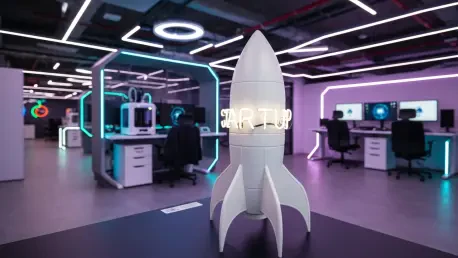

A seismic shift is underway in Silicon Valley, where established startups are doing something more radical than pivoting or restructuring—they are “refounding” themselves. This emerging trend, championed by mature companies like Airtable, Handshake, and Opendoor, represents a complete operational, cultural, and strategic overhaul designed to confront the transformative power of artificial intelligence. This is not a course correction; it is a fundamental reimagining of a company’s core identity. This analysis explores why these established players are choosing to rebuild from the ground up, dissecting the strategic necessity, cultural resets, and market perceptions driving one of the most significant strategic movements of the AI era.
The AI Imperative a New Playbook for Corporate Survival
For decades, the startup lexicon has included terms like “pivot” to describe a strategic change in direction, often in response to market feedback or a flawed business model. These moves, while significant, were typically adjustments within an existing framework. The current wave of AI, however, is not just another feature or market trend; it is a foundational technology that threatens to make entire business models obsolete. Unlike previous technological waves, generative AI is rewriting the rules of software, productivity, and value creation itself. This context is crucial because it explains why incremental updates are no longer sufficient. Startups that built their moats on workflow efficiency or data aggregation now find those advantages eroding, forcing them to confront an existential choice: rebuild around AI or risk being replaced by it.
Deconstructing the AI Driven Refounding Model
Rebuilding the Core Value Proposition from the Ground Up
The primary driver of the refounding movement is the recognition that AI necessitates a complete reconstruction of a company’s value proposition. Airtable, a collaborative database platform, serves as a prime example. By publicly declaring its AI integration a “refounding moment,” the company deliberately invoked the high-stakes intensity of its initial launch. This powerful language signals that AI is not being bolted on as an afterthought but is being woven into the very fabric of the product. The strategy is forward-looking, aiming to align the entire organization with a new technological paradigm where AI is the core, not a feature. This approach acknowledges that to compete in the next decade, the company’s reason for existing must be fundamentally re-anchored in AI-native capabilities.
A Cultural Reset to Recapture Startup Agility
A successful refounding extends beyond technology and into the very culture of an organization. As startups mature, they often accumulate bureaucracy and operational slowness—”organizational cruft”—that stifles the innovation required to compete with nimble, AI-native upstarts. Handshake, a career platform for students, is using its refounding to re-inject the urgency and intensity of its early days. This includes a notable cultural shift back to a five-day-a-week in-office policy, a move explicitly designed to increase operational tempo and collaborative friction. This demonstrates that refounding is a holistic process, combining a technological rebuild with a cultural reset aimed at shedding accumulated weight while retaining the hard-won advantages of an established company, such as market position, data, and capital.
Market Perceptions of a High Stakes Gamble
The refounding trend is not confined to a single sector, with companies like real estate technology firm Opendoor also signaling a major strategic realignment. This broadening scope suggests a growing consensus that established models are vulnerable. Crucially, investors and market observers are not viewing these announcements as signs of weakness or desperation. Instead, they are largely seen as necessary, serious responses to the disruptive force of AI. However, a critical question remains: does this movement represent visionary adaptation or an expensive, high-risk “midlife crisis”? The answer is not yet clear. While refounding provides a powerful narrative for galvanizing employees and reassuring stakeholders, its success will ultimately be measured by tangible results in product innovation and market share.
Future Outlook Will Refounding Define the Next Decade
Looking ahead, the actions of today’s refounding pioneers will likely set a precedent for countless other established startups. If companies like Airtable and Handshake succeed in reinventing themselves and fending off AI-native challengers, refounding could become a standard playbook for corporate longevity in an era of perpetual technological disruption. We may see this strategy adopted not just in tech but across industries as AI’s impact broadens. Conversely, if these efforts falter, they may be remembered as a costly buzzword. The evolution of this trend will depend on whether these companies can successfully merge the speed and agility of a startup with the scale and resources of an incumbent, creating a new type of organization built for the AI era.
A Strategic Framework for Navigating AI Disruption
The key takeaway for leaders and investors is that the AI revolution demands more than incremental change; it requires a willingness to question and even dismantle long-held assumptions. For startups, this means honestly assessing whether their core value proposition can withstand the AI onslaught. A refounding should be considered when the foundational technology of the market shifts so dramatically that the existing business model becomes untenable. The most effective refounding initiatives are holistic, addressing not only the product roadmap but also company culture, operational intensity, and strategic vision. Investors, in turn, should evaluate these moves not as panic signals, but as indicators of a management team’s foresight and willingness to make difficult, long-term decisions.
A New Mandate for the AI Era
The rise of the “refounding” movement marked a pivotal moment for the tech industry. It was an admission that in the age of artificial intelligence, past success offered no guarantee of future relevance. By tearing down their existing structures to rebuild around an AI core, companies like Airtable and Handshake made a high-stakes bet on their ability to adapt and lead in a new technological landscape. This trend underscored a stark reality for every established business: the choice was no longer between optimization and innovation, but between radical reinvention and eventual obsolescence. The survival of an entire generation of startups ultimately depended on their courage to begin again.