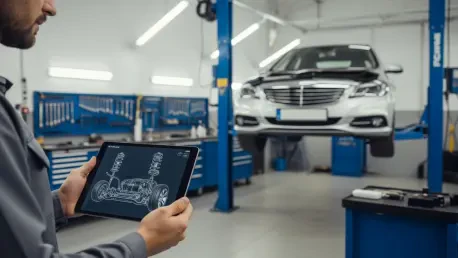

Finding the exact bolt or sensor for a niche European sedan manufactured in the late 2010s often feels like searching for a microscopic needle in a global haystack of mechanical components. Partly has successfully secured fifty million dollars to address this exact frustration by utilizing advanced artificial intelligence to overhaul the global automotive repair sector. This capital injection aims to modernize a sector that has historically relied on fragmented catalogs and outdated digital databases which frequently lead to incorrect orders. The problem of “fitment”—ensuring a part actually fits a specific vehicle—costs the industry billions in returns and lost productivity. By 2026, the demand for precision has reached a fever pitch as electric vehicles and complex sensor arrays become the standard for modern transportation. Partly’s approach leverages advanced neural networks to map millions of unique components across every make and model imaginable. This recent funding round signifies a massive shift toward automated logistics. The goal is to create a universal language for auto parts that eliminates human error and reduces the time a vehicle spends on a lift. It is a necessary evolution for a global market that is rapidly digitizing its core operations.
Precision Engineering: Overcoming Data Fragmentation With AI
The complexity of the modern supply chain means that a single vehicle can consist of more than thirty thousand individual components sourced from hundreds of different manufacturers. When a repair shop attempts to order a replacement, they often encounter conflicting data between the manufacturer’s original equipment numbers and aftermarket alternatives. This inconsistency leads to a return rate that plagues the industry, driving up costs for consumers and squeezing the thin margins of local mechanics. Partly addresses this by centralizing disparate data points into a cohesive, searchable infrastructure. Their platform acts as a digital translator, interpreting messy data from legacy systems and converting it into a standardized format. By doing so, the company provides a level of clarity that was previously impossible. This allows distributors to list their inventory with absolute confidence that the buyer is receiving the correct item. Consequently, the reliance on manual cross-referencing is quickly becoming a relic of the past, replaced by automated systems that prioritize accuracy.
Beyond just identifying parts, the infrastructure established by this technology creates a ripple effect across the entire automotive ecosystem. Insurance companies and fleet managers are beginning to integrate these AI-driven insights to streamline claims and maintenance schedules. When a collision occurs, the ability to instantly generate an accurate bill of materials reduces the cycle time for repairs from weeks to mere days. This level of efficiency is no longer a luxury but a necessity in a market where vehicle downtime represents significant lost revenue. The fifty million dollar investment will facilitate the expansion of this data network into emerging markets where vehicle diversity is even higher and data quality is often lower. By mapping the global car park with such precision, the system essentially creates a “digital twin” of every vehicle’s parts list. This proactive approach to data management ensures that as cars become more sophisticated, the support systems keeping them on the road evolve at an equivalent pace, preventing a bottleneck in global mobility and ensuring that repairs are consistently reliable.
Industry Evolution: Navigating the Shift Toward Universal Compatibility
The recent infusion of capital into the AI-driven parts sector proved that the industry was finally ready to move beyond the limitations of manual data entry and fragmented catalogs. Stakeholders recognized that the status quo was unsustainable in a world of increasing mechanical complexity and consumer expectations for rapid service. The transition toward a unified, intelligent database was not merely about software development; it was about reimagining the very foundation of automotive maintenance and logistics. For many years, the inefficiency of parts sourcing acted as a hidden tax on every driver and every repair facility, but the arrival of advanced machine learning began to dissolve those barriers. As the technology matured, the focus shifted from mere identification to the holistic management of a vehicle’s entire technical lifecycle. This period of rapid innovation demonstrated that even the most traditional industries could be revolutionized when data was treated as a primary asset rather than an afterthought. The successful scaling of these tools marked a new era.
Looking ahead, the next logical step involved the deeper integration of these AI systems directly into vehicle onboard diagnostics to create a seamless repair loop. This allowed a car to identify its own replacement parts the moment a fault was detected, automatically placing an order before the driver even realized there was a problem. Such a proactive model required even closer cooperation between software developers, parts manufacturers, and repair professionals. For businesses in this space, the immediate priority became the adoption of standardized data protocols to ensure they were not left behind as the ecosystem became more interconnected. Managers invested in training their staff to utilize these AI tools effectively, blending traditional mechanical skill with modern data literacy. The journey toward a truly frictionless repair experience was well underway, and those who leveraged these tools dominated the market. By prioritizing data integrity, the automotive sector finally achieved the level of efficiency required to support the next generation of transport.