
The private venture capital market has roared back to life with an intensity not seen in years, as January witnessed the birth of 31 new unicorn companies, a figure that marks the most substantial monthly addition to this exclusive club since the middle of 2022. This sudden and powerful resurgence, injecting over $9.3 billion in fresh capital and adding a colossal $58.5 billion in new valuation, is not a random market fluctuation but a clear signal of renewed investor confidence. The driving force behind this dramatic acceleration is an unmistakable and pervasive trend: the transformative power of Artificial Intelligence, which is not only creating a new class of high-value startups but is also fundamentally reshaping the entire technological landscape. This surge compels a closer look at the dynamics at play, revealing a market characterized by unprecedented speed, geographic concentration, and an almost singular focus on the disruptive potential of AI.
The Overwhelming Influence of AI
A detailed analysis of January’s new unicorns reveals that Artificial Intelligence is not just a leading sector but the central engine powering this market resurgence. AI and its related infrastructure were responsible for nine new billion-dollar companies, making it the most prolific category by a significant margin. However, the influence of AI extends far beyond its own vertical. It acts as a foundational technology, a catalyst that propels innovation and value creation across a multitude of other industries. This ripple effect was profoundly evident in sectors like manufacturing and security, which each contributed three new unicorns, with reports explicitly noting that their growth was “propelled by AI.” The technology’s reach was also a critical factor for emerging unicorns in the semiconductor, defense, and autonomous driving spaces, illustrating how deeply AI has been integrated into the core of modern technological development. The sheer scale of investment in this area was further underscored by a funding event outside the new unicorn list: Elon Musk’s xAI reportedly securing an immense capital injection at a valuation that dwarfs many established public companies, highlighting the massive capital flows being directed toward pioneering AI initiatives.
The financial figures associated with these new AI-driven companies are staggering, reflecting an investor appetite for high-risk, high-reward ventures in the space. Among the most notable entrants was Humans&, a Redwood City-based research lab focused on human-AI collaboration. Despite being less than a year old, it secured a remarkable $480 million seed round at a $4.5 billion valuation, a testament to the market’s belief in its long-term potential. Similarly, another nascent AI research lab, Flapping Airplanes, also under a year old, raised $180 million for a $1.5 billion valuation. This trend of rapid valuation extends to companies building the critical infrastructure supporting the AI ecosystem. The AI chip developer Etched.ai achieved an impressive $5 billion valuation, while Ricursive Intelligence, a sub-one-year-old AI chip design firm, reached a $4 billion valuation. These massive investments in the hardware layer underscore the understanding that the AI revolution requires a powerful and specialized computational backbone, and investors are placing significant bets on the companies building it.
A New Era of Speed and Concentration
One of the most striking characteristics of the current market is the breathtaking speed at which startups are achieving billion-dollar valuations. The data from January showed that four of the 31 new unicorns are less than one year old, a phenomenon that points to a radical compression of the traditional startup growth cycle. Companies like the AI research labs Humans& and Flapping Airplanes, alongside the AI evaluation platform Arena, have gone from inception to unicorn status in a fraction of the time it took their predecessors. This acceleration is indicative of a market where investors, armed with significant capital, are aggressively pursuing companies with disruptive potential, particularly in high-demand fields like generative AI. The willingness to place substantial bets on such young enterprises suggests a strategic shift towards capturing early-mover advantages in what is perceived as a paradigm-shifting technological wave, leading to compressed timelines and soaring valuations from the earliest funding stages. This dynamic creates a highly competitive landscape where speed and access to capital are paramount for survival and success.
This period of rapid growth is also defined by a strong geographic consolidation, with North America, and specifically the United States, cementing its position as the epicenter of unicorn creation. An overwhelming majority of the new entrants—23 of the 31 companies—were U.S.-based, demonstrating the continued dominance of its venture capital and startup ecosystem. The addition of two new unicorns from Canada further solidified North America’s role as the primary hub for high-growth ventures in this new wave. In stark contrast, global representation was notably sparse. Germany, France, Belgium, Israel, Japan, and India each contributed only a single unicorn to the January list. This imbalance highlights the immense concentration of capital, talent, and infrastructure within the U.S. that enables it to capitalize on emerging technology trends at a scale and speed that other regions are struggling to match. The data suggests that while innovation is global, the ecosystem required to scale companies to a billion-dollar valuation at this velocity remains heavily centered in the United States.
A Maturing Market with Broad Horizons
While the influx of new companies captured headlines, the market also displayed signs of a healthy, maturing ecosystem through a steady stream of successful exits, which provided crucial liquidity for early investors and validated long-term strategies. A total of 11 unicorns exited the private market in January, either through strategic mergers and acquisitions or by going public. The most significant M&A deal involved the fintech company Brex, which was acquired by Capital One for $5.2 billion. Although this valuation was below its peak, it represented a substantial return for its long-term backers. On the public market front, seven companies completed initial public offerings, led by high-profile listings from MiniMax and Z.ai, two foundational AI model companies based in China. The presence of these active exit pathways demonstrated that the venture capital cycle was functioning effectively, with capital being successfully recycled back into the ecosystem to fund the next generation of innovators. This activity provided a necessary counterweight to the rapid creation of new unicorns, indicating a market with both robust entry and exit dynamics.
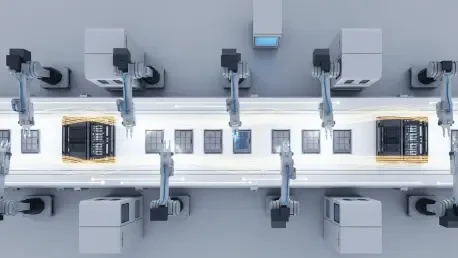
The transformative power of AI was not confined to a single category but was instead a pervasive force that enhanced value across a diverse spectrum of industries. The security sector saw the emergence of unicorns like Upwind Security, Torq, and Aikido Security, all of which leverage AI to build sophisticated defense platforms against evolving cyber threats. In traditional sectors, companies like Hadrian, which is building advanced factories for the aerospace and defense industries, and Vention, a manufacturing automation platform, showed how AI-driven technology could revolutionize established fields. The influence extended into fintech with new unicorns like Alpaca and Juspay, healthcare with Pomelo Care and Tandem, and even autonomous driving, where Toronto-based Waabi raised $750 million to reach a $3.8 billion valuation. This broad application underscored that the recent surge was not merely an AI sector boom but a wider, technology-led market shift where artificial intelligence acted as a fundamental, value-multiplying layer across the entire startup landscape. The events of January painted a clear picture of a confident market where AI had firmly established itself as the primary catalyst for creating the next generation of industry-defining companies.