
The Physical Foundation: Shifting Priorities in Artificial Intelligence
The massive surge of institutional investment into the fundamental components of silicon and electrical grids signifies that the speculative era of artificial intelligence has matured into a heavy-industry deployment phase. As of late 2026, a significant influx of capital into U.S.-based startups suggests that the “AI gold rush” has transitioned into a more stable, capital-intensive cycle. Investors are no longer captivated by simple generative interfaces; they are instead prioritizing the power plants, hardware engineering, and data protection protocols required to keep the digital world functioning. This analysis explores how the maturation of the AI ecosystem is driving a convergence between software and hard tech, signaling a new era where digital intelligence and physical infrastructure are treated as a singular, interconnected engine for growth.
Beyond Software: The Industrial Reality of Deep Tech
Historically, venture capital favored asset-light software models that promised rapid scalability with minimal overhead and high margins. The initial wave of AI investment followed this pattern, focusing on Large Language Models and consumer-facing applications that required little more than cloud subscriptions. However, as these technologies scale toward global utility, the industry has hit a “physical wall” characterized by hardware shortages and massive energy demands. This realization has shifted the investment focus toward foundational concepts that shaped previous industrial revolutions—power and capacity. By analyzing recent funding rounds, it becomes clear that the current landscape is a reaction to these bottlenecks, where infrastructure has become the primary driver for high-stakes megadeals exceeding $100 million.
Infrastructure Growth: The AI Buildout and Physical Cloud Capacity
Powering Progress: Investing in the Hardware Behind the Models
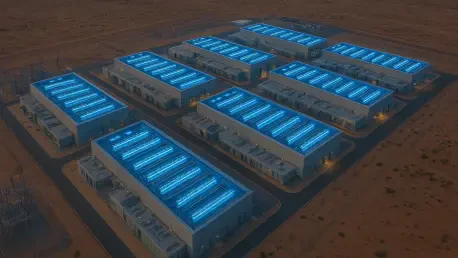
A critical aspect of the current investment climate is the massive expansion of physical cloud and power capacity, often referred to as the “AI buildout.” For instance, the recent $2 billion investment in Axiom Solutions International—a spinout from Flex—underscores a growing consensus that software cannot advance without a corresponding leap in physical infrastructure. Investors are pouring capital into the frameworks that house and power massive neural networks, recognizing that the bottleneck for future growth is no longer code, but the availability of high-performance data centers. This shift represents a move toward capital-intensive innovations that prioritize the entire value chain over isolated software products, ensuring that the underlying hardware keeps pace with algorithmic complexity.
Energy Resilience: Solving the Bottleneck Through Fusion and Distributed Power
Building upon the need for physical capacity is the urgent requirement for energy resilience to sustain modern computing demands. The venture capital market is now placing substantial bets on hard tech solutions that address the high power consumption of AI clusters. High-profile funding rounds for fusion technology, such as the $200 million raise for Type One Energy, and distributed energy platforms like Voltus, demonstrate that energy is now a core component of the tech investment strategy. This trend suggests that the future of AI is inextricably linked to the future of the power grid, forcing investors to adopt a more holistic view of how digital intelligence is fueled. Reliability and sustainability are no longer optional but are prerequisites for the next stage of computational scaling.
Data Integrity: Protecting the Human Element of the AI Ecosystem
Beyond power and hardware, the complexity of the AI era introduces regional and market-specific challenges regarding data protection and licensing. The emergence of startups like SignSplit, which secured $400 million in seed funding, highlights an overlooked aspect of the AI boom: the human element of data. As AI models become more pervasive, the need for sophisticated data protection and ethical licensing becomes a high-priority market. Addressing these bottleneck issues—data privacy, hardware limitations, and secure scaling—is becoming as lucrative as building the models themselves, leading to a surge in high-valuation stealth exits and massive seed rounds for companies solving these foundational problems in the current year.
Integrated Futures: Predicting the Union of Digital and Physical Systems
Looking forward, the trend toward deep-tech integration is expected to accelerate, fundamentally altering the industrial landscape. The boundaries between tech and industry continue to blur as AI-driven manufacturing and quantum computing become standard components of the global economy. Experts predict that regulatory shifts and economic pressures will further incentivize investments in domestic energy and hardware sovereignty. As the AI ecosystem matures, the winners will not just be those with the best algorithms, but those who control the physical frameworks—from micro-manufacturing plants to fusion reactors—that allow those algorithms to function at scale.
Strategic Navigation: Actionable Insights for the New Infrastructure Paradigm
The major takeaway from this shift is that the AI value chain is now a comprehensive ecosystem where physical infrastructure is the primary gatekeeper of progress. For businesses and professionals, the recommendation is to pivot focus toward the “picks and shovels” of the digital age—energy, hardware engineering, and data security. Investors should look for opportunities in the convergence of AI and physical manufacturing, while companies must prioritize energy resilience and data integrity in their long-term strategies. In this new landscape, success is defined by the ability to bridge the gap between digital potential and physical reality, ensuring that all components of the industrial stack are optimized for high-performance computing.
Retrospective Analysis: Redefining Venture Capital in an Age of Infrastructure
The surge in high-value venture capital activity for AI infrastructure signaled a permanent shift in how technology was valued. The era of focusing solely on software applications gave way to a more sophisticated strategy that prioritized the physical and energetic foundations of progress. As digital intelligence and physical infrastructure merged into a single investment category, the long-term significance of this trend was solidified. We witnessed the construction of a new industrial backbone, where the most valuable assets were those that ensured the lights stayed on and the servers kept humming in an increasingly AI-driven world. The transition established a blueprint for the next decade of industrial growth.