
Vijay Raina has spent over 30 years watching the enterprise software industry grow into a labyrinth of complexity, often prioritizing the next billable feature over actual user utility. As an expert in SaaS architecture and software design, he has seen the “feature bloat” era reach its breaking point. Today, as AI-driven development allows users to bypass traditional vendors, Raina suggests we are facing a fundamental reckoning that could dismantle 90 percent of the commodity SaaS market. We sat down with him to discuss why the future of software isn’t about more capabilities, but about the democratization of simplicity and the enduring necessity of professional accountability.
For decades, the industry has operated on the principle that more features equate to more value, yet you’ve noted that 99 percent of the capability in tools like Microsoft Word remains invisible and unused. How has this culture of “complexity as a product” left the industry vulnerable to the current AI shift?
We have reached a stage where we are essentially selling puzzles rather than solutions. When you look at a powerhouse like Excel, it is built with the sophistication to run a global investment bank, yet the vast majority of the world is just using it to track a household budget or make a basic bar chart. For 30 years, every new version of a software suite needed to justify its upgrade price, so engineers added nested styles, cross-references, and complex animations that most people never once clicked. This created a massive opening for AI because users are finally realizing they don’t want the 99 percent of features they never touch; they want a tool that does exactly the five things they need. The industry has been selling “just in case” features for years, but AI is now allowing people to build “just in time” tools that are stripped of all that legacy weight.
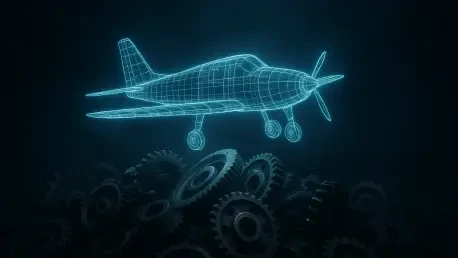
You’ve used the analogy of an “ultralight aircraft” to describe the tools individuals are now building with AI. What does it look like when a team decides to stop paying for a bloated project management platform and starts “flying” their own custom-built solution?
It’s a moment of pure democratization that feels like a weight being lifted off a small team’s shoulders. Instead of wrestling with a massive platform that has 50 different integrations, Gantt views, and a mobile app they don’t need, a manager can describe a simple priority tracker in plain language and have it running by the end of the afternoon. It’s like taking a couple of weekends to learn how to fly a small, ultralight plane—you don’t need years of training or a medical certificate to make a short hop across familiar terrain. This transition is incredibly empowering for the “ultralight builders” who can now generate functional, personalized tools without formal engineering training. However, the danger is when people mistake that successful short hop for the ability to pilot a commercial aircraft with 300 passengers across the Atlantic.
That gap between “ultralight” and “commercial” software seems to be where the real danger lies for businesses. What specific engineering disciplines are missing when an AI-generated weekend project is suddenly expected to perform in a high-stakes corporate environment?
The primary issue is that people don’t see the weight of enterprise software until it falls on them and causes a total system collapse. Beneath the surface of any professional system sits a complex architecture of versioning, backward compatibility, and deployment pipelines that protect production systems from untested changes. When these are absent, I’ve seen production systems serving paying clients stop dead in their tracks, leaving no one on staff who actually knows how to recover the data. You end up with breached SLAs and data at risk, and the technical cost of that recovery is often ten times higher than any license fee would have been. In a regulated industry, you aren’t just paying for the code; you are paying for the parallel testing environments and the discipline that keeps the “engines” running at 35,000 feet.
You’ve predicted a 90 percent probability that commodity SaaS tools will disappear as businesses begin to self-generate what they need. If the “moat” of basic functionality is gone, what actually keeps a software company alive in this new economy?
The survivors will be the ones who provide the “accountable party” that AI-generated software simply cannot offer. We saw this decades ago with the rise of Linux; everyone thought Microsoft was finished because free software had arrived, yet enterprises kept paying for those licenses because they needed a contract with someone to call when things break. Large organizations in regulated industries aren’t just buying software; they are buying legally enforceable obligations and a vendor who carries the liability for security and maintenance. The commodity tools with no proprietary data and no integration complexity will be wiped out because paying a monthly subscription for something you can build in an afternoon makes no economic sense. The “un-killable” companies will be those that lean into the weight of their responsibility rather than just the breadth of their features.
As we see this shift toward bespoke, self-generated tools, does the industry face a “Tower of Babel” moment where data can no longer move between different teams?
This is the hidden crisis of the democratization movement: the loss of interoperability. If every team in a corporation generates their own bespoke tool in a unique, personalized format, data portability becomes a nightmare for the entire organization. In a regulated environment, an auditor expects to see traceable, consistent data, not a patchwork of one-off formats that only the three people who “prompted” the app into existence can understand. Shared standards are the invisible glue of the enterprise, and the value of those standards is often overlooked until you realize your data is trapped in a thousand different “ultralight” containers. We have to solve the problem of how these self-generated tools talk to each other, or the simplification we’re gaining will be offset by an audit and compliance disaster.
What is your forecast for the future of enterprise software?
I believe we are entering an era of “Radical Simplification” where the software industry is forced to answer for 30 years of selling complexity for its own sake. Within the next few years, the mass market will finally get the streamlined, personalized software it actually wanted, but the “backbone” of the industry will consolidate around a few high-trust, high-accountability platforms that manage the data standards and legal risks. We will see a world where the front-end experience is almost entirely user-generated and ephemeral, while the back-end remains a strictly controlled, professionalized environment. The legacy vendors who can transition from being “feature factories” to “trust and interoperability anchors” will flourish, while those who continue to hide behind bloated menus and unnecessary buttons will simply be prompted out of existence.