
As we navigate the middle of 2026, the landscape of urban movement in India has undergone a radical transformation that few could have predicted just a few years ago. The era of the “walled garden” aggregator is giving way to a more democratic, distributed ecosystem where technology serves as an enabler rather than a gatekeeper. To understand this shift, we are joined by Vijay Raina, a leading specialist in enterprise SaaS technology and software architecture. With his deep background in designing scalable digital tools, Vijay has been at the forefront of the movement to “unbundle” mobility, helping transition the industry from high-commission models to lean, subscription-based infrastructure. Today, he shares his insights on how software-as-a-service platforms and open networks like ONDC are finally bringing digital inclusion to the millions of drivers and passengers in India’s rapidly growing Tier-2 and Tier-3 cities.
The following discussion explores the economic pivot from commissions to daily fees, the technological liberation of local fleet operators, and the strategic rollout of interoperable networks that are connecting everything from auto-rickshaws to metro systems. We delve into how these shifts are empowering the individual “Captain” on the street and what it means for the long-term sustainability of the digital economy.
Rapido’s transition from taking a percentage of every fare to a daily subscription model—sometimes as low as ₹19 or ₹29—represents a fundamental change in the driver-platform relationship. From an architectural perspective, how does this low-cost fee structure redefine the incentives for high-utilization drivers compared to the traditional aggregator model?
The shift we are seeing is essentially the “SaaS-ification” of the gig economy, and it changes the heartbeat of the daily operations for a driver. Under the old model, every time a driver pushed themselves to take one more ride at the end of a long day, they felt the sting of the platform taking a 20% or 30% cut of that extra effort. By moving to a flat daily fee of ₹19 or ₹29, the platform becomes a utility, like electricity or internet access, rather than a partner in the transaction. For a high-utilization driver who might complete 15 to 20 rides a day, the savings are massive, allowing them to take home a significantly larger portion of their daily earnings. This creates a powerful psychological shift where the driver feels like a true micro-entrepreneur who owns their business rather than a contractor working for an algorithm. It encourages them to stay active on the platform during peak hours because every additional rupee earned after the subscription fee is paid stays entirely in their pocket.
We often see major ride-hailing apps struggle once they move beyond the dense urban centers of Tier-1 cities. In what ways do SaaS platforms and open networks solve the ‘density’ problem that previously made digital mobility unviable in India’s smaller towns?
In smaller cities, the traditional aggregator model often collapses because the cost of customer and driver acquisition simply outweighs the lower average ride value and thinner demand. A national platform has to spend millions to build a localized marketplace from scratch, but SaaS changes that math by separating the technology layer from the actual mobility operator. Instead of waiting for a giant corporation to arrive, a local taxi union or an auto-rickshaw cooperative in a Tier-2 city can now adopt a ready-made technology stack to bring their existing fleet online. They don’t have to build mapping, dispatch, or payment systems because those are now available as “shared rails” that they can simply plug into. This lowers the entry barrier so significantly that digital transport can thrive in places where demand is too fragmented for a high-overhead corporate model to survive. It’s no longer about a single app controlling the market, but about providing the digital infrastructure that allows local supply to meet local demand efficiently.
The concept of ‘unbundling’ the mobility transaction—separating discovery, payments, and supply—is a cornerstone of the ONDC framework. With nearly 900,000 drivers already integrated into this network, what are the most significant operational benefits for a driver who is no longer tethered to a single closed platform?
The most profound change is the shift in bargaining power; when a driver is part of an open network like ONDC, they are no longer invisible to the rest of the market if they aren’t on one specific app. Today, that pool of 900,000 drivers across 55 cities can be discovered by a variety of consumer-facing applications, meaning they aren’t at the mercy of one company’s shifting commission rates or hidden algorithms. This architecture allows a driver to maintain a single digital identity and vehicle record while receiving ride requests from multiple sources, which maximizes their chances of finding a passenger nearby. We are also seeing the emergence of models like Namma Yatri and Bharat Taxi, where the open-source Beckn protocol allows for a zero-commission environment. For the driver, this means a more stable income and the freedom to choose which service terms suit them best, effectively turning the digital platform into a tool they use, rather than a master they serve.
With over 10,000 buses and nine metro systems now connected to public-transport networks through more than 30 consumer applications, the scale of integration is unprecedented. How does digitizing the entire ‘mobility market’ differ from the early days of simply digitizing the individual ride?
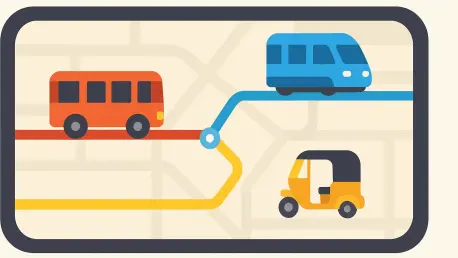
Digitizing the individual ride was a convenience play, but digitizing the entire mobility market is an infrastructure play that reshapes the city itself. When you have 10,000 buses and metro systems talking the same digital language as the local auto-rickshaw, you enable a “multi-modal” journey that was previously a logistical nightmare for the average commuter. A person can now use a single application to book an auto to the metro station, pay for their train ticket, and see the real-time location of the bus they need to catch on the other side. This level of transparency across 20+ cities reduces the friction of public transit, making it a viable competitor to private vehicle ownership. For the city, the data generated by these integrated systems allows for much smarter urban planning, as authorities can see exactly where the bottlenecks are in real-time. It’s a shift from siloed apps to a unified digital fabric that covers every leg of a journey, no matter the vehicle type.
While the subscription model is incredibly attractive to drivers, it places a massive burden on the platform to achieve extreme scale because the revenue per driver is so much lower than a commission-based model. What are the primary risks for SaaS providers trying to maintain financial sustainability in such a low-margin environment?
The primary risk is indeed the “low margin, high volume” trap, where the provider must maintain a massive, active user base just to cover the costs of the cloud infrastructure and software maintenance. When you are only collecting ₹19 a day from a driver, your operational efficiency must be near-perfect, and you cannot afford the high customer acquisition costs that the industry was known for in the past decade. SaaS providers have to find ways to monetize the technology layer itself, perhaps by offering value-added services like insurance, vehicle financing, or battery-swapping subscriptions to the same driver pool. There is also the challenge of maintaining service quality; without a central aggregator enforcing strict rules, ensuring that thousands of independent operators maintain their vehicles and treat customers fairly requires clever decentralized reputation systems. If the platform fails to ensure a reliable match between supply and demand, users will quickly migrate back to the more controlled, albeit more expensive, traditional apps.
Government initiatives like Digital India and NITI Aayog’s advocacy for common digital mobility infrastructure have clearly accelerated this shift. How essential is this alignment between private SaaS innovation and public policy for the long-term success of the distributed mobility model?
This alignment is the secret sauce that makes the Indian model unique and, frankly, quite resilient compared to other global markets. NITI Aayog has been very vocal about the need for shared digital rails, and that high-level policy support gives private SaaS players the confidence to build for the long term. When the government backs standards like ONDC and UPI, it creates a level playing field where a small startup can compete with a global giant based on the quality of their software rather than the size of their balance sheet. This public-private synergy has already proven its worth in the payments sector, and applying it to mobility is the logical next step for a nation that needs to move 1.4 billion people efficiently. By treating mobility infrastructure as a public good—much like roads or bridges—the government is ensuring that digital inclusion reaches the last mile, literally and figuratively.
What is your forecast for the evolution of the digital mobility landscape?
I expect that by the time we look back at this decade, the concept of a “ride-hailing app” will feel as antiquated as a physical travel agency does today. We are moving toward a reality where mobility is a background utility, seamlessly integrated into our digital lives through thousands of different touchpoints, from maps and chat apps to banking interfaces. The traditional aggregators will likely pivot to become high-end service providers or specialized logistics players, while the bulk of daily commuting will happen on these open, decentralized networks. We will see a massive surge in local entrepreneurship as small fleet owners in hundreds of smaller towns use SaaS tools to run sophisticated, digitally-enabled businesses that were previously the domain of tech giants. Ultimately, the “larger prize” is a mobility market that is more competitive, more affordable, and more resilient because it is built on open access rather than closed control.