
In the fast-evolving landscape of venture capital, few themes are as compelling as the digital transformation of traditional industries. Vijay Raina, a seasoned specialist in enterprise SaaS and software architecture, joins us to discuss the recent $850 million capital raise by Base10 Partners aimed at automating the “real economy.” Our conversation explores the firm’s unique research-first methodology, the shift from large language models to “world models” that understand physical atoms, and how social impact is being integrated into the carry structure of modern funds.
The concept of the “real economy” can seem broad in a digital-first world, so how do you define this space and why is it currently the primary target for such significant automation investment?
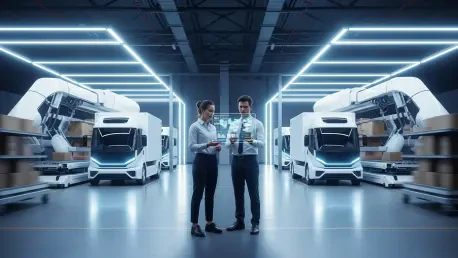
When we talk about the real economy, we are moving away from purely digital playbooks and looking at the sectors that actually keep the world moving—think logistics, payroll, construction, and even your morning coffee. The thesis here is centered on democratization, specifically taking the high-end technological capabilities once reserved for the top 1% of enterprises and making them accessible to the other 99%. You can see this in action with companies like Motive, which focuses on fleet safety, or Blank Street, which is reimagining the retail coffee experience through better systems. It is about applying software to the tangible world where things are built, moved, and sold physically. By targeting these essential services, automation becomes a tool for massive scale in sectors that have historically been underserved by the Silicon Valley elite.
Base10 is known for a “research-first” approach that involves analyzing sectors for months before writing a check; how does this level of rigor change the way a firm interacts with the startup ecosystem?
This methodology flips the traditional venture model on its head by prioritizing deep sector analysis over reactive deal-flow. Instead of waiting for a pitch deck to land in an inbox, the firm spends months asking what a specific industry, like IT support or the modern restaurant stack, should look like when infused with AI. This leads to a remarkable statistic where roughly 50% of their time is spent with companies that aren’t even actively fundraising, and 90% of their investments are the direct result of this proactive research. When you look at a massive cohort like the 160 companies in a Y Combinator batch, this level of preparation allows for much faster conviction. You aren’t just guessing if a founder is right; you are matching their vision against a pre-constructed thesis of how that market must evolve.
We are seeing a shift in AI from processing text to understanding the physical world, so what does the development of “world models” mean for the future of robotics and heavy industry?
The next frontier of intelligence isn’t just about understanding pixels on a screen but understanding atoms on a construction site. We are exploring vision models and world models that function as the visual equivalent of the LLMs we use for text today. If an AI can truly comprehend every pixel and atom in a complex environment like a high-rise building project, it unlocks the true potential of robotics to navigate and assist in the physical world. This extends into manufacturing intelligence, where we ask if AI can understand the nuances of creating perfumes, pharmaceuticals, or concrete with the same fluency that it currently interprets a paragraph of writing. This transition from “text-understanding” to “world-understanding” is what will finally bridge the gap between software and heavy industry.
With the introduction of internal AI tools like Base11 to automate research, how do you maintain the human element in a competitive venture market where founder relationships are still paramount?
While tools like Base11 are incredible for classifying thousands of companies and automating the grunt work of market mapping, the final stage of winning a deal is more human than it has ever been. In a market where competition among venture firms is at an all-time high, you have to articulate a clear, empathetic reason why a founder should choose you as their partner. This involves spending a significant amount of time understanding founders as people and conducting deep dives with their actual customers to see how the product lives in the real world. You use the AI to find the needle in the haystack, but you use human intuition and relationship-building to convince that needle to join your portfolio. It is a balance of data-driven conviction and the emotional intelligence required to support a leader through the highs and lows of scaling.
What is your forecast for the intersection of venture capital returns and social impact, particularly regarding the trend of donating carried interest?
I believe we are entering an era where the financial success of a fund will be increasingly tied to its social footprint, as evidenced by initiatives that donate up to 50% of carried interest to underfunded colleges and universities. By directing these significant sums toward financial aid, venture firms are not just investing in startups but in the future workforce that will eventually lead these very companies. This creates a virtuous cycle where the “real economy” automation we discuss actually funds the education of the next generation of engineers and founders. As more firms feel the pressure to articulate their value beyond just capital, this model of institutionalized giving will likely become a standard expectation for limited partners and founders alike. It transforms venture capital from a closed loop of wealth into a powerful engine for broader social mobility.