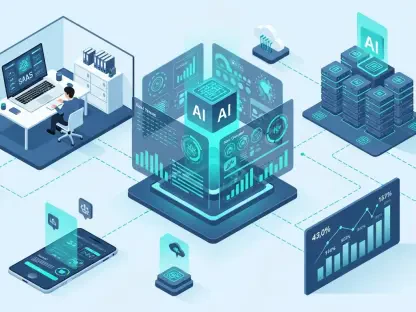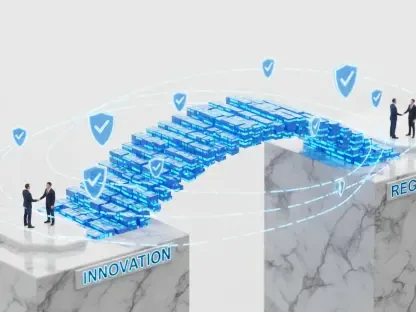

In today’s hyper-competitive digital landscape, the ability to innovate and deploy new features at an unprecedented pace is no longer a competitive advantage but a baseline requirement for survival. Businesses are under immense pressure to deliver value to customers instantly, yet many find their efforts hindered by the rigid, slow, and capital-intensive nature of traditional IT infrastructure. The cycle of provisioning servers, managing operating systems, and planning for capacity creates a significant drag on development velocity, diverting critical resources away from building the applications that drive business growth. This operational friction is precisely the challenge that serverless computing was designed to solve, evolving from a niche architectural pattern into a fundamental business strategy. By abstracting away the underlying infrastructure, serverless empowers organizations to focus exclusively on their core logic, transforming the development lifecycle and unlocking a new paradigm of agility, scalability, and cost efficiency.
The Economic and Operational Revolution
The shift towards serverless architecture represents one of the most significant economic transformations in cloud computing, primarily driven by its revolutionary pay-per-use billing model. Unlike traditional infrastructure-as-a-service (IaaS) models where companies pay for provisioned servers regardless of their utilization, serverless completely eliminates the cost of idle resources. Organizations are billed only for the precise compute time their code is executing, measured in milliseconds. This granular approach means that during periods of low or no traffic, costs can scale down to zero, offering unparalleled financial efficiency. This model fundamentally alters IT budgeting, moving from large, upfront capital expenditures (CapEx) to a more predictable and flexible operational expenditure (OpEx) model. The result is a dramatic reduction in the total cost of ownership (TCO) and the liberation of capital that can be reinvested into core business innovation rather than being tied up in depreciating hardware assets.
Beyond direct cost savings, the serverless paradigm delivers a profound impact on operational efficiency and developer productivity, which accelerates the time-to-market for new products and features. By offloading all aspects of infrastructure management—including server provisioning, patching, scaling, and maintenance—to the cloud provider, development teams are freed from undifferentiated heavy lifting. This allows engineers to dedicate their full attention to writing code that delivers direct business value. The platform’s inherent automatic scaling capabilities ensure that applications can seamlessly handle unpredictable traffic spikes without manual intervention, guaranteeing high availability and a consistent user experience. Simultaneously, this managed, fault-tolerant environment provides a resilient foundation for modern, event-driven systems like microservices, allowing teams to build and deploy complex applications faster and with greater confidence, thereby creating a powerful competitive advantage.
Fueling the Next Wave of Technological Innovation
The serverless market is not just growing; it is evolving and becoming deeply integrated with other transformative technologies, positioning it as a cornerstone of modern digital infrastructure. Industry projections indicate that the market is set to more than double by 2029, a testament to its expanding role across various high-growth sectors. Serverless is proving to be an essential enabler for artificial intelligence and machine learning workloads, providing the on-demand, massively parallel processing power required for tasks like real-time data analysis, model training, and inference at scale. Furthermore, its synergy with edge computing is unlocking new possibilities for the Internet of Things (IoT) ecosystem. By deploying serverless functions at the edge of the network, organizations can process data closer to its source, drastically reducing latency and enabling responsive, real-time applications for everything from smart manufacturing to autonomous vehicles.
This rapid adoption is also fostering a rich and dynamic ecosystem, characterized by a move toward greater flexibility and sustainability. A key trend is the increasing use of hybrid and multi-cloud strategies, where businesses leverage serverless architectures to build portable applications that can run across different cloud providers, mitigating the risk of vendor lock-in and optimizing for both performance and cost. Concurrently, the continuous improvement of developer tools, frameworks, and observability platforms is lowering the barrier to entry and simplifying the management of serverless applications at scale. Another significant driver is the growing emphasis on sustainable cloud computing. Because the serverless model inherently eliminates idle infrastructure, it minimizes energy consumption and reduces the overall carbon footprint of digital operations, aligning technological advancement with corporate environmental responsibility goals.
A Retrospective on Strategic Transformation
The organizations that successfully navigated the digital-first era were those that recognized early on that adopting serverless was not merely a technological upgrade but a fundamental business decision. By abstracting away the complexities of infrastructure management, these companies unlocked a new level of organizational agility. Their development teams were empowered to focus solely on creating value, which drastically shortened innovation cycles and allowed them to respond to market changes with unprecedented speed. This strategic pivot from managing servers to delivering features proved to be the critical differentiator that redefined their competitive standing. It was a shift in philosophy that ultimately cultivated a culture of continuous innovation and placed them at the forefront of their respective industries.