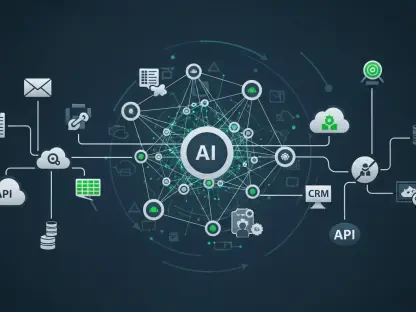

The very tools designed to accelerate innovation and streamline development have quietly become one of the most significant single points of failure for modern enterprises, exposing them to a cascade of financial, operational, and reputational damage. A deeply ingrained trust in the “always-on” promise of major Software-as-a-Service (SaaS) providers has created a widespread illusion of safety, masking a volatile reality where service disruptions are not just possible but frequent and increasingly severe. The migration to the cloud was meant to offload risk, yet for organizations without an independent resilience strategy, it has merely shifted the threat to a dependency they do not control. This report dissects the escalating crisis of DevOps downtime, revealing the hidden costs and outlining the critical shift required to reclaim control in an unstable digital ecosystem.
The Interconnected DevOps Landscape: Where Convenience Meets Critical Risk
The modern software development lifecycle is a finely tuned engine powered by a suite of interconnected cloud services. Platforms like GitHub, Jira, and Azure DevOps are no longer just tools; they are the central nervous system of research and development, housing everything from source code and project backlogs to deployment pipelines and critical infrastructure configurations. This tight integration has delivered unprecedented efficiency, allowing distributed teams to collaborate seamlessly and automate complex workflows. However, this convenience has come at a steep price: profound operational fragility.
When a core service in this ecosystem fails, the effect is not isolated. It triggers a domino effect that can paralyze an entire organization. A source control outage freezes all code progression, a project management tool failure leaves teams directionless, and a CI/CD pipeline disruption halts all software releases. For cloud-first businesses, there is often no manual override or alternative workflow. The operational dependency is so complete that a single provider outage can bring all value creation to an abrupt and costly standstill, turning a sophisticated, automated pipeline into a digital ghost town.
The Rising Threat: Downtime Trends and Their Financial Consequences
The Data Doesn’t Lie: Quantifying the Surge in SaaS Outages
The perception of major SaaS platforms as infallible fortresses of uptime is crumbling under the weight of evidence. Recent analysis reveals a startling and sustained increase in service disruptions among the industry’s leading DevOps providers. In 2024 alone, these platforms were plagued by 502 separate incidents, resulting in a cumulative total of over 4,755 hours of degraded performance or complete outages. This data paints a clear picture of a systemic problem that is not only persistent but also rapidly worsening.
Preliminary data from the following year confirms this alarming trajectory. A comparison shows that critical and major incidents skyrocketed by 69%, jumping from 48 to 156 in just twelve months. Correspondingly, the total duration of service degradation more than doubled, climbing from 4,755 hours to a staggering 9,255 hours. These figures are not anomalies; they represent a clear trend of escalating instability. The question for businesses is no longer if their critical DevOps tools will fail, but when, for how long, and how frequently.
From Bad to Worse: Projecting the Accelerating Cost of Failure
The financial repercussions of these outages are as severe as they are predictable. Industry-wide research consistently shows that the cost of downtime is immense and growing. A recent survey found that for 90% of mid-size and large enterprises, a single hour of downtime costs over $300,000. For Fortune 1000 companies, that figure balloons to between $1 million and over $5 million per hour. These numbers are not abstract calculations; they represent lost revenue, idle developer salaries, missed market opportunities, and contractual penalties.
This financial strain is particularly acute for smaller software vendors and startups, where a significant outage can threaten the company’s very liquidity and survival. Beyond the immediate costs, downtime inflicts lasting damage by derailing project timelines, delaying crucial releases, and forcing companies to breach Service Level Agreements (SLAs). For organizations contractually obligated to deliver hotfixes or new features within tight windows, an external provider’s failure becomes their own, triggering financial penalties and eroding customer trust that can take years to rebuild.
The False Safety Net: Why Provider Promises Fall Short
The Shared Responsibility Trap: Unpacking Where Provider Liability Ends
A fundamental misunderstanding of the Shared Responsibility Model lies at the heart of many failed disaster recovery strategies. This standard industry agreement clearly delineates duties: the SaaS provider is responsible for the security and availability of its global infrastructure, but the customer retains full and sole responsibility for the data they create and store on that platform. This includes invaluable intellectual property such as source code, project metadata, wikis, and issue-tracking histories.
This division of liability has a critical and often overlooked implication: no major DevOps SaaS provider contractually guarantees the recovery of a customer’s data. While they may offer assistance as a courtesy, there is no binding obligation to restore information lost due to accidental deletion, a malicious attack, or even a systemic failure. The terms of service are explicit on this point, placing the ultimate burden of data protection squarely on the customer. Believing the provider will act as a safety net in a data-loss scenario is a dangerous assumption that leaves a business completely exposed.
Native Backups: A Strategy Riddled with Gaps and Single Points of Failure
Relying solely on the native backup features offered by a SaaS provider is a flawed strategy that violates the most basic principles of data resilience. It creates a critical single point of failure by storing both production data and its backups within the same ecosystem. When a provider like Atlassian or Microsoft experiences a widespread outage, it is highly probable that both the primary service and its associated backup infrastructure will become inaccessible simultaneously, rendering the recovery plan useless precisely when it is needed most.
Furthermore, these built-in tools are notoriously inadequate for the demands of a dynamic DevOps environment. They often lack the granular control needed to restore a single lost repository branch or a specific set of project issues, forcing a disruptive and inefficient all-or-nothing recovery. These tools also run on fixed schedules, which can create significant data gaps. In a fast-moving development cycle, critical commits, pull requests, and comments made between automated backup cycles can be permanently lost, representing hours or even days of irretrievable work.
Navigating the Minefield of Security and Regulatory Compliance
The Shadow IT Threat: How Outages Create Lasting Security Backdoors
The pressure to maintain productivity during an outage often leads development teams to resort to risky workarounds, collectively known as “Shadow IT.” When official systems are down, employees may turn to unsanctioned and unsecured tools to collaborate and share information. This can involve sending sensitive code snippets via personal email accounts, discussing project vulnerabilities on public messaging apps, or storing proprietary data on unauthorized third-party cloud drives.
While these actions are often born of good intentions, they create severe and lasting security vulnerabilities. This behavior opens the door to intellectual property theft, accidental code leaks, and the introduction of malicious code into the development pipeline. The security backdoors created during a brief outage do not disappear when the service is restored; they remain as hidden threats that can be exploited by malicious actors long after the initial incident has been resolved, leaving the organization exposed to future breaches.
When Downtime Triggers a Compliance Crisis: Facing Audits and Penalties
For organizations operating in regulated industries such as finance, healthcare, or government contracting, robust business continuity and data protection are non-negotiable legal and contractual requirements. An extended DevOps outage can do more than just halt operations; it can trigger a full-blown compliance crisis. The inability to access or restore critical development data and configurations can lead to failed audits and the loss of essential certifications like ISO 27001 or SOC 2.
Moreover, emerging regulations like the NIS2 Directive explicitly mandate that organizations implement comprehensive backup management and disaster recovery capabilities. Relying on insufficient native tools or having no independent recovery plan may constitute a direct violation of these standards, resulting in significant fines and legal penalties. In this context, an outage is not merely an operational inconvenience but a public demonstration of a company’s failure to meet its regulatory obligations, with severe consequences for its legal standing and market reputation.
Forging a Resilient Future: The Strategic Shift to Proactive Defense
Beyond the Provider: Core Pillars of an Independent Recovery Plan
True resilience is not about hoping for the best; it is about preparing for the inevitable. The foundation of a modern defense strategy is an independent, third-party backup and recovery plan that operates completely outside the primary SaaS provider’s infrastructure. This approach is built on several core pillars, starting with comprehensive and frequent backups that capture not just source code but all associated metadata, configurations, and project management data. The objective is to have a complete, self-contained copy of the entire DevOps environment.
To eliminate the single point of failure, this data must be stored in an immutable and isolated location, adhering to the industry-standard 3-2-1 rule: three copies of the data, on two different media types, with at least one copy held off-site. This plan must also be supported by a tool capable of orchestrating a complex, multi-service recovery and validated through continuous testing to ensure it works flawlessly under pressure. Finally, this strategy must be guided by clearly defined business metrics, including a Recovery Time Objective (RTO) to dictate the maximum acceptable downtime and a Recovery Point Objective (RPO) to define the maximum tolerable data loss.
The Next Frontier: Turning Resilience into a Competitive Advantage
Adopting a robust, independent recovery solution does more than just mitigate the risk of downtime; it unlocks significant strategic value and transforms data protection from a defensive cost center into a competitive advantage. With a complete and accessible copy of their DevOps environment, organizations gain a new level of operational agility. This includes the ability to perform seamless platform migrations, create safe sandbox environments for testing and training without impacting production, and implement long-term data archiving to meet stringent compliance requirements.
This capability also provides powerful granular restore functions that can resolve minor data loss incidents, such as the accidental deletion of a critical feature branch, in minutes rather than hours or days. In a competitive market, the ability to recover from both minor errors and catastrophic failures with speed and precision is a powerful differentiator. It demonstrates a level of operational maturity and reliability that builds trust with customers, partners, and investors, proving that the organization is not only innovative but also fundamentally resilient.
The Final Verdict: Reclaiming Control Is No Longer Optional
The evidence presented in this report points to an undeniable conclusion: the passive reliance on the inherent stability of DevOps SaaS providers is an outdated and dangerous posture. The escalating frequency and severity of outages, combined with the clear limitations of shared responsibility models and native backups, create a landscape of unacceptable risk. Businesses that continue to operate without an independent, tested, and comprehensive recovery strategy are not merely unprepared; they are actively vulnerable to financial loss, operational paralysis, and severe reputational harm.
The strategic shift toward proactive resilience, anchored by third-party backup and recovery solutions, is no longer a matter of best practice but of fundamental business continuity. By taking ownership of their data and developing a robust “plan B,” organizations can reclaim control over their own operational destiny. This move transforms resilience from an afterthought into a core business enabler, providing the stability and agility required to innovate with confidence in an increasingly unpredictable digital world. The question has shifted from whether a company can afford a proper resilience plan to whether it can afford to be without one.