
The silent hum of servers in data centers worldwide now orchestrates a new kind of workforce, one composed not of pre-programmed automatons but of intelligent agents capable of independent thought and action. This fundamental shift marks a critical turning point for the enterprise software industry, where the race is no longer about automating repetitive tasks but about building and managing a sophisticated digital labor force. At the heart of this transformation stands UiPath, a company once synonymous with Robotic Process Automation, now making a high-stakes pivot to become the essential operating system for this new agentic era. Its journey from a provider of rule-based bots to an orchestrator of AI-driven agents represents a profound bet on the future of work itself.
From Programmed Bots to Thinking Agents: The New Automation Frontier
The enterprise automation landscape was, for over a decade, defined by the predictable and structured world of Robotic Process Automation (RPA). In this domain, software “bots” meticulously followed pre-programmed scripts to execute routine, high-volume tasks like data entry and invoice processing. UiPath rose to prominence as a leader in this field, providing the tools for businesses to build armies of these digital workers, driving efficiency by eliminating manual, repetitive labor. The value proposition was clear and deterministic: a bot was a digital tool designed to perform a specific function with unwavering consistency.
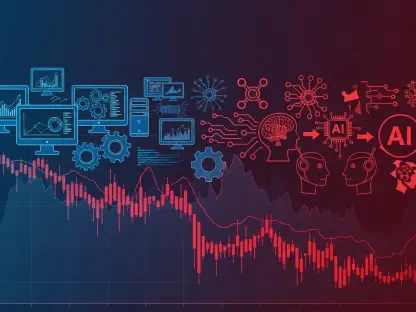
However, the rapid ascent of Generative AI and large language models (LLMs) introduced a paradigm-shifting capability: digital reasoning. This technological leap rendered the old model of deterministic automation incomplete. The new frontier is agentic automation, where AI agents can perceive their digital environment, reason through multi-step problems, and execute complex workflows with a degree of autonomy previously unimaginable. These agents are not just following a script; they are dynamic problem-solvers, capable of handling exceptions and adapting to novel situations, fundamentally changing what is possible to automate.
This evolution has ignited a fierce competitive realignment among technology giants. Hyperscalers like Microsoft and SaaS platforms such as ServiceNow are aggressively integrating their own AI-powered agentic capabilities, transforming the automation market from a niche category into a core component of enterprise technology stacks. The competitive battleground has shifted from who can build the best bot to who can provide the most robust platform for orchestrating, governing, and scaling a hybrid workforce of humans and intelligent AI agents.
The Agentic Wave: Market Dynamics and Growth Projections
The Rise of the Agentic Enterprise
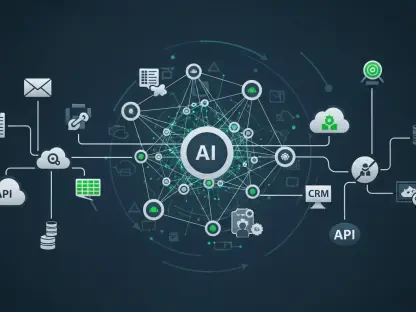
The primary trend reshaping the industry is the emergence of the “Agentic Enterprise,” a business model built around dynamic, AI-powered workflows rather than static, human-defined processes. This represents a convergence of RPA, Intelligent Document Processing, and Generative AI into a unified automation category. Companies are moving beyond automating isolated tasks and are now focused on orchestrating end-to-end business processes with fleets of specialized AI agents. This strategic shift requires a new kind of platform, one that serves as a central nervous system to coordinate these autonomous agents across disparate systems and applications.
This transition is propelled by the promise of exponential gains in productivity and innovation. Where traditional RPA offered incremental efficiency improvements, agentic automation enables the complete reimagining of core business operations, from customer service to financial compliance. The demand is no longer just for cost savings but for a new operational agility that allows businesses to adapt in real time. Consequently, the market is quickly moving toward platforms that offer comprehensive management and governance for these powerful new digital workers.
Gauging the Market: UiPath’s Financials in an AI World
UiPath’s financial narrative reflects both the challenges and the potential of its strategic pivot. As of its latest reporting, the company’s Annual Recurring Revenue (ARR) reached $1.78 billion, showing a modest 11% year-over-year growth. This figure, while substantial, represents a significant deceleration from the hyper-growth rates of its pre-AI era, indicating that the market is still evaluating the tangible revenue impact of its new agentic strategy. The company’s stock (NYSE: PATH), currently trading around $12.89, remains far below its 2021 IPO highs, suggesting investor caution and a “wait-and-see” approach.
Despite the tempered top-line growth, UiPath has demonstrated impressive operational discipline. It maintains strong non-GAAP gross margins near 85% and has improved its non-GAAP operating margin to approximately 20%, signaling a move toward sustainable profitability. With a robust cash reserve of around $1.7 billion, the company is well-capitalized to fund further innovation and strategic acquisitions. The central challenge for management is to prove that its agentic pivot can reignite ARR growth and translate its technological vision into a compelling financial trajectory that regains long-term investor confidence.
Navigating the Pincer Movement: UiPath’s Core Challenges
UiPath finds itself in a precarious competitive position, squeezed by a formidable “pincer movement.” From one side, hyperscalers like Microsoft are leveraging their immense market power, bundling their Power Automate platform deeply within the ubiquitous Windows and Office 365 ecosystems. This strategy creates significant pricing pressure and a low-friction entry point for enterprises already invested in Microsoft’s technology stack. From the other side, enterprise SaaS giants such as Salesforce and ServiceNow are developing proprietary agent platforms tailored to their specific environments, threatening to lock customers into their walled gardens.
Beyond the competitive pressures, UiPath faces significant internal hurdles. A primary challenge is monetization friction; as a single, powerful AI agent becomes capable of performing the work of dozens of traditional bots, the company must devise a new value-based pricing model to avoid cannibalizing its existing revenue streams. Furthermore, the technical complexity of managing vast “agent swarms” at an enterprise scale is immense. Ensuring stability, preventing cascading errors, and providing robust governance for thousands of autonomous agents operating on critical systems presents a monumental engineering challenge that will be crucial to overcome for widespread adoption.
Governing the Swarm: The Mandate for Control and Compliance
As enterprises begin to deploy AI agents at scale, the need for a sophisticated governance and orchestration layer becomes paramount. The prospect of thousands of autonomous agents making decisions and taking actions across sensitive corporate systems introduces a new class of operational risk. Without a centralized control plane, businesses face the threat of “agent sprawl,” where unmanaged agents create security vulnerabilities, compliance breaches, and unpredictable operational failures. This new reality mandates a platform that can provide comprehensive oversight, control, and an auditable record of all agent activities.
The technical challenges of enterprise-grade agentic automation extend to mitigating inherent AI risks, such as model “hallucinations,” where an agent may generate false or nonsensical information. In critical business processes like financial reporting or customer data management, such errors can have severe consequences. Therefore, a successful orchestration platform must incorporate advanced protocols for hallucination detection, exception handling, and human-in-the-loop verification. It must also enforce strict security measures to ensure that agents operate within their designated permissions, safeguarding against both internal misuse and external threats. For heavily regulated industries, this level of control is not just a feature but a non-negotiable requirement.
Orchestrating a New ErUiPath’s Strategic Growth Levers
In response to these challenges, UiPath is centering its strategy on a suite of product innovations designed for the agentic age. The cornerstone is the UiPath Agent Builder, which allows businesses to create sophisticated agents powered by leading LLMs. These agents are managed by UiPath Maestro, an orchestration layer engineered to govern agent interactions and ensure seamless collaboration between AI, legacy bots, and human employees. A key differentiator is “ScreenPlay,” a breakthrough technology that enables agents to visually perceive and interact with any application interface, bypassing the need for fragile API integrations, particularly with entrenched legacy systems.
UiPath is also leveraging strategic acquisitions to accelerate its entry into high-value vertical markets. The recent acquisition of WorkFusion, for instance, provides UiPath with a portfolio of “pre-trained” agents specializing in complex domains like financial crime compliance. This move allows customers to deploy highly capable agents much faster, delivering immediate value without the lengthy development cycles typically associated with custom solutions. This M&A strategy, combined with a deep partnership with AI pioneers like OpenAI, positions UiPath to continuously integrate cutting-edge models and deliver specialized, industry-specific solutions.
The Verdict on the Pivot: An Operating System for the New Digital Workforce
UiPath’s strategic transformation represented a necessary and decisive response to the disruption brought by Generative AI. By shifting its focus from task-centric bots to a comprehensive platform for orchestrating intelligent agents, the company successfully charted a course away from technological obsolescence. The return of founder Daniel Dines to the CEO role, coupled with a deepened alliance with OpenAI, infused the company with a renewed sense of product vision and technical credibility at a critical juncture.
While the market’s reception remained cautiously optimistic, evidenced by a stabilized but not yet soaring stock valuation, UiPath solidified its competitive value proposition. It established itself not as a direct competitor to hyperscalers or SaaS giants within their ecosystems, but as the essential, neutral orchestration layer that connects them all. The company’s future was no longer defined by its ability to automate simple tasks, but by its capacity to become the indispensable operating system for the millions of AI agents that constitute the new digital workforce of the global economy.