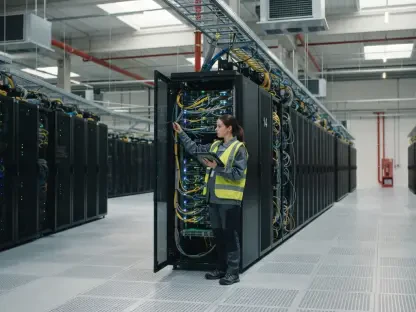

Complex licensing agreements and restrictive contracts prevent nearly forty percent of enterprise leaders from migrating to the cloud-native solutions needed for AI. This administrative inertia creates a profound friction point within the modern enterprise landscape, where the transformative potential of artificial intelligence is consistently throttled by the heavy weight of outdated software. As organizations strive to compete in an increasingly automated economy, they find themselves anchored by decades of accumulated technical debt and inefficient on-premises infrastructure. This systemic drag does more than just slow down operations; it actively prevents companies from fully embracing modernization. Systems that were originally designed to support business functions have morphed into the primary barriers to future progress. The struggle is particularly acute as the gap widens between agile, cloud-born competitors and established firms that are still wrestling with codebases written before the turn of the century, leading to a critical strategic impasse that threatens long-term survival.
The High Cost of Operational Maintenance
Technology leaders are currently trapped in a zero-sum game where the demands of the past are actively consuming the resources of the future. Recent research indicates that a majority of IT teams are overwhelmed by the constant need to patch and integrate aging applications that reside locally rather than in the cloud. With nearly eighty percent of leadership admitting that financial and human capital is being siphoned away from AI initiatives to keep legacy systems afloat, the unresolvable predicament of maintenance versus innovation has become a critical strategic hurdle. Every dollar spent on preserving a monolithic database or a decades-old server environment is a dollar that cannot be invested in large language models or predictive analytics. This financial bleeding is not merely an accounting issue; it is a fundamental threat to long-term viability in a market where speed and intelligence are the primary currencies of success for any modern organization.
Beyond the direct financial costs, the drain on human talent represents an even more significant barrier to progress. Skilled engineers who should be designing the next generation of automated workflows find themselves relegated to the role of digital archaeologists, digging through layers of poorly documented code to fix recurring bugs. This misallocation of expertise creates a talent vacuum, as top-tier developers are increasingly drawn to startups and tech-native firms that offer the chance to work with cutting-edge tools rather than maintaining legacy stacks. The resulting brain drain further slows the modernization process, leaving organizations with a dwindling pool of experts capable of bridging the gap between old and new systems. Consequently, the reliance on outdated technology creates a self-perpetuating cycle of stagnation, where the lack of innovation makes it harder to attract the very talent required to escape the legacy trap and finally transition toward a more agile, cloud-centric development model.
Cybersecurity Risks in the Age of AI
The traditional security model of releasing software and patching it later is failing under the pressure of AI-enhanced cyberattacks. Malicious actors now use artificial intelligence to exploit vulnerabilities at a speed that human administrators cannot match, leading to an exponential increase in required security updates. This patching treadmill is exemplified by the massive volume of vulnerabilities addressed by major software vendors monthly, forcing IT departments into a reactive cycle that leaves little room for proactive development. In 2026, the complexity of managing thousands of critical patches across a fragmented infrastructure has become nearly impossible for most teams to handle. When the defensive response time is measured in days but the offensive exploitation happens in seconds, the structural flaws of legacy systems become glaringly apparent. This imbalance essentially grants attackers a permanent advantage, as they only need to find one unpatched hole to compromise an entire network.
For resource-constrained organizations, particularly in the public sector, the complexity of legacy code creates a dangerous security dichotomy. These systems often consist of millions of lines of interdependent scripts that are nearly impossible to secure against modern threats without total overhauls. Maintaining these crumbling infrastructures is no longer just an operational burden; it represents a systemic risk that leaves enterprises vulnerable to sophisticated, AI-driven exploits. The sheer age of these systems often means they lack basic security features, such as multi-factor authentication or robust encryption, that are standard in cloud-native environments. Furthermore, the lack of vendor support for many older applications means that new vulnerabilities remain unpatched indefinitely. This creates a permanent state of exposure, where organizations are essentially hoping that their obscurity provides a layer of protection that no longer exists in a highly connected and automated world.
Establishing a New Technology Partnership
The analysis of current industry shifts established that the path forward required a decisive break from the technological habits of previous years. Decision-makers recognized that the transition to a modern, AI-integrated infrastructure was not merely a technical upgrade but a wholesale strategic realignment. Organizations that successfully navigated this transition focused on reclaiming their autonomy from restrictive vendor contracts and prioritizing interoperability over convenience. They also adopted a more aggressive stance toward technical debt, treating it as a primary risk factor rather than a secondary operational concern. By shifting resources from the maintenance of legacy stacks to the development of cloud-native platforms, these leaders ensured that their infrastructure served as a catalyst for growth. This comprehensive overhaul proved essential for maintaining competitiveness in an era where agility and intelligence became the defining features of the global business landscape.
Moving forward, the most effective strategy involved utilizing artificial intelligence as a tool to fix the very problems legacy systems created. By deploying autonomous code-auditing instruments and threat defense platforms, IT teams automated the detection and remediation of vulnerabilities. This shift allowed engineers to focus on high-value innovation rather than constant troubleshooting. Furthermore, the implementation of “secure by design” principles shifted the responsibility for security outcomes back to the vendors, ensuring that new investments did not contribute to future technical debt. The ultimate takeaway for leadership was the necessity of evaluating technology partners based on their ability to facilitate future growth rather than their historical dominance. Transitioning away from outdated models became a strategic mandate, enabling organizations to leverage the full creative and operational potential of AI-driven systems to thrive in a rapidly evolving market.