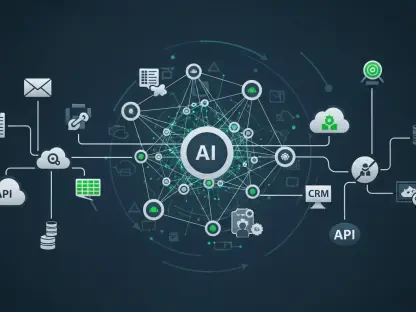

While the public discourse around artificial intelligence is dominated by visions of sentient chatbots and revolutionary customer-facing features, a far more profound and consequential transformation is quietly taking place within the foundational layers of the software-as-a-service industry. For SaaS leaders and investors, the most critical AI story is not about the next generative feature announcement but about the deep, often invisible, re-architecting of core business operations, cost structures, and engineering teams. This internal rebuild, driven by market realities and technological prerequisites, represents the true front line of the AI revolution, determining which companies will thrive in the coming decade and which will be left behind by a wave of innovation they were not prepared to support.
The AI Hype Cycle vs. SaaS Reality: Setting the Stage
The chasm between the market’s perception of AI and its practical implementation in the SaaS world is widening. Industry headlines are saturated with discussions of AI-powered products, creating an expectation of immediate, transformative change for the end-user. However, the economic reality on the ground tells a different story. Enterprise clients, while certainly interested in the potential of artificial intelligence, are demonstrating a significant reluctance to pay a premium for AI-branded features integrated into their existing software stacks. This creates a challenging paradox for SaaS providers who are under immense pressure to innovate without a clear path to monetizing those innovations directly.
This consumer resistance is forcing a strategic pivot. Instead of a gold rush for new revenue streams, the initial wave of AI adoption is being funded by reallocating existing budgets. Chief Information Officers are prioritizing generative AI initiatives, yet this is not translating into a proportional increase in overall software spending. Consequently, SaaS companies are channeling their investments inward, focusing on areas where AI can deliver a more immediate and measurable return on investment. The primary beneficiary of this internal focus is operational efficiency, particularly within the complex and costly domain of software engineering. The current phase of the AI journey in SaaS is therefore less about product disruption and more about foundational preparation and process optimization.
The Great Internal Shift: Unpacking AI’s Transformative Trends
Beyond the Feature List: AI’s True Infiltration into SaaS Operations
The most significant impact of AI within the SaaS industry is not yet visible in the average user’s dashboard; it is embedded deep within the software development lifecycle. With customers unwilling to absorb the costs of AI development through higher subscription fees, leaders are deploying these powerful tools to streamline their own internal processes. The goal is no longer just to build smarter products but to build products more smartly. This means leveraging AI to accelerate code generation, automate sophisticated testing protocols, and drastically improve the speed and accuracy of bug detection and resolution.
This internal optimization is yielding tangible results long before any new feature reaches the market. Engineering teams are experiencing measurable boosts in productivity, allowing them to shorten development cycles and deploy updates more frequently. For instance, AI-powered tools can analyze vast codebases to identify potential vulnerabilities or inefficiencies that a human developer might miss, effectively acting as a tireless partner in quality assurance. This focus on the back end is not a deferral of innovation but a necessary precursor to it. By making the process of software creation more efficient, companies are freeing up capital and human resources that can be reinvested into the long-term, complex work of building truly AI-native applications.
The Numbers Behind the Noise: Quantifying AI’s Economic Footprint
Beneath the surface of the AI boom lies a complex and challenging economic reality for SaaS providers. The technology is incredibly consumption-hungry, demanding massive computational resources for both the initial training of models and the ongoing process of running inference. A significant portion of the capital flooding the AI space is therefore flowing directly to infrastructure providers, such as semiconductor firms designing advanced chips and public cloud platforms offering the requisite processing power. This leaves SaaS companies caught in a precarious position between soaring operational costs and market resistance to price hikes.
This economic tension is a powerful catalyst for a new wave of architectural and engineering innovation. The predictable, flat-fee subscription model that defined the SaaS industry for over a decade is fundamentally at odds with the variable, high-consumption cost profile of AI. In response, companies are aggressively exploring strategies to mitigate these expenses. This includes a push toward developing smaller, fine-tuned AI models that are less computationally intensive than their larger counterparts, as well as a strategic shift to push more inference workloads to the edge, running them on user devices instead of costly cloud servers. Success in the AI era will depend as much on a company’s ability to manage these costs as it does on the intelligence of its algorithms.
Navigating the Trenches: The Hidden Costs and Architectural Hurdles of AI Integration
The promise of advanced AI is forcing a reckoning with a decade of accumulated technical debt. Many established SaaS platforms were built on architectures designed for a predictable world of static business rules and structured data. These systems excel at executing predefined workflows but are fundamentally ill-equipped to handle the dynamic, data-intensive, and computationally demanding nature of modern machine learning. AI models are not static; they learn and evolve, constantly rewriting the logic of an application. Trying to bolt these capabilities onto a legacy architecture is not just inefficient—it is often impossible at scale.
Consequently, a wave of core modernization has become a non-negotiable prerequisite for meaningful AI integration. This is not a simple refactoring project but a complete rethinking of how data is stored, processed, and leveraged. SaaS companies must invest in building flexible, scalable platforms capable of supporting the massive data pipelines and complex computational workloads that AI requires. This foundational work is expensive, time-consuming, and largely invisible to the end-user, making it a difficult investment to justify in the short term. However, without it, any promises of autonomous workflows, agentic capabilities, or truly intelligent modules will remain confined to marketing materials.
The Unwritten Rulebook: Navigating Compliance and Data Governance in the AI Era
The integration of artificial intelligence introduces a new and formidable layer of complexity regarding data governance and regulatory compliance. AI models are fueled by vast quantities of data, and their effectiveness is directly tied to the quality and breadth of the datasets used for training. This reliance on data places an immense responsibility on SaaS companies to manage information ethically and securely. Issues of data privacy, consent, and usage rights, which were already significant concerns, become exponentially more critical when data is used not just for storage but to actively shape the behavior of a software product.
Moreover, the opaque nature of many sophisticated AI models—often referred to as the “black box” problem—presents a significant challenge for compliance and accountability. Regulators and customers alike are beginning to demand transparency in how algorithmic decisions are made, particularly in sensitive industries like finance and healthcare. SaaS providers must now develop robust frameworks for ensuring model fairness, mitigating bias, and providing clear audit trails for AI-driven outcomes. Navigating this evolving legal and ethical landscape is no longer a peripheral task for the legal department but a central challenge for product and engineering teams, adding another hidden but essential cost to AI implementation.
Forging the Future: From Internal Rebuilds to an AI-Native SaaS Landscape
The deep, internal work of modernization and process optimization is laying the groundwork for the next generation of software: the AI-native platform. The eventual goal of this foundational rebuild is to move beyond simply adding AI features to existing products and toward creating applications where intelligence is a core, inseparable part of the architecture. This future landscape will be defined by autonomous workflows that can anticipate user needs, agentic systems that can execute complex multi-step tasks, and user interfaces that are truly conversational and adaptive.
Achieving this vision requires more than just new technology; it demands a new kind of engineering organization. The traditional pyramid structure of software teams, with a large base of junior developers, is becoming obsolete. AI development tools disproportionately benefit experienced engineers who can use their expertise to guide the technology effectively, amplifying their output. This is causing the talent model to compress into a diamond shape, with a smaller entry-level cohort, a large and critical core of senior talent, and a select group of top-level architects. This organizational restructuring is a crucial component of the transition, as the ability to attract, retain, and empower senior engineers becomes a key competitive differentiator.
The Strategic Imperative: Why Foundational Investment is Non-Negotiable for Survival
In the current economic climate, many SaaS companies have understandably prioritized margin expansion and short-term profitability, sometimes at the expense of research and development. However, the arrival of artificial intelligence fundamentally changes this equation, transforming foundational investment from a discretionary choice into an urgent, non-negotiable imperative. Deferring the necessary work of architectural modernization is no longer a viable strategy; it is a direct path toward competitive irrelevance. The race to build the next generation of intelligent applications cannot be won on a brittle or outdated technological foundation.
The true AI revolution in SaaS is happening now, but it is taking place in the server rooms, code repositories, and engineering team meetings, not in the press releases. For industry leaders, the challenge is clear: balance the immediate demands for financial performance with the critical need to fund the deep, internal rebuilding effort that AI requires. The companies that successfully navigate this transition are the ones that recognize that the most valuable AI investments today are those that strengthen the core. This strategic foresight is what separates the companies that will merely use AI from those that will ultimately be defined by it.