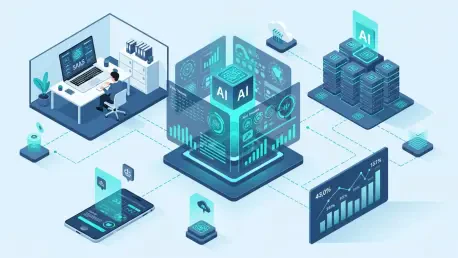

The traditional boundary between software as a mere utility and software as an autonomous strategic partner has effectively vanished as artificial intelligence recalibrates the core architecture of the global cloud economy. This transition signals a departure from the static applications of previous years, moving toward a dynamic ecosystem where software does not simply wait for user input but actively anticipates business needs. As organizations navigate the complexities of a hyper-connected marketplace, the integration of machine learning into cloud-based delivery has become the defining characteristic of modern enterprise strategy.
The Convergent Landscape of Intelligent Cloud Platforms
The SaaS Evolution: Examining the Transition From Local Perpetual Licenses to Fluid, Service-Oriented Cloud Delivery Models
The transformation of software delivery began with a move away from the rigid constraints of local, perpetual licensing. In the traditional model, businesses faced significant capital expenditures and the logistical burden of manual updates. The rise of service-oriented cloud delivery replaced this with a subscription-based framework, ensuring that the latest innovations are immediately accessible to users without the need for physical infrastructure overhauls.
This shift has enabled a more fluid interaction between vendors and clients. Instead of purchasing a finished product, companies now invest in a living service that evolves in real-time. This elasticity allows for rapid scaling, where software capacity expands or contracts alongside the actual requirements of the business, fostering a culture of continuous improvement rather than periodic, disruptive upgrades.
Defining the AI-Powered Category: How the Fusion of Cloud Accessibility and Machine Learning Is Creating a New Standard for Business Software
The current era is defined by the fusion of pervasive cloud accessibility and sophisticated machine learning algorithms. While standard cloud platforms provide the storage and connectivity, the AI-powered category introduces an analytical layer that processes data internally to generate higher-order value. This synergy has moved software beyond the role of a passive data repository and into the realm of an active participant in business logic.
This new standard is characterized by the ability of software to learn from historical patterns and optimize its own performance. By embedding intelligent models directly into the delivery pipeline, platforms can now offer features like automated anomaly detection and intelligent resource allocation. Consequently, the distinction between a data tool and an intelligence tool has effectively disappeared.
Cross-Sector Proliferation: The Pervasive Influence of Intelligent Platforms Across Finance, Healthcare, Retail, and Education
No industry remains untouched by the expansion of intelligent platforms. In finance, these systems manage risk by identifying subtle fraudulent patterns that escape human detection, while in healthcare, they assist in diagnostic accuracy by synthesizing vast amounts of patient data. Retailers use these platforms to manage complex global supply chains, ensuring that inventory levels are optimized based on shifting consumer behaviors.
Education has also seen a significant shift toward personalized learning environments powered by these intelligent engines. By tailoring content to the specific progress of individual students, software platforms are bridging the gap between mass instruction and specialized tutoring. Across all these sectors, the common thread is the use of cloud-native intelligence to solve industry-specific problems with unprecedented speed and accuracy.
Key Market Players: Identifying the Leaders in the Cloud Ecosystem and the Democratization of High-End Enterprise Tools for Businesses of All Sizes
The leaders in the current cloud ecosystem are no longer just the providers of raw computing power but the innovators of pre-packaged intelligence. Major technology firms have integrated advanced machine learning models into their core offerings, making high-end tools available to startups and established enterprises alike. This democratization has leveled the playing field, allowing smaller firms to deploy the same analytical capabilities as global conglomerates.
Furthermore, the emergence of niche providers targeting specific business functions has diversified the market. These players focus on delivering deep expertise through accessible subscription models, ensuring that even highly specialized tasks can be enhanced by machine learning. This accessibility is driving a surge in innovation, as businesses of all sizes can now experiment with advanced technologies without the need for massive internal research departments.
Market Dynamics and the Trajectory of Intelligent Automation
Emerging Trends in Hyper-Automation and Predictive Analytics
Shift From Passive to Active Software: How Platforms Are Moving Beyond Data Storage to Offer Proactive Insights and Interpretation
Modern software platforms have fundamentally shifted their value proposition from passive storage to active interpretation. In the current business environment, simply having data is insufficient; the competitive advantage lies in the ability to derive meaning from that data instantly. Intelligent systems now provide proactive insights, alerting managers to potential issues before they escalate into systemic problems.
This trend toward proactive software means that decision-making is increasingly supported by real-time predictive models. Instead of looking back at quarterly reports to understand performance, leaders receive continuous updates on projected outcomes. This shift empowers a more agile management style, where strategic pivots are based on anticipated trends rather than historical reactions.
The API Economy: The Role of Seamless Interoperability and Integrations in Creating Cohesive Digital Business Ecosystems
The modern digital ecosystem relies heavily on the role of Application Programming Interfaces (APIs) to ensure that disparate software tools can communicate effectively. This interconnectivity allows for the creation of a cohesive environment where data flows seamlessly between sales, marketing, and operations. The API economy has turned individual software applications into modular components of a larger, more powerful business engine.
Moreover, this interoperability enables businesses to build custom stacks that perfectly suit their unique workflows. By integrating specialized AI tools with existing cloud infrastructure, companies can create highly efficient, automated pipelines. This modularity ensures that as new technologies emerge, they can be integrated into the existing ecosystem without requiring a total system overhaul.
Personalization at Scale: Utilizing Machine Learning to Tailor User Experiences and Product Recommendations in Real-Time
One of the most visible impacts of intelligent automation is the ability to deliver personalization at scale. Machine learning models analyze user behavior in real-time to tailor interfaces, content, and product suggestions to the specific needs of each individual. This level of customization was once only possible through manual human intervention, but it is now a standard feature of digital business interactions.
The result is a significant increase in user engagement and satisfaction. When a platform anticipates what a user needs, it reduces friction and builds loyalty. This capability is particularly transformative in the retail and media sectors, where the sheer volume of choices makes personalized curation a necessity for maintaining a competitive edge.
DevOps and CI/CD: The Technical Shift Toward Continuous Improvement and Rapid Feature Deployment Through Automated Pipelines
The technical backbone of modern SaaS is built upon DevOps practices and automated pipelines for continuous integration and deployment (CI/CD). This approach allows developers to push updates and new features on a daily or even hourly basis, ensuring that the software is always at the cutting edge. Automation within the development lifecycle has reduced the risk of errors and significantly shortened the time to market for new innovations.
This technical shift also facilitates the rapid integration of new machine learning models. As researchers develop more efficient algorithms, these can be deployed to the user base almost immediately through the automated pipeline. This culture of continuous improvement ensures that the software never becomes stagnant, providing users with a tool that grows more capable over time.
Growth Projections and Global Performance Indicators
Expansion of the SaaS Market: Analyzing the Ongoing Shift From Capital Expenditure (CapEx) to Operational Expenditure (OpEx) Models
The financial landscape of corporate technology continues to favor the shift from Capital Expenditure (CapEx) toward Operational Expenditure (OpEx). Businesses have recognized that the predictability of monthly subscriptions is preferable to the volatility of large, infrequent hardware investments. This trend is a primary driver behind the sustained expansion of the cloud market as organizations prioritize liquidity and financial flexibility.
This transition also aligns with the rapid pace of technological change. By opting for an OpEx model, companies avoid the risk of owning depreciating assets that might become obsolete within a few years. Instead, they pay for access to the most current technology, ensuring that their budget is always tied to active, value-generating services rather than sunk costs.
Data-Driven Success Metrics: Performance Indicators Showing the Efficiency Gains and ROI Provided by AI-Integrated Tools
Performance indicators for the current year show a marked improvement in operational efficiency for companies that have fully integrated intelligent tools. Return on investment (ROI) is increasingly measured by the reduction in time spent on routine tasks and the increase in accuracy for complex forecasts. Data suggests that automation has allowed teams to reallocate significant portions of their workweek toward high-value strategic initiatives.
Furthermore, success metrics are now more granular, tracking the specific impact of AI on customer acquisition costs and lifetime value. These indicators provide clear evidence that intelligent software is not just a technical upgrade but a major driver of bottom-line growth. Organizations are using these metrics to justify further investments in automated systems, creating a feedback loop of continuous technological adoption.
Forecasting the Next Decade: Projected Market Valuation and the Anticipated Dominance of AI-Native SaaS Over Legacy Cloud Systems
Forecasting the market trajectory over the coming years reveals a clear dominance of AI-native platforms over legacy systems. The valuation of the intelligent cloud sector is expected to rise sharply as more businesses retire their older, non-intelligent software in favor of platforms that offer embedded analytics. The market is moving toward a state where the absence of AI features will be viewed as a critical deficiency.
This shift will likely lead to a consolidation of the market, where providers who fail to integrate machine learning struggle to remain relevant. The anticipated dominance of these systems is rooted in their ability to provide superior value through automation and insight. As a result, the next decade of digital business will be defined by the ubiquity of intelligent, self-optimizing platforms.
Navigating Technical and Strategic Implementation Barriers
Data Privacy and Security Hurdles: Addressing the Complexities of Multi-Tenant Architectures and the Necessity of Strict Data Isolation
The implementation of advanced cloud platforms brings significant challenges regarding data privacy and security. In a multi-tenant architecture, where multiple customers share the same underlying infrastructure, ensuring strict data isolation is paramount. Providers must employ sophisticated encryption and access controls to prevent unauthorized data access and maintain customer trust.
Moreover, as AI systems require vast amounts of data to function effectively, the risk of data leaks becomes more acute. Companies must navigate the delicate balance between feeding their models enough information to be useful and protecting sensitive corporate secrets. This tension requires a robust security framework that evolves as quickly as the threats it is designed to counter.
Integration Friction: Strategies for Overcoming the Challenges of Merging Intelligent SaaS Into Existing Legacy IT Environments
Merging new, intelligent software into existing legacy IT environments often creates significant integration friction. Older systems may not be compatible with modern API standards, leading to data silos that hinder the effectiveness of AI models. Overcoming these challenges requires a strategic approach to digital transformation, often involving the use of middleware or the gradual decommissioning of outdated hardware.
Businesses must also address the cultural resistance that often accompanies the introduction of automated tools. Employees who are accustomed to traditional workflows may view AI as a threat rather than an enhancement. Successful integration strategies involve clear communication about the benefits of the new technology and comprehensive training to ensure that the workforce can utilize the tools effectively.
The AI Talent Gap: Navigating the Scarcity of Specialized Skills Required to Manage and Optimize Complex AI-Driven Platforms
A critical barrier to the widespread adoption of intelligent software is the scarcity of specialized talent. Managing and optimizing these platforms requires a unique blend of data science expertise and business acumen, skills that are currently in high demand. Organizations are finding it increasingly difficult to recruit and retain the professionals needed to oversee their AI initiatives.
To navigate this gap, many companies are turning to internal upskilling programs and partnerships with specialized consultancies. By investing in the education of their existing staff, businesses can build the necessary internal capabilities over time. However, the competition for top-tier talent remains a significant hurdle for firms looking to maximize their investment in intelligent cloud solutions.
Cost vs. Value Optimization: Balancing the Subscription Costs of Advanced AI Features With the Tangible Gains in Operational Efficiency
While the benefits of intelligent software are clear, the costs associated with advanced features can be substantial. Businesses must carefully balance the recurring subscription fees with the tangible gains in operational efficiency they expect to achieve. This optimization requires a deep understanding of the specific value each AI feature brings to the organization.
The challenge lies in avoiding the trap of paying for sophisticated tools that the company is not yet ready to fully utilize. A strategic approach involves starting with core intelligent functions and gradually adding more advanced modules as the organization’s maturity increases. This phased adoption ensures that the cost of technology remains aligned with the actual value it delivers to the business.
The Regulatory Framework and Security Standards
Global Compliance Mandates: The Impact of GDPR, CCPA, and Emerging AI-Specific Regulations on Software Providers and Users
The regulatory landscape for digital business is becoming increasingly complex as new mandates emerge to govern the use of artificial intelligence. Established frameworks like the GDPR and CCPA have already set high standards for data privacy, and these are now being supplemented by AI-specific regulations. These rules are designed to ensure that automated systems are used responsibly and that user data is protected across international borders.
For software providers, staying compliant requires a continuous commitment to transparency and data sovereignty. They must be able to demonstrate how their AI models use data and ensure that users have the ability to opt out of certain automated processes. This regulatory pressure is driving the development of more ethical and transparent AI systems, which ultimately benefits the entire ecosystem.
Ethical AI Guidelines: Addressing Transparency, Bias Mitigation, and Accountability in Automated Decision-Making Processes
Ethical considerations are at the forefront of the conversation regarding automated decision-making. There is a growing demand for transparency in how AI models reach their conclusions, particularly in sensitive areas like hiring or lending. Software providers are increasingly expected to implement bias mitigation strategies to ensure that their algorithms do not perpetuate existing social inequalities.
Accountability is also a major focus, with businesses needing to establish clear lines of responsibility for the actions of their automated systems. If an AI makes an error that causes financial or reputational damage, there must be a framework in place to address the consequences. These ethical guidelines are becoming a standard part of the software development lifecycle, ensuring that intelligence is deployed in a socially responsible manner.
Data Governance Protocols: Establishing Rigorous Standards for Data Sovereignty and Protection Within the Cloud
Establishing rigorous data governance protocols is essential for protecting the integrity of business information in the cloud. These protocols define how data is collected, stored, and shared, ensuring that it remains accurate and secure throughout its lifecycle. Data sovereignty, or the idea that data is subject to the laws of the country where it is located, is a particularly critical issue for global enterprises.
Strong governance also involves regular audits and monitoring to detect any deviations from established security standards. By implementing a centralized data management strategy, organizations can ensure that their AI models are trained on high-quality, compliant data. This foundation of trust is necessary for the long-term success of any intelligent cloud initiative.
The Role of Certifications: How SOC2, ISO, and Other Industry-Standard Certifications Build Trust in the AI-Powered Ecosystem
Industry-standard certifications like SOC2 and ISO play a vital role in building trust between software providers and their clients. These certifications provide independent verification that a provider has implemented necessary security controls and adheres to best practices for data protection. In the AI-powered ecosystem, having these credentials is often a prerequisite for doing business with large, security-conscious organizations.
These certifications serve as a benchmark for quality and reliability, helping businesses to vet potential software partners. As the complexity of intelligent platforms increases, the importance of these standardized assessments will only grow. They provide a common language for security and compliance, facilitating smoother collaborations in a fragmented global market.
Future Horizons: The Next Frontier of Digital Transformation
Generative AI Integration: How Large Language Models and Generative Tools Are Set to Redefine Content Creation and Customer Interaction
The integration of generative tools into cloud platforms is set to redefine the nature of content creation and customer engagement. Large language models are already being used to automate the production of marketing materials, technical documentation, and even software code. This capability allows businesses to generate high-quality content at a fraction of the traditional cost and time.
Customer interaction is also being transformed by these technologies. Generative agents can provide more natural and helpful responses to user inquiries, moving beyond the scripted limitations of earlier chatbots. This shift toward more human-like digital interactions is enhancing the overall user experience and allowing companies to provide high-quality support at a massive scale.
The Rise of Vertical SaaS: The Shift Toward Highly Specialized, Niche-Specific AI Solutions Tailored for Unique Industry Workflows
A significant trend in the market is the rise of vertical SaaS, where platforms are designed specifically for a single industry. These niche-specific solutions are embedded with AI models that are trained on industry-specific data, allowing them to handle unique workflows with greater precision. This shift away from general-purpose software allows businesses to benefit from tools that truly understand their specific challenges.
Vertical platforms are particularly effective in sectors like construction, agriculture, and law, where the workflows are highly specialized. By providing a more tailored experience, these providers can offer deeper insights and more effective automation than their broader competitors. This specialization is likely to be a major driver of cloud innovation in the coming years.
Autonomous Business Operations: Predicting a Future Where AI-Powered Platforms Manage Routine Operational Decisions With Minimal Human Intervention
The trajectory of intelligent automation points toward a future where many routine operational decisions are managed entirely by AI-powered platforms. This concept of autonomous business operations involves systems that can automatically adjust pricing, reorder inventory, and optimize logistics based on real-time market data. Human intervention will increasingly be reserved for high-level strategic planning and exception handling.
This level of autonomy will require a high degree of trust in the underlying algorithms. However, the efficiency gains promised by autonomous operations are too significant for most businesses to ignore. As these systems become more reliable and their decision-making processes more transparent, the shift toward autonomous management will accelerate, fundamentally changing the role of the human worker in the digital enterprise.
Global Economic Influences: How the Distributed Workforce and International Collaboration Will Continue to Drive Cloud-Native Innovation
The ongoing shift toward a distributed workforce and international collaboration remains a primary driver of cloud-native innovation. As teams become more geographically dispersed, the need for centralized, intelligent platforms that facilitate collaboration becomes even more critical. The cloud provides the necessary infrastructure to support this global connectivity, ensuring that talent can be leveraged regardless of physical location.
Economic influences, such as the need for increased resilience in the face of global disruptions, are also pushing companies toward cloud-native solutions. The flexibility offered by these platforms allows businesses to adapt more quickly to changing market conditions. This global perspective is shaping the development of new features that prioritize cross-border communication and real-time synchronization.
The Strategic Path Forward for Modern Enterprises
Synthesizing the AI-SaaS Synergy: A Final Look at How Intelligent Software Has Moved From a Luxury to a Competitive Necessity
The convergence of cloud delivery and machine learning was consolidated into a single, indispensable framework that redefined the modern enterprise. Throughout the recent period of digital transformation, it became evident that intelligent software was no longer a discretionary luxury for high-budget firms. Instead, the synergy between accessibility and automation established a new baseline for competitive survival, forcing a comprehensive reevaluation of how companies interact with their technological assets.
Actionable Recommendations for Adoption: Strategies for Businesses to Vet Providers and Integrate AI Tools Without Disrupting Core Operations
Enterprises sought to mitigate the risks of adoption by implementing rigorous vetting processes for their software partners. The focus was placed on selecting providers who demonstrated a clear commitment to data transparency and ethical algorithm design. To avoid operational disruption, organizations utilized a modular integration strategy, where intelligent features were introduced in stages to allow the workforce to adapt to new workflows without overwhelming the existing system.
Investment Prospects: Identifying High-Growth Areas Within the Intelligent Cloud Sector for Long-Term Strategic Positioning
The financial outlook for the intelligent cloud sector remained robust, with high-growth prospects identified in vertical-specific applications and generative integration. Strategic positioning moved toward specialized platforms that offered deep industry expertise rather than broad, generic tools. Investors and corporate leaders recognized that the greatest long-term value resided in systems capable of providing autonomous decision support and real-time predictive capabilities tailored to unique market demands.
Concluding Outlook: Summarizing Why the Permanent Shift Toward Intelligent Cloud-Native Solutions Is the Cornerstone of Modern Business Success
The transition to intelligent cloud-native solutions was recognized as the definitive cornerstone of business success in the digital age. By moving beyond static tools toward adaptive, learning-based systems, organizations secured the agility needed to thrive in a volatile economic landscape. This permanent shift was solidified by the realization that intelligence, delivered through the cloud, provided the only viable path to sustaining innovation and operational excellence in a data-centric world.