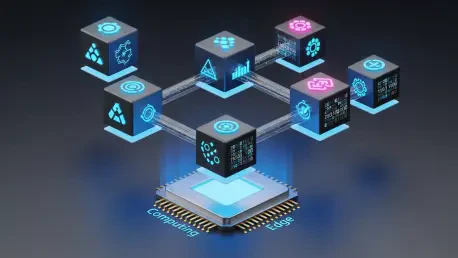

Modern enterprise software has transitioned from being a static repository of features into a living, breathing ecosystem that adapts in real-time to the shifting needs of the global marketplace. This metamorphosis is driven by the seamless integration of cloud-native architectures and advanced artificial intelligence, which together provide a foundation for unprecedented scalability and responsiveness. In 2026, the traditional distinction between the infrastructure and the application has largely evaporated, as software-defined environments now manage themselves with minimal human intervention. Organizations are no longer satisfied with monthly update cycles; instead, they demand continuous refinement where bugs are caught by predictive models before they impact the user experience. This shift has necessitated a total reimagining of how digital products are conceived, moving away from rigid frameworks toward fluid systems that leverage distributed computing to process massive datasets at the edge while maintaining a centralized intelligence core.
Architectural Foundations: Scaling and Intelligence
Microservices: The Backbone of Elastic Infrastructure
The shift toward a microservices-based approach has allowed companies like Netflix and Amazon to set a standard where individual components of an application function as independent entities. This decoupling ensures that a failure in one module, such as a payment processor or a recommendation engine, does not bring down the entire platform, thereby maintaining high availability and user trust. In the current landscape, these services are orchestrated using Kubernetes and other container management tools that allow for horizontal scaling in response to traffic spikes. Beyond mere resource allocation, cloud-native SaaS now utilizes serverless computing to execute specific functions only when needed, significantly reducing operational costs and environmental impact. By abstracting the server layer entirely, developers are free to focus on the logic of the application rather than the nuances of hardware provisioning. This elasticity is crucial for modern businesses that must handle unpredictable workloads in an increasingly volatile digital economy.
Intelligence Integration: Embedding AI within the Data Plane
Integrating artificial intelligence directly into the software’s data plane has transformed SaaS from a passive tool into an active participant in business processes. Rather than treating AI as an external API call, modern developers are embedding specialized models into the very fabric of the application’s database and logic layers. This allows for real-time data enrichment and retrieval-augmented generation, where the software can provide contextual insights by drawing from a vast knowledge graph of internal and external information. Technologies like vector databases have become standard, enabling applications to perform semantic searches that understand the intent behind a query rather than just matching keywords. Moreover, the rise of small language models has enabled on-device processing, which preserves user privacy and reduces latency for critical tasks. This decentralized intelligence ensures that applications remain functional and fast, even when disconnected from the primary cloud backbone, bridging the gap between local performance and global connectivity.
Operational Excellence: Automation and Interaction
Autonomous DevOps: Refining the Release Cycle
The delivery pipeline for modern software has undergone a radical transformation through the adoption of autonomous DevOps agents that manage the full lifecycle of code deployment. These agents are capable of writing unit tests, identifying potential security vulnerabilities in real-time, and even rolling back deployments if performance metrics deviate from the established baseline. This “zero-touch” approach to continuous integration and continuous delivery (CI/CD) has reduced the lead time for new features from weeks to minutes, allowing businesses to iterate at the speed of thought. Observability tools have also evolved, moving past simple logging to provide deep-trace analysis that pinpoint the root cause of issues across thousands of distributed containers. By leveraging predictive analytics, operations teams can now anticipate infrastructure bottlenecks before they occur, shifting the focus from reactive firefighting to proactive optimization. This reliability is the bedrock upon which modern digital services are built, ensuring that the user experience remains seamless.
Intent-Based Interaction: Redefining the User Interface
User interaction is no longer confined to traditional menus and buttons, as intent-based interfaces have become the primary method for engaging with complex SaaS platforms. These systems utilize natural language processing to understand what a user wants to achieve, automatically navigating the necessary workflows to produce the desired outcome without requiring manual input for every step. This transition has made software more accessible and intuitive, effectively lowering the barrier to entry for non-technical users who can now perform advanced data analysis or project management tasks through simple conversation. Accessibility has also seen massive improvements, as AI-driven interfaces can adapt their layout, color contrast, and input methods in real-time to suit the specific needs or preferences of an individual. Furthermore, hyper-personalization has moved beyond simple marketing tactics; it now involves the application dynamically rearranging its own architecture to surface the most relevant tools for a user’s current task.
Strategic Evolution: Actionable Steps for Enterprise Growth
Enterprises that successfully navigated this transition prioritized the refactoring of their legacy systems into modular, cloud-ready components that supported autonomous intelligence. They recognized that data was the fuel for this new era and invested heavily in cleaning and structuring their internal datasets to ensure high-quality training inputs for their proprietary models. Leadership teams moved away from siloed development practices and fostered a culture of cross-functional collaboration where security, operations, and development were integrated from the outset. They adopted robust governance frameworks that addressed the ethical implications of automated decision-making, ensuring that transparency and accountability remained central to their digital strategy. By embracing a vendor-agnostic approach to cloud infrastructure, these organizations maintained the flexibility to migrate workloads to the most cost-effective or high-performance environments as they became available. These strategic actions allowed businesses to transform their software into a powerful engine for innovation.