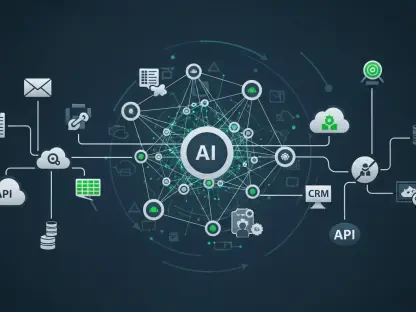

A seismic reconfiguration is underway within the Software as a Service industry, where the foundational principles of value delivery and business operations are being fundamentally rewritten by twin technological forces. The once-distinct domains of software, artificial intelligence, and financial services are rapidly converging, creating a new ecosystem where intelligent automation and seamless transactions are not just features but the core of the user experience. This fusion is forcing a market-wide reevaluation of what it means to be a competitive SaaS provider in the modern era, moving beyond simple feature sets toward holistic, integrated platforms that serve as the operational backbone for businesses.
The New SaaS Paradigm: Where Software Meets Intelligence and Finance
The modern Software as a Service landscape is no longer defined solely by its cloud-based delivery model but by a powerful convergence of artificial intelligence and embedded financial services. This new paradigm treats software not as a static tool but as a dynamic, intelligent partner capable of automating complex workflows and handling financial transactions within a single, unified interface. For customers, this means a significant reduction in friction, as disparate systems for operations and finance are consolidated into one cohesive environment.
This integration of AI and payments is fundamentally altering traditional SaaS business models. The long-standing per-seat subscription fee is becoming increasingly obsolete as value shifts from mere access to tangible, data-driven outcomes. Consequently, the value proposition is being redefined around efficiency gains, predictive insights, and streamlined financial management. This shift has intensified the competitive environment, compelling established players to innovate beyond their core functionalities and forcing new entrants to build platforms that are intelligent and transactional from the ground up.
Decoding the Market’s Momentum
Twin Engines of Transformation: AI and Embedded Finance as Core Catalysts
Artificial intelligence has officially graduated from a peripheral feature to a core architectural component of next-generation SaaS platforms. No longer a simple add-on for analytics or automation, AI is being woven into the very fabric of software, enabling predictive capabilities, personalizing user experiences, and driving operational decisions. This transition is challenging established subscription and upgrade frameworks, as the value delivered by AI is often continuous and outcome-based, rather than tied to a specific number of users or a tiered feature set.
Simultaneously, embedded payments have emerged as a critical driver of this transformation. By integrating payment processing directly into software workflows, SaaS companies are creating seamless, unified experiences that eliminate the need for manual reconciliation and third-party financial tools. This is particularly impactful for vertical SaaS platforms catering to specific industries, where integrated payments streamline everything from invoicing to payroll. For these providers, embedded finance is not just a convenience; it is a powerful engine for generating new revenue streams and deepening customer relationships by becoming the central hub for their clients’ financial operations.
Gauging the Seismic Shift: Growth Projections and Evolving Valuations
The rapid integration of AI into SaaS has sent ripples across the financial markets, creating a climate of both opportunity and uncertainty. Investors are closely watching how established companies adapt, leading to significant stock fluctuations as the market attempts to price in the disruptive potential of AI-driven platforms. While some view AI as a threat to existing software structures, a more prevalent view, echoed by industry leaders, suggests that AI will augment rather than replace current tools, creating a more powerful, cooperative ecosystem.
Looking forward, the industry’s trajectory points decisively toward a new era of monetization. The traditional per-seat licensing model is projected to give way to more dynamic, consumption-based or outcome-based pricing by 2028. This shift reflects the evolving nature of software value, where customers pay for specific results, such as processed transactions, automated tasks, or data-driven insights, rather than for simple access. This evolution promises to align the interests of SaaS providers and their clients more closely, but it also introduces new complexities in packaging, pricing, and communicating value.
Navigating the Disruption: Overcoming Integration and Adoption Hurdles
SaaS companies navigating this new landscape face significant challenges, beginning with the technical complexities of integrating sophisticated AI and payment systems. Retrofitting legacy platforms with these capabilities is a formidable task that requires deep architectural changes, not just the addition of new modules. Beyond the technical hurdles lies the strategic challenge of redesigning core products to be fundamentally intelligent and transactional, a process that demands a complete rethinking of the user experience and value proposition.
Successfully managing this transition requires more than just technical expertise; it necessitates a cultural shift toward continuous innovation. Companies must foster an environment where experimentation is encouraged and failure is treated as a learning opportunity. Moreover, they must proactively address customer apprehension about new pricing models and AI-driven workflows. Clear communication, transparent value demonstration, and robust support are essential to guide clients through this change and build trust in the new, more integrated way of working.
The Governance Gauntlet: Regulation in the Age of AI and Embedded Payments
As SaaS platforms become more deeply embedded in their clients’ core business and financial operations, they fall under increasing regulatory scrutiny. The evolving landscape of data privacy, transaction security, and AI ethics presents a complex web of compliance requirements. Regulations governing financial transactions and the responsible use of customer data now apply directly to software companies, forcing them to adopt the same rigorous standards as traditional financial institutions.
This heightened regulatory environment places a significant compliance burden on SaaS providers. Building and maintaining robust security measures to protect sensitive financial and operational data is no longer optional but a prerequisite for earning and retaining customer trust. As AI algorithms make increasingly autonomous decisions, issues of bias, transparency, and accountability come to the fore, demanding clear governance frameworks to ensure ethical and fair outcomes.
Beyond the Horizon: Envisioning the Next Generation of SaaS
The future of software is likely to be defined by the rise of “agentic systems” autonomous AI agents that can perform complex tasks on behalf of users, potentially bypassing traditional application interfaces altogether. Instead of logging into a dashboard to run a report or process a payment, a user might simply instruct an AI agent to accomplish the goal. This evolution would mark a profound shift in how value is delivered, moving from providing tools to delivering direct outcomes.
In this next generation of SaaS, the synergy between AI and payments will enable platforms to become indispensable operational hubs. By seamlessly connecting intelligent workflows with financial transactions, these platforms will occupy a central position in their clients’ daily activities. They will not just support business processes but actively manage them, creating a deeply integrated ecosystem where software, intelligence, and finance operate as a single, cohesive unit.
The Strategic Imperative: Charting a Course for Future-Proof SaaS
The analysis presented confirmed that the convergence of artificial intelligence and embedded payments is not a fleeting trend but a fundamental restructuring of the SaaS industry. For companies to remain competitive, these technologies could no longer be treated as optional add-ons or separate roadmaps. Instead, they had to be recognized as foundational pillars of a modern software strategy, essential for delivering the integrated, intelligent experiences that customers now demand.
This realization led business leaders to understand that a comprehensive strategic shift was necessary. Thriving in this new environment required a holistic approach that seamlessly merged software functionality with automated financial services. The successful SaaS companies of the near future were those that repositioned themselves not just as tool providers but as central operational partners, embedding their platforms so deeply into their clients’ workflows that they became indispensable.