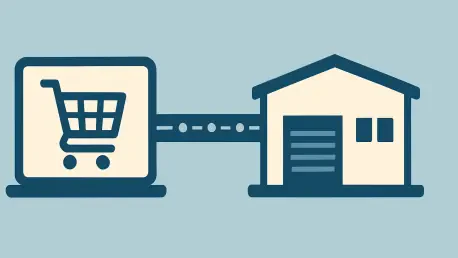

The economic value of a connected business stack is driven by a massive reduction in middleware costs, sometimes saving enterprises seven-figure sums over several years. Modern corporations are increasingly abandoning the antiquated strategy of evaluating Customer Relationship Management (CRM) platforms as isolated tools. For a long period, businesses operated under the assumption that CRM decisions were localized choices for sales or service departments, completely removed from the foundational Enterprise Resource Planning (ERP) infrastructure. This belief is now recognized as a costly fiction that ignores the fundamental reality of modern digital operations. True value in enterprise software is found at the intersection of front-office interactions and back-office logistics. By integrating these traditionally separate spheres, a company creates a unified data environment that transforms how every department functions. Instead of viewing CRM as a mere digital Rolodex, leaders are starting to see it as an extension of their core business logic, ensuring that every customer-facing employee has the full weight of the organization’s operational intelligence behind them at all times.
Bridging the Productivity Gap
Addressing Inefficiencies: The Information Gap
Sales representatives in the modern corporate landscape often find themselves bogged down by non-selling activities that consume nearly a third of their productive hours. These tasks frequently involve the manual verification of order statuses, the arduous process of chasing down pricing approvals from various stakeholders, or checking for inventory availability across multiple disconnected databases. Such inefficiencies are a direct byproduct of an environment where Customer Relationship Management and Enterprise Resource Planning systems operate in isolation from one another. In a connected ecosystem, these repetitive and time-consuming tasks are inherently automated, as the data flows seamlessly between the front-office and back-office environments. By bridging this gap, companies can significantly accelerate their sales motion and provide their teams with the tools needed to focus on high-value client interactions. This reduction in administrative overhead not only boosts morale but also prevents the gradual erosion of the organization’s substantial investment in software.
Market Trends: The Move Toward Architectural Alignment
The market is currently witnessing a significant shift toward architectural alignment, where organizations prioritize the integrity of their digital ecosystem over the flashy features of a standalone product. Sophisticated buyers have recognized that selecting a CRM built on the same data model as their underlying ERP, such as the SAP S/4HANA environment, effectively eliminates the need to build and maintain expensive, fragile bridges between disparate systems. This strategic pivot marks a departure from the best-of-breed philosophy that dominated earlier technology procurement cycles. Instead, businesses are favoring integrated suites that offer a unified data architecture, acknowledging that the integration risk of mismatched platforms often outweighs the marginal benefits of a niche point solution. By opting for a native approach, enterprises ensure that their technology stack remains flexible and cohesive, allowing them to adapt to market changes without the constant burden of reconfiguring complex middleware or reconciling conflicting data formats across the enterprise.
Unlocking Performance and Economic Value
Operational Gains: Measurable Improvements in Sales
Native integration between front-end and back-end systems unlocks measurable performance gains that directly influence the bottom line, including a notable 38% reduction in sales cycles and a double-digit increase in overall win rates. When a sales representative can view real-time credit exposure, current inventory levels, or specific contract terms directly within their CRM interface, the friction that typically slows down a transaction simply vanishes. This level of connectivity allows for a much higher degree of automation, replacing traditional manual handoffs with streamlined digital workflows that require no human intervention to move data from one system to another. Consequently, the organization experiences a more aggressive sales motion and improved forecast accuracy, as the data used for planning is based on real-time operational facts rather than outdated manual entries. This seamless flow of information ensures that the sales force remains focused on high-value activities rather than administrative navigation across multiple software environments.
Economic Impact: Revenue Uplift and Middleware Savings
The economic benefits of maintaining a unified technology stack are extensive, often culminating in a massive return on investment over a five-year horizon. Organizations that utilize integrated solutions save significantly on middleware development and maintenance, while simultaneously realizing a substantial uplift in revenue through improved customer retention and higher conversion rates. Data from recent industry studies suggests that the five-year ROI for such integrated environments can range from 214% to over 700%, depending on the complexity of the legacy systems being replaced. Furthermore, an integrated approach facilitates much faster implementation timelines, allowing businesses to realize the full value of their software investments in months rather than years. This rapid time-to-market is crucial in the current business climate of 2026, where the ability to pivot and scale rapidly can define a company’s competitive advantage. By removing the technical barriers to data visibility, enterprises provide their teams with a transparent view of the business.
Structural Integrity: Strategic Scalability and Compliance
Beyond the immediate boosts to productivity and revenue, an integrated software suite provides robust built-in support for regulatory compliance and data security across the entire organization. By utilizing native connectors and standardized data flows, companies can significantly reduce the risk of legal complications or data breaches without the need for expensive, custom-coded security layers that are often difficult to maintain. This structural integrity is particularly vital as data privacy regulations continue to evolve globally, requiring enterprises to maintain a clear and auditable trail of how customer information is used and stored. When the CRM and ERP share a common data model, the task of ensuring compliance becomes a centralized function rather than a fragmented effort spread across multiple departmental silos. This unified approach to governance not only protects the company from potential fines but also builds trust with customers who are increasingly concerned about the security of their personal data.
Future Growth: Avoiding Technical Debt in Scaling
The ability to scale operations efficiently is another critical advantage of a connected business stack, as it prevents the accumulation of technical debt that typically plagues companies using disparate systems. As a business grows and its processes become more complex, a fragmented IT landscape becomes increasingly difficult and expensive to manage, often requiring specialized staff to maintain legacy integrations. In contrast, an integrated suite allows for horizontal and vertical scaling with minimal friction, as new modules or functionalities can be added within the existing architectural framework. This ensures that the business can expand its geographic reach or enter new market segments without being held back by a rigid or outdated infrastructure. By investing in a platform that is designed for growth, leaders can focus their energy on strategic initiatives rather than troubleshooting technical inconsistencies. The long-term stability offered by a unified stack serves as a reliable foundation for future innovations like predictive analytics.
Enhancing the User and Customer Experience
Service Excellence: Human-Centric Benefits and Data
The suite advantage extends far beyond technical metrics, fundamentally transforming the daily experience for both employees and the customers they serve. Feedback from customer service directors and marketing managers indicates that seamless connectivity allows teams to provide a much more informed and reliable experience, which is the cornerstone of modern brand loyalty. When a support agent or sales professional has immediate access to shipping status, billing history, and previous service tickets during a live interaction, the quality of service improves dramatically and the customer feels genuinely understood. This eliminates the frustration of being placed on hold while an agent navigates separate systems to find basic information. Furthermore, marketing teams can use this integrated data to create highly personalized campaigns that resonate with the specific needs and purchase histories of their audience. By humanizing the digital experience through data transparency, organizations foster deeper relationships with their clientele.
Strategic Evolution: Real-Time Connectivity for Success
Strategic technology providers shifted their focus from slow batch replication methods to real-time, API-first connectivity, which fundamentally changed how enterprises managed their digital operations. This evolution turned system integration into a streamlined product that businesses activated instantly, rather than a complex and costly project that required months of custom development. By aligning every customer interaction with the underlying business reality, organizations successfully transformed their technology stacks into powerful engines for growth and long-term agility. Leaders who embraced this unified architecture found that they were better positioned to respond to market shifts and customer demands with unprecedented speed and accuracy. The transition away from siloed applications allowed companies to cultivate a more resilient operational model, ensuring that data flowed freely across every department. Ultimately, the decision to integrate CRM and ERP systems proved to be a decisive factor in achieving sustained profitability and a superior competitive position.