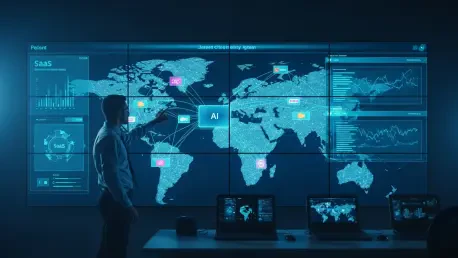

The persistent whispers suggesting that generative artificial intelligence will soon dismantle the entire software-as-a-service ecosystem ignore the historical resilience of specialized enterprise infrastructure. While social media pundits frequently predict a landscape where single, unified AI interfaces replace entire toolsets, the technical reality facing modern IT administrators is far more nuanced. This analysis navigates the gap between speculative hype and enterprise stability, exploring why the anticipated displacement of specialized vendors is failing to materialize. Instead of a wholesale replacement, the industry is witnessing a transition toward a sophisticated integration model where AI solves the “plumbing” problems of the past.
Navigating the noise of “thought leadership” requires a firm grasp of technical reality rather than abstract potential. For stakeholders, the significance of this shift lies in identifying which platforms offer genuine security and which merely provide a veneer of innovation. The roadmap for this exploration includes a review of adoption timelines, the necessity of specialized infrastructure, and the emerging “both/and” model of software consumption. By examining these factors, one can see how specialized tools continue to provide the essential framework that general-purpose AI lacks.
The Evolution of AI Adoption and Current Market Realities
Tracking the Trajectory of Gen-AI Adoption
Historical parallels offer a sobering perspective on how quickly large-scale technology shifts actually occur within the enterprise. The migration to the cloud, often described as an overnight revolution, actually followed a “long-tail” trajectory that spanned over a decade and continues for many organizations even today. From the current vantage point of 2026, the movement toward full AI autonomy appears to be following a similarly measured path rather than the immediate “rip-and-replace” cycle predicted by enthusiasts.
Adoption statistics indicate that while interest in large language models has reached a peak, the actual displacement of established enterprise vendors remains a speculative outlier. Most corporations prioritize continuity and proven reliability over the experimental allure of unbundled AI solutions. Consequently, there remains a significant discrepancy between the rapid-fire trends seen on professional social networks and the deliberate, often slow pace of corporate procurement and implementation.
Practical Applications in Specialized Infrastructure
Specialized software providers are currently outperforming general-purpose AI models by focusing on niche environments that require high degrees of precision. In the realm of Apple IT management, for example, general AI lacks the deep, native hooks into hardware and operating systems that are necessary for stable administration. Purpose-built tools like Mobile Device Management platforms and Security Information and Event Management systems remain indispensable because they handle the specific telemetry that general models cannot interpret.
Rather than replacing the underlying infrastructure, organizations are using AI to augment their existing data pipelines. This approach allows companies to utilize the analytical power of AI without compromising the structural integrity of their device fleets or network security. By feeding specific, verified data from specialized tools into AI engines, IT teams achieve a level of granular control that a general-purpose interface alone could never facilitate.
Expert Perspectives: Why Specialization Outlasts Generalization
The Transfer of Risk and Compliance
Industry veterans like Bradley Chambers emphasize that a SaaS subscription is often less about the software itself and more about the transfer of risk and regulatory compliance. Specialized vendors invest heavily in security frameworks and audit logs that meet the stringent requirements of modern governance. General-purpose AI, often criticized for its “black box” nature, cannot yet replicate the transparency or the legal guardrails that enterprise stakeholders demand for their core operations.
The Plumbing Problem: Technical Stability and Integration
A fundamental technical argument against the displacement of SaaS is the “plumbing” problem. Enterprise software requires deep integration with specific hardware and operating system kernels to function reliably. General AI models operate at a layer of abstraction that prevents them from managing the intricate, low-level tasks required for system-level stability. Without these native hooks, an AI interface is merely a conversational layer atop a void, lacking the actual machinery to execute complex administrative commands.
The Value of Human-Led Support
The human element remains a critical differentiator in the debate between general AI and specialized SaaS. When a critical operating system update introduces unexpected bugs, IT administrators rely on the engineering teams of their vendors to provide immediate, documented patches. These specialized teams offer a safety net and ecosystem expertise that general AI providers do not match. The reliability of having a dedicated partner during a system-wide crisis provides a level of business continuity that justifies the ongoing cost of specialized subscriptions.
Forecasting the Future: A Measured Evolution Toward Integration
The Transition from Tool to Feature
The overarching trend is shifting toward “both/and” scenarios where AI is woven into the fabric of existing platforms. Instead of acting as a standalone replacement, AI is becoming the primary engine used to eliminate manual “toil” within a trusted environment. This evolution allows users to interact with complex systems using natural language while still benefiting from the robust backend of an established SaaS provider. This model ensures that the gains in efficiency do not come at the expense of structural reliability.
Potential Challenges and Technical Hurdles
Several technical hurdles remain before AI can be fully unified within the enterprise interface. Maintaining strict access controls and detailed audit logs within a generative AI framework is a significant challenge for IT departments. Furthermore, the difficulty of ensuring that an AI-driven interface does not bypass established security protocols remains a primary concern. Until these “black box” issues are resolved, the reliance on specialized vendors with clear permission structures will persist as the industry standard.
The Zero-Training Outcome: Simplifying the User Experience
There is a positive potential for AI-driven interfaces to create “zero-training” outcomes for complex business tools. By making customer relationship management and deployment tools intuitive enough for any employee to use without formal instruction, AI enhances the value of the underlying SaaS platform. In this future, the complexity of the software is hidden behind a conversational layer, but the specialized backend continues to do the heavy lifting. This shift focuses on outcomes rather than the mechanics of tool management.
Final Assessment: The Enduring Role of Specialized SaaS
The predicted apocalypse of the software industry proved to be an exaggerated narrative that overlooked the foundational requirements of modern IT infrastructure. Throughout the recent period of rapid AI expansion, specialized vendors maintained their position as the essential bedrock of business continuity and risk management. IT leaders who prioritized long-term stability over the impulse to replace entire systems with unverified AI models found themselves better positioned to weather technical shifts.
Strategic investments moved toward deep integration, ensuring that the analytical power of AI served to enhance rather than replace the “plumbing” of the enterprise. Organizations discovered that the most effective way to utilize emerging technology involved pairing it with the established reliability of specialized SaaS providers. This balanced approach allowed for the automation of repetitive tasks while preserving the rigorous security standards necessary for global operations. Ultimately, the focus remained on building a resilient technological stack that valued specialized expertise as much as it valued artificial intelligence.