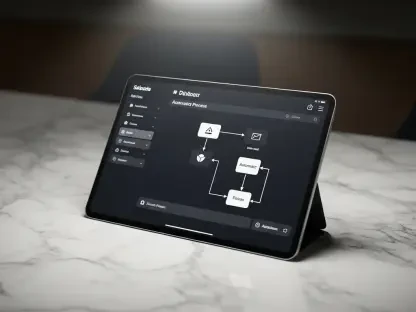

The traditional boundary between conversational interfaces and deep operational workflows has finally dissolved as the enterprise landscape enters its most transformative phase yet. Workplace communication is no longer a peripheral activity limited to messaging; it has evolved into a sophisticated management layer. Organizations now view Slack as more than a chat tool, recognizing its potential as an agentic operating system where AI agents and human workers collaborate in real time. This shift marks the end of the era where communication was isolated from execution. By centralizing operations, the platform has become a hub that orchestrates complex digital ecosystems, fundamentally changing how business value is created.
Salesforce’s ownership of Slack has accelerated this transition, pushing the platform to integrate more deeply with professional data and customer relationship management. This evolution is driven by intense competitive pressure from other tech giants like Microsoft and Google, who are also racing to claim the primary enterprise desktop. As the demand for seamless orchestration grows, the focus has shifted toward creating a unified environment that can handle both internal discussions and external business logic. This move requires a careful balance between high-speed innovation and the rigorous technological and regulatory foundations necessary for enterprise-grade security.
The integration of large language models is the engine behind this transformation, turning a messaging app into a cognitive assistant. Maintaining compliance in this new environment is a priority for global firms that deal with sensitive data. The transition is not just about adding features; it is about redefining the infrastructure of work. As businesses adopt these tools, the necessity of maintaining data integrity while allowing AI to act on behalf of users has become the central challenge of modern IT strategy.
The New Frontier of Enterprise Communication and AI Orchestration
The transition from simple chat applications to complex digital ecosystems has fundamentally altered the role of the digital workspace. Workplace communication has moved beyond the exchange of text, becoming the primary site for project management, resource allocation, and strategic alignment. In this context, the rise of the agentic operating system represents a logical progression. It provides a centralized hub where human decision-making is augmented by AI agents that can browse data, suggest actions, and execute tasks. This convergence ensures that the context of a conversation is never lost when moving into the execution phase of a project.
Market dynamics currently reflect the significant influence of Salesforce, which has positioned Slack as the conversational interface for its vast array of enterprise tools. This positioning is critical as competition intensifies from rivals who offer their own deeply embedded AI assistants. The objective is to create a gravitational pull that keeps employees within a single ecosystem for the duration of their workday. Consequently, the technological foundations of the platform are being rebuilt to support various language models while ensuring that every interaction remains within the bounds of corporate regulatory requirements.
Redefining Productivity Through Autonomous Workflows
Emerging Trends in Proactive AI and Contextual Assistance
The evolution of Slackbot from a reactive notification tool into a proactive teammate is a cornerstone of this new era. Modern AI capabilities allow the assistant to anticipate needs by analyzing the flow of conversation and identifying administrative or technical hurdles before they stall progress. This proactive stance enables the autonomous execution of routine tasks such as scheduling, minute-taking, and status updates. By handling these repetitive burdens, the AI allows human employees to stay focused on high-level problem-solving and creative tasks.
Furthermore, the introduction of standardized AI skills provides a framework for organizational consistency. These skills act as automated sequence triggers that can be deployed across different departments, ensuring that workflows follow a predictable and efficient path. Cross-platform intelligence has also moved beyond the chat window, allowing the AI to provide real-time assistance based on desktop activity and the context of other open applications. This broader awareness ensures that the assistant is not just a siloed tool but a comprehensive partner in the daily work life of every employee.
Market Projections and the Quantifiable Impact of AI Integration
Analyzing data regarding time management reveals significant gains in productivity, with some teams reporting savings of up to 20 hours per week through automated summarization and data retrieval. This return on investment is not merely theoretical; it is reflected in the measurable reduction of manual labor and the acceleration of project timelines. As the agentic ecosystem continues to grow, forecasts suggest a widespread adoption of AI agents that will eventually handle the majority of low-complexity administrative duties. This reduction in cognitive load is becoming a primary metric for success in the modern workplace.
Performance indicators are shifting from counting inputs to measuring outcomes facilitated by automation. The transition from manual data entry to invisible updates in customer relationship systems represents a major leap in efficiency. Automated project tracking ensures that every milestone is recorded without human intervention, providing leadership with a clear and accurate view of organizational progress. These trends indicate that the most successful companies will be those that effectively leverage AI to eliminate friction in their internal processes.
Navigating the Complexities of a Unified Digital Workspace
Overcoming the productivity loss caused by constant switching between disparate software tools, often referred to as the toggle tax, is a primary goal for the modern enterprise. By integrating various functions into a single interface, businesses can significantly reduce the mental fatigue associated with managing multiple logins and windows. However, this consolidation brings its own set of challenges, specifically the need to balance increasing technical complexity with the simple and intuitive user experience that users expect. Adding sophisticated AI layers must not come at the cost of usability or speed.
Technical debt and integration hurdles remain significant obstacles for many legacy systems attempting to adopt these modern protocols. Managing the transition requires a commitment to frameworks like the Model Context Protocol, which facilitates communication between different software architectures. This standardization is essential for ensuring that AI agents can access the data they need without compromising the stability of the underlying systems. Organizations must navigate these technical requirements carefully to avoid creating new silos during their digital transformation.
Establishing Governance in an AI-First Environment
Security by design is no longer optional in an environment where AI agents possess the authority to act on data. It is imperative that AI-driven capabilities inherit the existing enterprise permissions and data governance policies of the organization. This ensures that an agent cannot access or share information that would otherwise be restricted to a human user. By embedding security directly into the AI framework, businesses can mitigate the risks associated with automated data handling and prevent unauthorized disclosures of proprietary information.
Standardized frameworks like the Model Context Protocol play a vital role in facilitating secure communication between thousands of external applications and the central AI hub. These protocols ensure that data exchange is seamless but also strictly governed by compliance standards. In the age of automation, navigating the legal and ethical requirements of AI is a continuous process. Companies must remain vigilant to ensure that as agents handle increasingly sensitive customer and internal data, they do so in a way that aligns with global privacy regulations and ethical norms.
The Future Roadmap of the Agentic Enterprise
The convergence of daily conversation and enterprise data management is set to redefine how businesses interact with their customers. Predicting the impact of embedding native CRM functionality directly into the flow of communication suggests a future where sales and support cycles are significantly shortened. When the administrative overhead of updating records is removed, teams can spend more time building relationships and closing deals. This integration creates a seamless loop where data informs conversation, and conversation automatically enriches the underlying data.
A unique competitive advantage exists for platforms that hold a massive repository of workplace conversation data. This moat provides a level of context that document-centric AI competitors struggle to match, as it captures the nuances of decision-making and the history of collaboration. As global economic shifts demand higher efficiency, the reduction of administrative burdens will likely shift human focus toward high-impact innovation and creativity. The long-term roadmap for the enterprise involves a total reimagining of work, where the digital assistant becomes the primary executor of technical and organizational logic.
The Evolution of Work in an Agentic Era
The pivot toward an agentic operating system has redefined the relationship between human labor and digital tools. Businesses that moved early to integrate AI agents observed a marked improvement in operational efficiency and employee engagement. By removing the mechanical aspects of work, organizations allowed their staff to reclaim time for strategic thinking. The findings suggested that the most effective implementations were those that treated AI as a collaborative partner rather than a replacement for human judgment. Managers were encouraged to standardize their automated workflows early to provide a clear structure for AI participation.
Strategic recommendations for the coming years emphasized the importance of data hygiene and the adoption of open protocols to ensure future flexibility. Companies that successfully navigated this transition focused on bridging the gap between legacy data and modern conversational interfaces. It became clear that the barrier between discussing a task and executing it had effectively vanished. The final outlook for the industry pointed toward a world where the operating system itself anticipated professional needs, allowing the human element of the enterprise to drive innovation with unprecedented speed and clarity.