
The digital skeleton that supports the modern economy is currently undergoing a structural transformation so profound that many observers have mistaken this evolution for a terminal decline. While analysts frequently point to market volatility as evidence of a dying model, the reality is that the subscription-based delivery of software is simply shedding its original, rigid skin to reveal a more fluid, intelligent core. This transition marks the end of software as a passive repository of data and the beginning of its life as an active participant in business strategy.
The State of Software as a Service in the Age of Intelligence
The modern software landscape remains dominated by the subscription model, which continues to serve as the vital backbone of global enterprise operations. Every major business process, from payroll to customer relationship management, still relies on the cloud-based accessibility that the previous decade established as the industry standard. However, the expectations placed upon these systems have shifted from simple availability to proactive utility.
Industry leaders and emerging startups are currently navigating a high-stakes shift from traditional cloud logic toward AI-integrated ecosystems. Market dynamics no longer favor the provider who simply hosts a database in the cloud; instead, the advantage has swung toward those who can synthesize vast quantities of data into actionable intelligence. This transition is not merely a technical upgrade but a complete reimagining of the relationship between a business and its digital tools.
Technological influences are moving faster than the regulatory frameworks designed to contain them. While cloud infrastructure provides the necessary physical foundation, data sovereignty regulations and the rapid infusion of large language models are creating a complex tapestry of requirements. Companies must now balance the desire for borderless, intelligent automation with the necessity of maintaining strict compliance with evolving global standards regarding data privacy and algorithmic transparency.
The “SaaSpocalypse” Versus the Great Transformation
From Static Applications to Fluid Ecosystems
The erosion of traditional moats has become the primary concern for legacy software providers who once relied on high switching costs and proprietary databases to lock in customers. In the current market, simply having a cloud-based application is no longer a competitive advantage because the barriers to entry for creating functional code have collapsed. When the fundamental utility of a software category becomes a commodity, the value shifts from the features themselves to the intelligence that orchestrates them.
Vibe coding and natural language development are fundamentally changing the relationship between developers and the code they produce. By democratizing the creation of software, these tools allow non-technical stakeholders to describe a business problem and receive a functional solution in real-time. This shift suggests that the future of software lies not in massive, pre-built suites, but in the ability to conjure specific, ephemeral tools that solve a problem and then disappear or evolve as the business moves forward.
The rise of hyper-customization is the natural byproduct of this newfound development speed. We are moving away from rigid, one-size-fits-all software toward platforms that adapt to unique business logic without requiring months of expensive consulting. Modern systems are expected to be liquid, flowing into the cracks of an organization’s specific workflows rather than forcing the organization to warp its processes to fit the limitations of a vendor’s software architecture.
Quantifying the Shift: Market Projections and Growth
Current SaaS performance indicators reveal a significant transition from the “growth at all costs” mentality toward a demand for sustainable, value-driven utility. Market volatility is often misinterpreted as a sign of failure, but it is actually a filtering mechanism that is removing undifferentiated products from the ecosystem. Investors are no longer captivated by high churn rates masked by aggressive sales tactics; they are looking for platforms that demonstrate deep, automated integration into the customer’s daily operations.
Forecasts for the agentic era suggest that autonomous software agents will dominate enterprise spending by 2030. Predictive data indicates that the shift toward autonomous workflows is not a slow burn but an accelerating curve, as businesses realize the efficiency gains of systems that can negotiate, procure, and optimize without constant human intervention. The projected impact on enterprise budgets reflects a transition from paying for “seats” to paying for “outcomes” achieved by these digital agents.
Overcoming the Obstacles of the New Software Paradigm
The challenge of undifferentiated software is perhaps the greatest existential threat to the current generation of tech companies. To avoid the “death of software” trap, firms must move beyond generic application logic that can be easily replicated by an AI in seconds. True differentiation now comes from the depth of a company’s proprietary data, the uniqueness of its industry-specific insights, and its ability to provide a secure environment where AI can operate with high degrees of accuracy.
Tool sprawl and the “toggle tax” continue to haunt the modern workplace, where the average employee loses significant portions of their day jumping between disconnected applications. This fragmentation does more than just lower productivity; it creates a mental fog that prevents high-level strategic thinking. Addressing this requires a radical move toward platform consolidation, where a single intelligent interface manages the underlying complexity of dozens of specialized services.
Integration and interoperability hurdles remain the primary technical debt preventing the full realization of AI-driven efficiency. Many enterprises are finding that their most valuable data is locked in silos that are inaccessible to the very language models meant to analyze them. Overcoming these silos requires a new standard of data hygiene and a commitment to building open architectures that prioritize machine readability over proprietary lock-in.
Navigating the Regulatory and Ethical Frontier
Trust has emerged as a core value proposition that can make or break a software brand in this new era. There is a growing debate over AI monetization, particularly concerning whether vendors should charge a premium for “intelligence” that is rapidly becoming a baseline requirement. Upcharging for every AI feature may provide a short-term revenue boost, but it risks damaging long-term customer relationships if the user feels they are being taxed for basic efficiency improvements.
Compliance in an automated world has become significantly more complex as systems begin to generate content and make decisions autonomously. Managing the risks of AI-generated output while adhering to GDPR, HIPAA, and emerging safety standards requires a level of oversight that many legacy systems are not equipped to handle. The software of the future must include built-in governance layers that act as a “black box” for auditing AI decisions in real-time.
Governance for agentic systems is the next great frontier for legal and IT departments alike. Establishing clear boundaries for autonomous agents is essential to ensure brand safety and data privacy. If an agent has the authority to spend company funds or interact with customers, the software hosting that agent must provide ironclad guarantees that the AI will remain within its prescribed ethical and operational guardrails.
The Future Frontier: Agentic Systems and Discovery
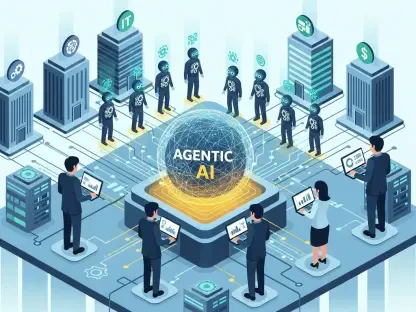
The shift to agentic orchestration represents the final stage of software’s evolution from a manual tool into a proactive partner. We are entering an era where software no longer waits for a user to click a button; instead, it monitors data streams, identifies opportunities or risks, and manages complex workflows autonomously. This change transforms the human role from that of a “doer” to that of a “governor,” who sets the parameters and approves the final outcomes of automated processes.
Survival in the “answer engine” era requires a fundamental change in how brands think about visibility. Because AI models and search agents are now the primary consumers of web content, Agent Experience (AX) is becoming as vital as User Experience (UX). If a brand’s value proposition is not easily parsed and understood by an LLM, that brand effectively ceases to exist in the “pre-funnel” phase of the customer journey where decisions are increasingly being made.
The human element and change management remain the most significant bottlenecks to this technological leap. Preparing organizational cultures for the transition from manual execution to strategic oversight is a massive undertaking that requires more than just new tools. It requires a shift in mindset where employees see AI not as a replacement, but as a way to embed their own expertise into a system that can scale their impact across the entire enterprise.
Final Verdict: The Rebirth of an Industry
The analysis of the current market landscape indicated that the perceived decline of software was, in fact, the uncomfortable middle phase of a necessary metamorphosis. Observations showed that while the traditional “static” SaaS model had reached the limits of its effectiveness, the demand for intelligent, orchestrated systems was higher than ever before. It was clear that the industry was not shrinking, but rather consolidating around platforms that could provide a unified environment for both human creativity and machine intelligence.
Strategic recommendations for the coming years suggested a prioritization of data transparency and machine-readable architectures. Investors were encouraged to look past simple growth metrics and focus on “stickiness” derived from how deeply a platform could automate its users’ most complex problems. For businesses, the focus shifted toward reducing the “toggle tax” by choosing vendors who prioritized orchestration over isolated features. These actions were projected to separate the resilient innovators from the companies still trying to compete with outdated, manual logic.
Looking ahead, the software industry appeared ready to shed its rigid past to become the intelligent “center of gravity” for the artificial intelligence era. The evolution from systems of record to systems of intelligence promised to unlock unprecedented levels of productivity, provided that the industry maintained its focus on trust and governance. The path forward required a commitment to building software that acted as a durable, secure foundation upon which the rapid, fluid innovations of AI could safely and effectively operate.