
The silent hum of data flowing through a modern enterprise often masks a cacophony of digital miscommunications happening just beneath the surface, where crucial business intelligence is lost in translation between systems that refuse to speak the same language. This digital disconnect is no longer a minor inconvenience; it has become a primary inhibitor of growth, innovation, and customer satisfaction. In an environment where speed and accuracy are paramount, the inability for a Customer Relationship Management (CRM) platform to instantly share insights with an Enterprise Resource Planning (ERP) system, or for a supply chain application to communicate seamlessly with a manufacturing floor, creates operational friction that grinds progress to a halt. The challenge is clear: organizations have invested heavily in best-of-breed applications to optimize individual functions, but in doing so, they have inadvertently constructed a landscape of isolated digital islands.
This fragmentation is the central paradox of modern digital strategy. While each individual application may be a powerful tool in its own right, the true value of an enterprise’s technology stack is unlocked only when these tools work in concert. Without a unifying fabric to connect them, the organization operates with a fragmented view of its own operations and customers, leading to redundant manual data entry, costly errors, and delayed decision-making. Integration Platform as a Service (iPaaS) has emerged as the definitive solution to this problem, offering a centralized, cloud-native platform to orchestrate the flow of data and processes across the entire organization. It is not merely a technical fix but a strategic imperative, providing the essential connective tissue required for any genuine digital transformation initiative to succeed.
Your Applications Are Talking but Are They Saying the Right Things
In the contemporary business landscape, the digital ecosystem of an average enterprise is a complex patchwork of technologies. It comprises legacy on-premises systems holding decades of invaluable data, a sprawling collection of Software as a Service (SaaS) applications governing everything from human resources to marketing automation, and a growing number of custom applications deployed across multiple public and private clouds. Each of these components generates and consumes data, performing its designated function with high efficiency. However, these systems often operate in functional silos, creating invisible walls that prevent the free flow of information. The result is a fragmented reality where the marketing team’s view of a customer is entirely different from the finance department’s, and the logistics team lacks real-time insight into the production schedule, leading to a state of persistent operational dissonance.
This lack of cohesive communication carries significant hidden costs that extend far beyond simple inefficiency. When data must be manually transferred between systems, the risk of human error skyrockets, potentially leading to incorrect orders, flawed financial reports, and a degraded customer experience. Furthermore, valuable employee time is consumed by repetitive, low-value tasks like data reconciliation instead of being directed toward strategic initiatives. This operational friction also stifles agility; launching a new product or entering a new market becomes a monumental task of untangling and re-stitching dozens of disparate data flows. The cumulative effect is a business that is slow to react, prone to error, and incapable of leveraging the full power of its collected data assets, ultimately placing it at a severe competitive disadvantage.
Beyond Spaghetti Code the Shift from Brittle Connections to Agile Integration
The challenge of application integration is not a new phenomenon, but the methods for addressing it have undergone a profound evolution. For decades, enterprises relied on on-premises middleware solutions like Enterprise Service Buses (ESBs) to act as a central communication backbone. While functional, ESBs were often monolithic, complex to manage, and required specialized expertise, making them ill-suited for the dynamic, fast-paced world of cloud computing. An even more common, yet perilous, approach was the creation of direct point-to-point connections. While a simple link between two applications seems straightforward, this strategy quickly devolves into a tangled web of “spaghetti code” as an organization’s application portfolio grows. This brittle architecture is a maintenance nightmare, where a single change to one application’s API can cause a cascade of failures across dozens of interconnected systems, making innovation slow and risky.
Integration Platform as a Service represents a paradigm shift away from these rigid and fragile models. As a cloud-native solution, iPaaS is architecturally designed to meet the demands of the modern enterprise, which is increasingly built on distributed systems like microservices, serverless functions, and hybrid cloud deployments. Unlike its on-premises predecessors, iPaaS offers the elasticity, scalability, and agility inherent to the cloud. It replaces the tangled mess of custom code with a managed, centralized hub that provides pre-built connectors, visual workflow designers, and robust governance tools. This positions iPaaS as the modern successor to traditional Enterprise Application Integration (EAI), moving the discipline of integration from a complex, code-heavy bottleneck managed by a central IT team to a democratized capability that empowers business units to build and manage their own connections with speed and confidence.
The Core Capabilities How iPaaS Functions as the Central Nervous System of the Enterprise
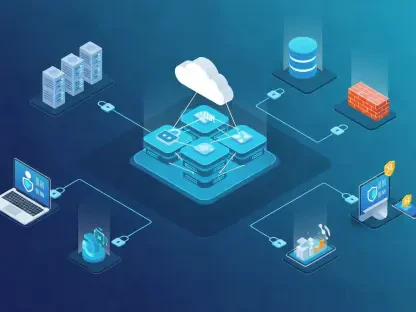
At its most fundamental level, iPaaS is a cloud-based suite of tools that enables subscribers to develop, execute, and govern integration flows between disparate applications. It functions as the central nervous system of the digital enterprise, receiving signals (data) from various sources, processing them, and routing them to the correct destination to trigger a specific action. This orchestration is managed through a central, often self-service, hub that abstracts away the underlying technical complexity of API protocols, data formats, and authentication mechanisms. This allows organizations to connect a vast array of endpoints—from legacy mainframes and on-premises databases to modern SaaS platforms and IoT devices—through a single, consistent management layer, ensuring that data can move seamlessly and securely wherever it is needed.
The functional applications of iPaaS are vast and touch nearly every aspect of business operations. One of the most powerful use cases is streamlined automation of multi-step processes. For example, the employee onboarding process, which traditionally involves manual coordination between HR, IT, and department managers, can be fully automated. An update in the HR system can trigger a workflow that provisions IT assets, assigns training modules in the learning management system, and creates user accounts in necessary applications. Another foundational capability is real-time data synchronization. By connecting a CRM like Salesforce with an ERP system, a business can ensure that sales, finance, and logistics teams are all working from a single, consistent source of truth, providing a true 360-degree view of the customer journey from initial contact to final delivery and payment. iPaaS also serves as a vital bridge for legacy system modernization, allowing valuable data trapped in older systems to be exposed via modern APIs and integrated with cloud-native applications. This extends the life of critical legacy investments while simultaneously unlocking their data for advanced analytics and AI initiatives.
Across different sectors, these core capabilities are being tailored to solve industry-specific challenges and drive competitive advantage. In healthcare, iPaaS is used to break down the silos between electronic health records (EHR), billing systems, and patient portals, creating a unified patient record that improves care coordination and patient engagement while maintaining strict HIPAA compliance. For financial services institutions, iPaaS is indispensable for automating complex financial reporting, ensuring regulatory adherence for Anti-Money Laundering (AML) and Know Your Customer (KYC) processes, and integrating a new generation of fintech services into their core banking platforms. In the manufacturing sector, iPaaS is the backbone of the “smart factory,” connecting supply chain management systems with factory floor IoT sensors and predictive maintenance platforms. This interconnectedness enables real-time production monitoring, optimized inventory management, and proactive maintenance that minimizes costly downtime, transforming the traditional factory into a highly efficient, data-driven operation.
The Strategic Returns Quantifying the Business Value of a Unified Integration Strategy
The adoption of iPaaS delivers tangible business value that extends far beyond technical efficiency. Its most immediate impact is a dramatic improvement in operational agility. By automating manual data transfer and reconciliation processes, organizations significantly reduce the incidence of costly human errors and free up countless employee hours. This reclaimed time allows teams to shift their focus from mundane, repetitive tasks to strategic, high-value activities that drive innovation and growth. This newfound agility also means the business can respond to market changes with unprecedented speed. Whether it involves integrating a newly acquired company’s systems, launching a new digital service, or adapting to a shift in consumer behavior, an iPaaS-driven architecture allows the organization to reconfigure data flows and business processes in a matter of hours or days, rather than weeks or months.
One of the most transformative benefits of modern iPaaS platforms is the democratization of development through low-code and no-code interfaces. These intuitive, visual tools empower non-technical users, often referred to as “citizen integrators,” to build and manage their own integrations without writing a single line of code. A marketing manager, for example, can independently connect a new social media analytics tool to the company’s CRM, or a finance analyst can automate the flow of data from expense reporting software into the general ledger. This self-service model drastically accelerates project timelines and reduces the burden on central IT teams, who are then free to focus on more complex, strategic integration challenges. This distribution of integration capabilities fosters a culture of innovation and problem-solving across the entire organization, enabling those closest to a business problem to build their own solutions.
From a governance and security perspective, iPaaS provides a critical layer of centralized control and visibility. In an environment of sprawling applications and APIs, maintaining security and compliance can be an overwhelming challenge. An iPaaS platform consolidates all data flows into a single manageable plane, allowing security teams to monitor for anomalous activity, enforce consistent access policies, and ensure that all data in transit is properly encrypted. This unified view helps mitigate significant risks, such as the proliferation of “shadow IT” or the existence of undocumented “zombie APIs” that can serve as attack vectors. Architecturally, iPaaS promotes a more resilient and scalable enterprise. By creating a loosely coupled system where applications are not directly dependent on one another, the failure of a single application is contained and does not trigger a catastrophic cascade effect across the entire ecosystem. This creates a more robust, fault-tolerant infrastructure that can scale seamlessly to meet fluctuating demands.
Future Proofing Your Enterprise Key iPaaS Trends to Harness for Competitive Advantage
As enterprises continue their migration to the cloud, the challenge of “SaaS sprawl” has become a pressing concern for CIOs. The ease with which departments can subscribe to new cloud services often leads to a chaotic and poorly governed application landscape, complete with redundant tools, inconsistent security protocols, and spiraling costs. iPaaS is proving to be the essential tool for taming this complexity. By acting as a central integration hub, it provides a comprehensive, real-time inventory of all connected cloud applications. This unified view allows organizations to identify and eliminate redundancies, enforce consistent governance and security policies across their entire SaaS portfolio, and gain clear visibility into how data is being used and shared, turning chaos into a well-managed and optimized ecosystem.
Beyond managing existing applications, the next frontier for iPaaS lies in its ability to unlock the immense value hidden within unstructured data. The vast majority of an enterprise’s data—residing in documents, emails, social media feeds, and customer service transcripts—remains largely untapped by traditional analytics tools. The convergence of iPaaS with artificial intelligence, particularly Natural Language Processing (NLP), is changing this reality. Modern iPaaS platforms can now orchestrate workflows that extract, process, and analyze this unstructured data, converting it into a structured format that can be used to train more sophisticated AI models, derive deeper customer insights, and identify emerging market trends. This capability transforms iPaaS from a simple data conduit into an intelligent data enrichment engine.
Looking ahead, the role of artificial intelligence within iPaaS is set to become even more profound with the rise of AI-driven integration. This emerging trend involves leveraging AI algorithms to automate the most complex aspects of the integration process itself. For example, AI can analyze data schemas from two different applications and automatically generate the complex data maps required to translate information between them, a task that has traditionally required significant manual effort from developers. In the near future, AI will be capable of autonomously generating entire no-code connectors for new applications based on their API documentation alone. This evolution will further accelerate the pace of innovation, making it possible for organizations to connect to new technologies and data sources almost instantaneously, solidifying the role of iPaaS as the indispensable, intelligent foundation of the future-proof enterprise.
The journey toward digital maturity was defined by the strategic decision to move beyond isolated applications and embrace a holistic, interconnected architecture. The implementation of a centralized integration strategy was not just a technological upgrade; it represented a fundamental shift in how the organization viewed its data as a unified, strategic asset. This transition enabled unprecedented operational agility, fostered a new wave of innovation through the democratization of development, and fortified the enterprise with a resilient, secure, and scalable foundation. Ultimately, the adoption of an iPaaS strategy was not merely about connecting applications; it became a declaration of an organization’s commitment to agility, resilience, and intelligent automation in an increasingly competitive digital world.